
Highlights
- Australia and the EU have finalized a trade agreement that eliminates tariffs on critical minerals and hydrogen exports, strengthening a non-China supply corridor for lithium and rare earth feedstocks needed for EVs and defense systems.
- While the deal reduces trade friction and supports friend-shoring strategies, it doesn't address the core bottleneck: China still controls ~90% of rare earth refining and midstream processing capacity.
- For investors, the key insight is that trade agreements move molecules but industrial strategy moves value—watch where processing facilities get built, not just where tariffs get cut.
After nearly a decade of negotiation, Australia and the European Union have struck a sweeping trade deal (opens in a new tab) designed to reduce tariffs, boost investment, and open markets across 450 million consumers. In simple terms: most Australian exports—including minerals—will now enter Europe duty-free, while Australians gain cheaper access to European goods.
But beneath the wine, wheat, and machinery headlines lies something more strategic: a deliberate alignment between two advanced economies seeking supply chain resilience in an increasingly fractured global system.
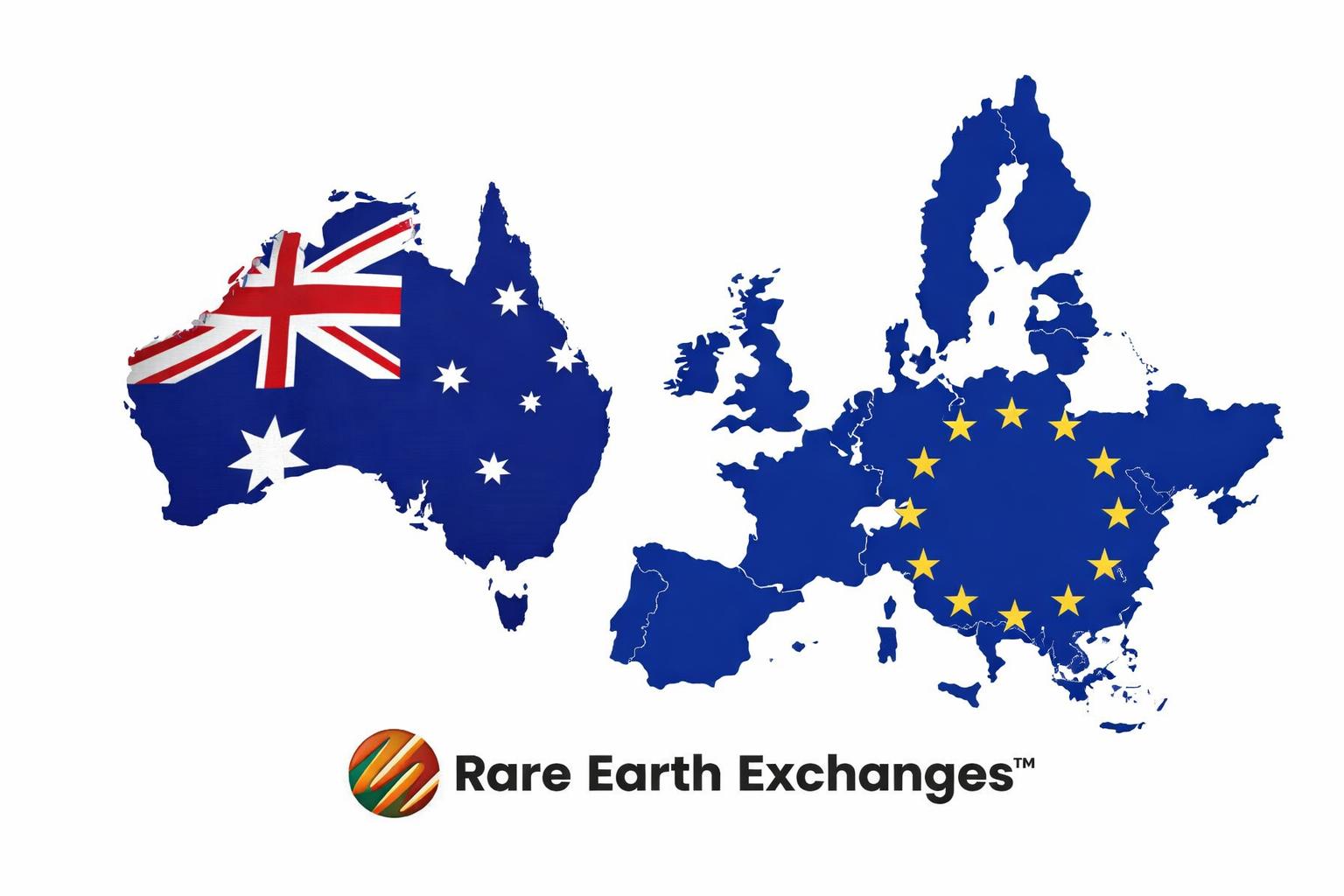
The Quiet Clause That Matters: Critical Minerals Go Tariff-Free
Here’s the real story for investors: critical minerals and hydrogen exports from Australia to Europe will face zero tariffs.
That matters. Australia is one of the world’s largest producers of lithium and rare earth feedstocks. Europe, meanwhile, is scrambling to secure inputs for EVs, wind turbines, and defense systems. Removing trade friction strengthens a non-China corridor—but only at the upstream level.
Let’s be clear: tariffs were never the main bottleneck. Processing is. And China still dominates ~90% of rare earth refining.
Where the Narrative Holds—and Where It Stretches
What’s grounded in reality:
- Trade diversification does reduce geopolitical risk—at least on paper
- Europe needs reliable partners for critical minerals
- Australia has a resource scale and political alignment
Where the rhetoric outruns reality:
- “Supply chain resilience” is overstated without midstream capacity
- Duty-free access does not equal secure supply
- No evidence that this deal materially accelerates refining, separation, or magnet manufacturing
This is a trade agreement—not an industrial policy.
The Strategic Undercurrent: Building a Western Supply Spine
The agreement aligns with a broader trend: friend-shoring critical minerals. Think U.S.–Japan, EU–Canada, and now Australia–EU. But here’s the paradox investors must understand:
Trade deals move molecules. Industrial strategy moves value. Until Europe or Australia builds meaningful separation and magnet capacity, value capture—and leverage—remains elsewhere.
Bottom Line: A Step Forward, Not a System Fix
This deal is directionally important. It strengthens alliances and reduces friction. But it does not solve the core problem of the rare earth supply chain: midstream dominance.
For Rare Earth Exchanges™ readers, the takeaway is simple:
Watch where processing gets built—not where tariffs get cut.


0 Comments
No replies yet
Loading new replies...
Moderator
Join the full discussion at the Rare Earth Exchanges Forum →