
Highlights
- South Africa's Steenkampskraal Monazite Mine begins construction on a new processing plant with exceptional 14.5% TREO grades and planned output of 13,400 tonnes annually of monazite concentrate.
- Despite high-grade ore, strategic control remains limited as China dominates critical midstream processing including separation, refining, and magnet production capabilities.
- Monazite's 2% thorium content adds regulatory and logistical complexity, while the absence of downstream processing infrastructure means even premium deposits remain inputs to external supply chains.
South Africa’s Steenkampskraal Monazite Mine (SMM) has broken ground on a new monazite processing plant, reviving one of the world’s historically richest rare earth deposits. The promise is straightforward: high-grade material, brought to market quickly. The implication is less so. Mining may be restarting—but control of the supply chain remains elsewhere.
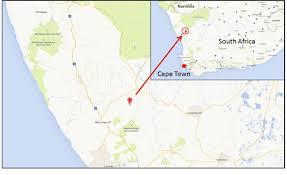
Source: ResearchGate
Rich Ore, Modest Leverage
By any geological standard, Steenkampskraal is exceptional. As cited in Mining Weekly (opens in a new tab), reported grades of roughly 14.5% total rare earth oxide (TREO) place it among the highest-grade deposits globally, while concentrate exceeding 50% TREO underscores its quality. Planned output of about 13,400 tonnes per year of monazite concentrate is not trivial, particularly for a Western-aligned supply base seeking alternatives to Chinese dominance.
The use of existing stockpiles and proven processing methods lowers capital intensity and accelerates early cash flow. These are tangible advantages. Yet they do not alter the project’s fundamental position: it remains an upstream play.
According to SMM CEO Graham Soden (opens in a new tab) “The initial product has demonstrated about 50% total rare earth oxide (TREO) content, confirming the high-grade nature of the deposit. In parallel, the mine’s hydrometallurgical laboratory circuit is currently undergoing optimization.
“Early results have been encouraging, with production of mixed rare earth carbonate (MREC) and cracked thorium anticipated in the near term.”
The Missing Middle
The strategic narrative begins to fray beyond the mine gate. Monazite concentrate is not a finished product but an intermediate—valuable only once processed, separated, and refined into usable oxides and, ultimately, magnets.
It is here that the imbalance persists. China continues to dominate the midstream:
- Separation
- Refining
- Magnet production
Without these capabilities, even high-grade concentrate must typically enter external processing networks. The locus of value—and leverage—remains downstream.
A Radioactive Complication
Monazite brings with it an additional complexity: thorium, present at around 2%. This is not merely a technical footnote. Thorium introduces regulatory and logistical burdens that affect permitting, transport, and processing economics. Its management requires specialized handling and compliant infrastructure—factors that can constrain market pathways, particularly outside established jurisdictions.
Supply Without Sovereignty
The project undoubtedly improves supply diversity and adds geographic optionality to a concentrated market. That is no small contribution. But it does not yet confer control.
Critical gaps remain:
- Heavy rare earth separation
- Scaled refining capacity
- Downstream magnet manufacturing
Until these are addressed, the structure of the market remains intact.
The Real Measure of Power
In rare earths, ownership of resources is often mistaken for a strategic advantage. It is not.
The decisive power lies not in extracting the ore, but in transforming it.
Steenkampskraal offers grade, speed, and promise. But until processing capacity expands beyond China’s orbit, even the richest deposits will remain what they have long been: inputs to someone else’s system.


0 Comments
No replies yet
Loading new replies...
Moderator
Join the full discussion at the Rare Earth Exchanges Forum →