
Highlights
- President Trump signed four landmark Southeast Asian trade agreements in Kuala Lumpur.
- These agreements create a new U.S.-anchored economic framework that challenges China's dominance in critical minerals and rare-earth supply chains.
- Malaysia's deal includes the first-ever bilateral ban on critical-mineral export restrictions to the U.S.
- Cambodia offers zero tariffs.
- Thailand commits to price-floor mechanisms and joint exploration partnerships.
- The agreements represent the most significant shift in critical-minerals security since 2019.
- Execution risks remain as China could weaponize pricing or processing capacity to counter America's new Indo-Pacific resource corridor.
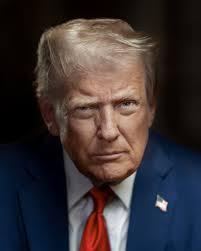
In a single extraordinary day in Kuala Lumpur, President Donald J. Trump looks to redraw the map of U.S. trade and mineral security. The White House confirmed four major agreements—two signed trade accords (Malaysia and Cambodia) and two framework deals (Thailand and Vietnam)—alongside the Kuala Lumpur Peace Accords ending decades of Thai-Cambodian border tension. The result: America now sits at the center of a new ASEAN-based economic framework linking trade, peace, and resilience of critical minerals. If executed well and if POTUS prepares for the anticipated moves by the Chinese, it would be a master milestone for POTUS.
Table of Contents
Outmaneuvering China in its’ own Backyard?
For rare-earth and critical minerals markets, this is the most significant shift since 2019’s U.S.–Japan magnet initiative. The Malaysia accord alone prohibits export bans or quotas on critical minerals and rare-earth magnets bound for the U.S.—a direct answer to Beijing’s tightening export controls.
Four Deals, One Strategic Arc
| Nation | Deal Summary |
|---|---|
| Malaysia | The Agreement on Reciprocal Trade grants preferential access for U.S. industrial goods, aerospace, semiconductors, and agriculture while anchoring the first bilateral critical-minerals clause in U.S. history. Malaysia pledges to keep rare-earth exports open, expand refining and recycling partnerships, and invest $70 billion in U.S. projects. It also commits to environmental and labor protections and aligns export-control cooperation with Washington. |
| Cambodia | Phnom Penh’s deal goes further on tariffs—zero on all U.S. goods—and opens its nascent mineral sector to U.S. exploration, refining, and infrastructure investment. The U.S. reciprocates with market access and defense-trade normalization, including lifting the arms embargo and reinstating joint exercises. |
| Thailand | A framework agreement coupled with a Critical Minerals MOU will erase tariffs on 99 percent of U.S. goods, promote joint exploration and processing, and establish technology-transfer and price-floor mechanisms to curb dumping. Thailand commits to align on export controls and strengthen labor and environmental laws—steps rare for an ASEAN producer. |
| Vietnam | The “Fair and Balanced Trade” framework secures preferential treatment for nearly all U.S. exports and a landmark $8 billion Vietnam Airlines-Boeing deal. It adds provisions on digital trade, data transfer, and state-enterprise behavior—signaling Vietnam’s deeper integration into a rules-based supply-chain regime. Together, these instruments form a concentric defense around America’s industrial future: open markets, secured minerals, diversified supply. |
The Critical-Minerals Core—and China’s Countermove
Each deal contains explicit rare-earth or critical-mineral provisions. Malaysia’s no-ban clause is unprecedented. Thailand’s MOU pledges U.S. first-look access to projects and “price-floor cooperation.” Cambodia opens exploration to U.S. firms under equal-treatment law. All four integrate export-control alignment—creating a soft alliance against Chinese backfill.
Still, risk remains. China could weaponize pricing, flood global magnet markets, or lure partners with processing capacity the U.S. lacks. Malaysia’s refining scale is embryonic; Thailand’s deposits are under-mapped; Cambodia’s governance is fragile. Execution will decide whether today’s breakthrough becomes durable architecture or diplomatic theater.
The Verdict from the Rare Earth Frontline
So what’s accurate? The White House confirms all four agreements, plus Malaysia’s explicit rare-earth export guarantee and the Thailand critical-minerals MOU.
But what about speculation? The scale of actual mineral flows, plant construction, and magnet output remains years away. Let’s not forget to accelerate industrial policy with an emphasis on refining and magnet output, plus understanding the need for downstream innovation and ultimate product demand.
Notable points called out by Rare Earth Exchanges (REEx). For the first time, U.S. trade deals link tariff policy, national security, and critical minerals supply—placing resource strategy on par with defense and technology.
If sustained, this Kuala Lumpur suite could mark the rebirth of a U.S.-anchored Indo-Pacific resource corridor, buffering industry from China’s dominance in rare earths. Investors should watch for EXIM and DFC financing signals, downstream magnet-plant announcements, and any Chinese countermove in pricing or processing diplomacy.
Summary for All
This REEx article decodes the October 26 White House agreements with Malaysia, Cambodia, Thailand, and Vietnam—highlighting their rare-earth clauses, geopolitical coherence, and risks. For investors and analysts, it offers factual clarity on how the new reciprocal-trade architecture could reshape U.S. critical minerals security and provoke competitive responses from China.
Citation: See all White House news releases (opens in a new tab). The White House Fact Sheet, “President Donald J. Trump Secures Peace and Prosperity in Malaysia,” Oct 26 2025; U.S.–Malaysia Agreement on Reciprocal Trade; U.S.–Cambodia Agreement on Reciprocal Trade; U.S.–Thailand Framework and Critical Minerals MOU; U.S.–Vietnam Framework for Reciprocal, Fair and Balanced Trade.
©!-- /wp:paragraph -->


0 Comments