
Highlights
- The U.S. aims to produce more rare earth magnets than needed by 2026, but industry insiders say meaningful domestic capacity won’t arrive until 2030 or later due to the complexity of recreating China’s $1 trillion, three-decade industrial ecosystem.
- Heavy rare earth processing remains the critical bottleneck—only a handful of projects like Pea Ridge can separate all elements domestically, while China continues to dominate midstream processing of dysprosium and terbium, essential for defense and EV applications.
- Project Vault’s stockpiling strategy faces a paradox: building reserves requires an abundant supply that doesn’t exist, potentially forcing reliance on Chinese materials while the Pentagon’s January 2027 deadline to eliminate Chinese inputs appears increasingly unrealistic.
It was supposed to be a sprint. In speeches and policy briefings, U.S. officials have projected confidence that the nation could soon produce more rare earth magnets than it needs—perhaps as early as later this year (2026). But across factory floors, project sites, and supply chain offices, a different picture is taking shape: one of incremental progress colliding with structural limits.
The United States is not simply rebuilding an industry. It is attempting to recreate an entire industrial ecosystem—one that China has spent more than three decades building, refining, and integrating at over $1 trillion in spend. That effort, experts say, cannot be rushed.
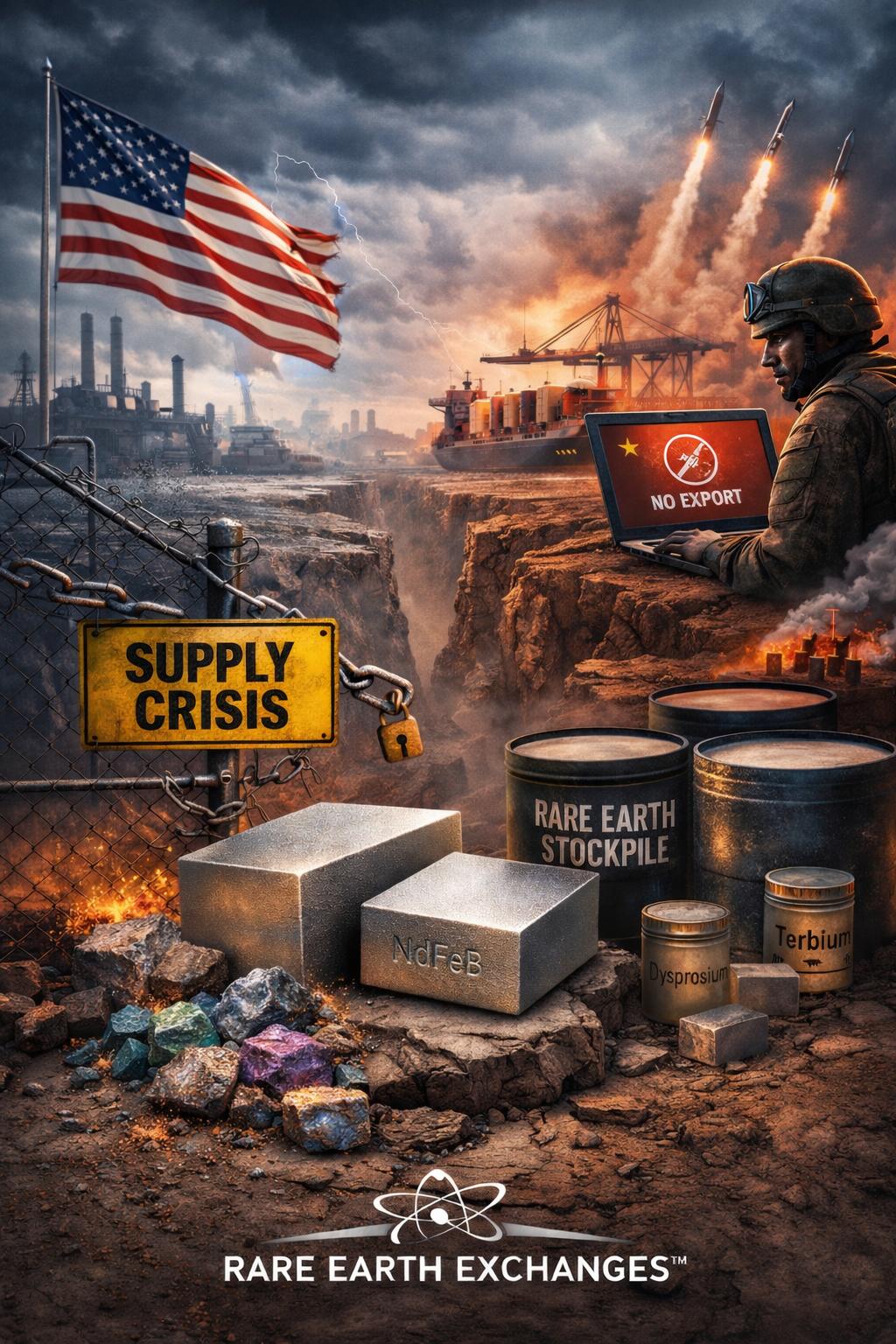
A System Few Fully Understood
The central challenge is often misunderstood in Washington and corporate boardrooms alike. Rare earths are not just about mining. They are about systems. Turning ore into a finished magnet requires a sequence of highly specialized steps: chemical separation, metallization, alloying, and precision manufacturing. Each stage is technically demanding, capital-intensive, and tightly interdependent.
China dominates the most critical link: midstream processing, particularly the separation of heavy rare-earth elements such as dysprosium and terbium. These materials are essential for high-performance magnets used in electric vehicles, wind turbines, and advanced defense systems. Without them, domestic magnet production becomes, in effect, an incomplete solution.
The Heavy Rare Earth Constraint
The vulnerability is most acute in heavy rare earths. While the United States and its allies possess deposits of lighter elements, few projects outside China can process and separate heavy rare earths at scale.
Industry data underscores the imbalance. Among dozens of global projects, only a handful approach full integration—and even fewer meet the stringent requirements for a fully domestic, defense-compliant supply chain.
One U.S. project, Pea Ridge in Missouri, stands out as a rare example of a potential end-to-end system capable of separating all rare earth elements domestically, according to our internal project rankings. Others include Aclara Resources, Northern Minerals, Southern Alliance Mining (currently supplying China) and a few others in early stage.
But relying on a single or limited number of projects introduces a different kind of risk: concentration.
Timelines Stretch Beyond Political Promises
Several high-profile initiatives—led by companies such as MP Materials, USA Rare Earth, and Energy Fuels—are advancing at a promising pace. Recycling ventures and alternative processing technologies are also gaining traction. Yet even under optimistic scenarios, most projects face significant hurdles: securing feedstock, scaling separation technologies, and achieving economic viability, not to mention producing high-quality rare-earth-based magnets for defense and industrial use cases at scale.
Industry participants increasingly point to a common conclusion: meaningful, resilient capacity is unlikely before the end of the decade. “The 2026 to 2028 narrative is political,” one executive said. “The 2030 + timeline is more industrial.”
A Trade War Without an Industry
Complicating matters is the broader geopolitical environment. The United States had moved aggressively to impose tariffs and restrict trade with China, framing rare earths as a strategic priority.
But several analysts and executives argue that the sequencing is problematic. “You don’t declare a trade war before you have an industry,” said one supply chain adviser involved in defense contracting on condition of anonymity. “Otherwise, you’re exposing your own vulnerabilities faster than you’re closing them.”
China has already demonstrated its leverage, tightening export controls on rare earths and magnet-related technologies, particularly for applications with potential defense use. That leaves U.S. manufacturers in a bind: facing higher costs and uncertain access while domestic alternatives remain under development. And if China continues to constrain exports, we could enter a deeper industrial crisis, slowing production in key high-tech industries.
Stockpiling Meets Scarcity
Against this backdrop, policymakers have advanced “Project Vault”—a proposal to build a national reserve of rare earth materials, framed as insurance against supply shocks.
In theory, stockpiling is a hedge. In practice, it requires abundance.
That abundance does not exist, least of all for heavy rare earths. To hoard in a market defined by scarcity is not stabilization; it is distortion. Prices rise, private buyers are squeezed out, and the very imbalance policymakers seek to correct is amplified—often to China’s advantage.
The deeper tension is strategic. If the Vault is filled with Chinese material, it dilutes the premise of independence. If it is not, it risks standing half-empty, a symbol of intent without substance.
Compounding the contradiction, _Rare Earth Exchanges_™ has learned that Vault planners have explored exemptions to source Chinese supply. But here, too, reality intrudes: materials tied to dual-use applications—the very ones that matter most—are precisely those Beijing is least likely to release.
What emerges is less a safeguard than a paradox: a reserve designed to insulate the system, yet built atop the same dependencies it seeks to escape. Then comes chatter Rare Earth Exchanges has picked up from DC—that Vault, as well as other projects, may be under investigation if midterms go to the Dems.
Deadlines and Disconnects
The Department of Defense has set an ambitious target (opens in a new tab): to eliminate Chinese inputs from certain supply chains by January 2027.
Industry participants say that the timeline is unlikely to be met at scale. The reasons are straightforward—limited domestic processing capacity, long construction timelines, and the complexity of tracing material origins across global supply chains.
The likely outcomes, they suggest, include waivers, revised definitions of compliance, or disruptions in procurement.
Inside corporations, a quieter divide is emerging. C-suite executives and Board members often express confidence that new projects and government support will stabilize supply. Supply chain managers, closer to operational realities, are less certain.
Politics as a Second Variable
The trajectory may also depend on politics. If control of Congress shifts in the midterm elections, Trump-era industrial deals Rare Earth Exchanges has picked up, face increased scrutiny, potentially delaying or reshaping projects.
For investors, that introduces an additional layer of uncertainty. For developers, it may slow momentum at a moment when speed is already constrained by technical challenges.
A System Under Pressure
The rare earth supply chain is increasingly viewed through a broader geopolitical lens. Analysts describe a form of “chokepoint stacking” in which vulnerabilities in energy, materials, and technology reinforce one another.
Disruptions in the Strait of Hormuz affect energy markets. Export controls affect materials. Technology restrictions reshape manufacturing. Together, they form a system under pressure.
A Longer Road to Resilience
There is little doubt that the United States is making progress under the Trump administration 2.0. Capital is flowing. Projects are advancing. Industrial policy is engaged in ways not seen in decades (though not at the level we have called for).
But progress is not the same as control.
For now, the rare earth challenge remains what it has always been: a long-term industrial undertaking, measured in years, and likely without a far more comprehensive industrial policy, decades.
Until the United States can build a fully integrated supply chain—from mine to magnet, including heavy rare earth processing—it will remain dependent, to varying degrees, on decisions made beyond its borders.
And in a world where supply chains have become instruments of power, that dependence carries serious consequences.


0 Comments
No replies yet
Loading new replies...
Moderator
Join the full discussion at the Rare Earth Exchanges Forum →