
Highlights
- Ron Matthews (Cranfield University) and Vlado Vivoda (University of Queensland) published the study in the European Journal of International Security, analyzing trade flows, FDI, and military relationships shaping Africa's mineral economy.
- Africa produces approximately 76% of global cobalt and 77% of platinum, making it central to the energy transition and advanced manufacturing supply chains.
- China's dominance extends beyond mining to controlling major refining and processing capacity for cobalt, nickel, lithium, and graphite, while the US remains heavily import-dependent.
- Russia has leveraged military partnerships and proxy groups such as Wagner and the Africa Corps to gain influence in mineral-rich regions rather than deploying large-scale industrial capital.
- The authors warn that without stronger governance, local refining capacity, and domestic value-added manufacturing, African states risk remaining raw material exporters rather than industrialization beneficiaries.
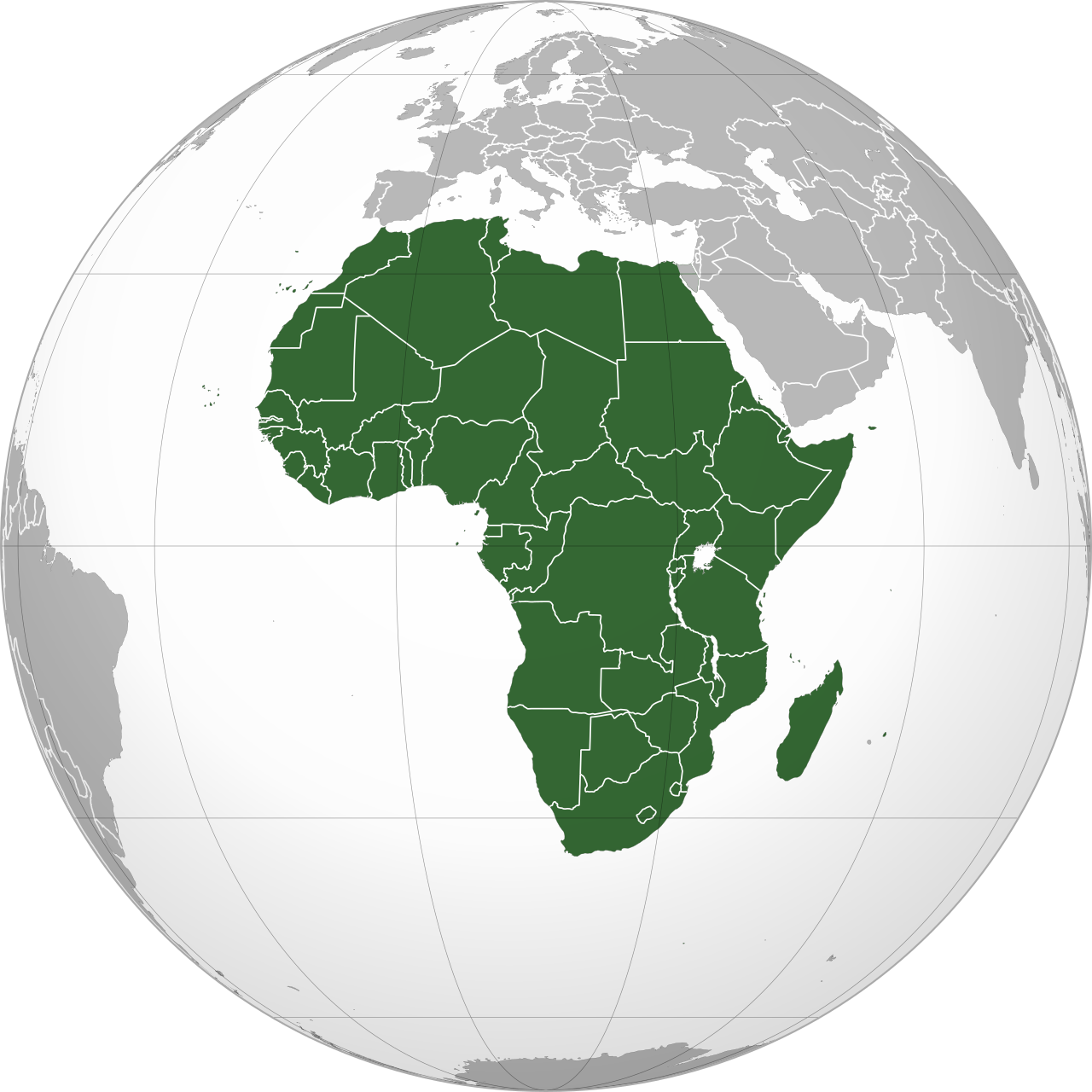
A new study (opens in a new tab) published in the European Journal of International Security by Ron Matthews (Cranfield University, Shrivenham, UK) and Vlado Vivoda (University of Queensland, Brisbane, Australia) argues that Africa is rapidly emerging as the central arena in a twenty-first-century struggle over critical minerals essential for electric vehicles, semiconductors, AI infrastructure, advanced defense systems, batteries, and renewable energy technologies. The authors contend that China, Russia, the United States, and Europe are now competing aggressively for influence over Africa’s enormous mineral wealth, including cobalt, lithium, manganese, platinum, copper, graphite, and rare earth elements. But the study warns that this new scramble for resources could either help industrialize parts of Africa or deepen corruption, instability, conflict, and foreign dependence. For Rare Earth Exchanges™ readers, the paper reinforces a defining reality of the emerging “Great Powers Era 2.0”: supply chains themselves are increasingly becoming instruments of geopolitical power.
Study Methods and Core Thesis
The paper is a geopolitical and security analysis rather than a geological field study or laboratory investigation. Matthews and Vivoda examine trade flows, foreign direct investment, military relationships, diplomatic agreements, mining policy, and strategic industrial initiatives shaping Africa’s critical mineral economy.
The authors argue that China has developed the most coherent long-term strategy. Through the Belt and Road Initiative (BRI), BRICS expansion, state-backed financing, infrastructure investment, and ownership stakes in mining and refining assets, Beijing has positioned itself deep inside African supply chains.
Russia has taken a different path. Rather than deploying large-scale industrial capital, Moscow has often relied on military partnerships, security agreements, and proxy groups such as Wagner and the Africa Corps to gain influence in mineral-rich regions. The paper notes that Africa now produces approximately 76% of global cobalt, 77% of platinum, and major shares of manganese, chromium, copper, and lithium resources critical to the energy transition and advanced manufacturing economy.
Key Findings
One of the study’s most important findings is that China’s dominance extends far beyond mining alone. Chinese firms now control major portions of global refining and processing capacity for minerals such as cobalt, nickel, lithium, and graphite.
The authors also emphasize that Western governments were slow to recognize how strategically vulnerable their supply chains had become.
The United States remains heavily import-dependent for many critical minerals central to both civilian industry and defense manufacturing. The paper further explores the darker side of the mineral trade, including “blood minerals,” armed conflict, smuggling networks, corruption, child labor, and insurgent financing in mineral-rich regions such as the Democratic Republic of Congo (DRC).
How This Aligns With REEx “Great Powers Era 2.0”
The study strongly overlaps with the Rare Earth Exchanges™ “Great Powers Era 2.0” thesis. Both frameworks argue that globalization is evolving away from a system driven primarily by efficiency and low-cost production toward one centered on industrial sovereignty, strategic supply chains, and geopolitical leverage.
The paper reinforces a core REEx position: critical minerals are no longer simple commodities. They are strategic assets directly tied to military capability, industrial resilience, energy systems, AI infrastructure, and technological leadership.
However, the REEx framework extends further into the industrial realities beneath geopolitics. Rare Earth Exchanges has consistently argued that the deepest bottlenecks are not merely upstream mining assets, but downstream refining, separation chemistry, metallization, alloying, magnet manufacturing, and industrial-scale processing ecosystems. Matthews and Vivoda acknowledge beneficiation and refining concerns, but their study remains more focused on geopolitical rivalry, governance, and foreign influence than on the highly technical midstream and downstream choke points dominating modern critical mineral supply chains.
Implications and Limitations
The implications are enormous. Africa could evolve into a major center of industrial development—or become another chapter in externally dominated extraction economies. The authors repeatedly stress that governance will determine the outcome. Without stronger institutions, infrastructure, transparency, local refining capacity, and domestic value-added manufacturing, African states risk remaining exporters of raw materials rather than beneficiaries of industrialization.
The study also indirectly reinforces another major REEx theme: upstream deposits alone are not enough. Discovering minerals is only the beginning. Mining economically, refining at industrial scale, separating chemically complex materials, and manufacturing downstream products remain the much harder challenge. China still dominates much of this midstream and downstream ecosystem.
One limitation is that the paper focuses heavily on geopolitical rivalry and less on technical feasibility, permitting constraints, environmental realities, and the immense capital intensity required to build non-Chinese refining systems. Some interpretations regarding BRICS coordination and long-term Chinese intentions may also invite debate.
Citation: Matthews, R. & Vivoda, V. (2026). In the Crosshairs: Twenty-First-Century Superpower Rivalry for Africa’s Critical Minerals. European Journal of International Security.


0 Comments
No replies yet
Loading new replies...
Moderator
Join the full discussion at the Rare Earth Exchanges Forum →