
Highlights
- The U.S. generates 60,000–70,000 metric tons of battery black mass yearly, yet most leaves North America for processing in Asia.
- Green Li-ion's modular 'factory-in-a-box' refining system produces precursor cathode active materials representing 50–75% of a battery's total value.
- Refining capacity—not mining alone—determines true critical mineral supply-chain security and national strategic resilience.
- Control of battery materials increasingly translates into economic and geopolitical leverage across EVs, AI data centers, and military systems.
- Great Powers Era 2.0 rewards nations that master the full value chain from extraction and refining to advanced manufacturing.
A new Rare Earth Exchanges® podcast (opens in a new tab) featuring Green Li-ion (opens in a new tab) and American Li-ion (opens in a new tab) CEO Leon Farrant (opens in a new tab) reveals a critical weakness in Western industrial strategy: while governments spend billions supporting mines, much of the refining capacity needed to transform critical minerals into strategic products remains concentrated in Asia.
Leon Farrant, CEO

Source: LinkedIn
According to Farrant, the United States generates approximately 60,000 to 70,000 metric tons of battery "black mass" annually—material containing recoverable lithium, nickel, cobalt, manganese, and other valuable battery metals. Yet most of that material ultimately leaves North America for processing overseas, with China remaining the dominant destination either directly or indirectly through Asian supply chains.
For Rare Earth Exchanges, this highlights a reality often overlooked in critical minerals policy: mining alone does not create supply-chain security. Refining creates supply-chain security.
The discussion underscores why refining has become one of the most important industrial chokepoints in the global economy. Batteries increasingly power electric vehicles, AI data centers, military systems, grid-scale energy storage, telecommunications infrastructure, and advanced manufacturing. Control of battery materials therefore increasingly translates into economic and geopolitical leverage.
Bringing Critical Mineral Battery Recycling Manufacturing to Oklahoma
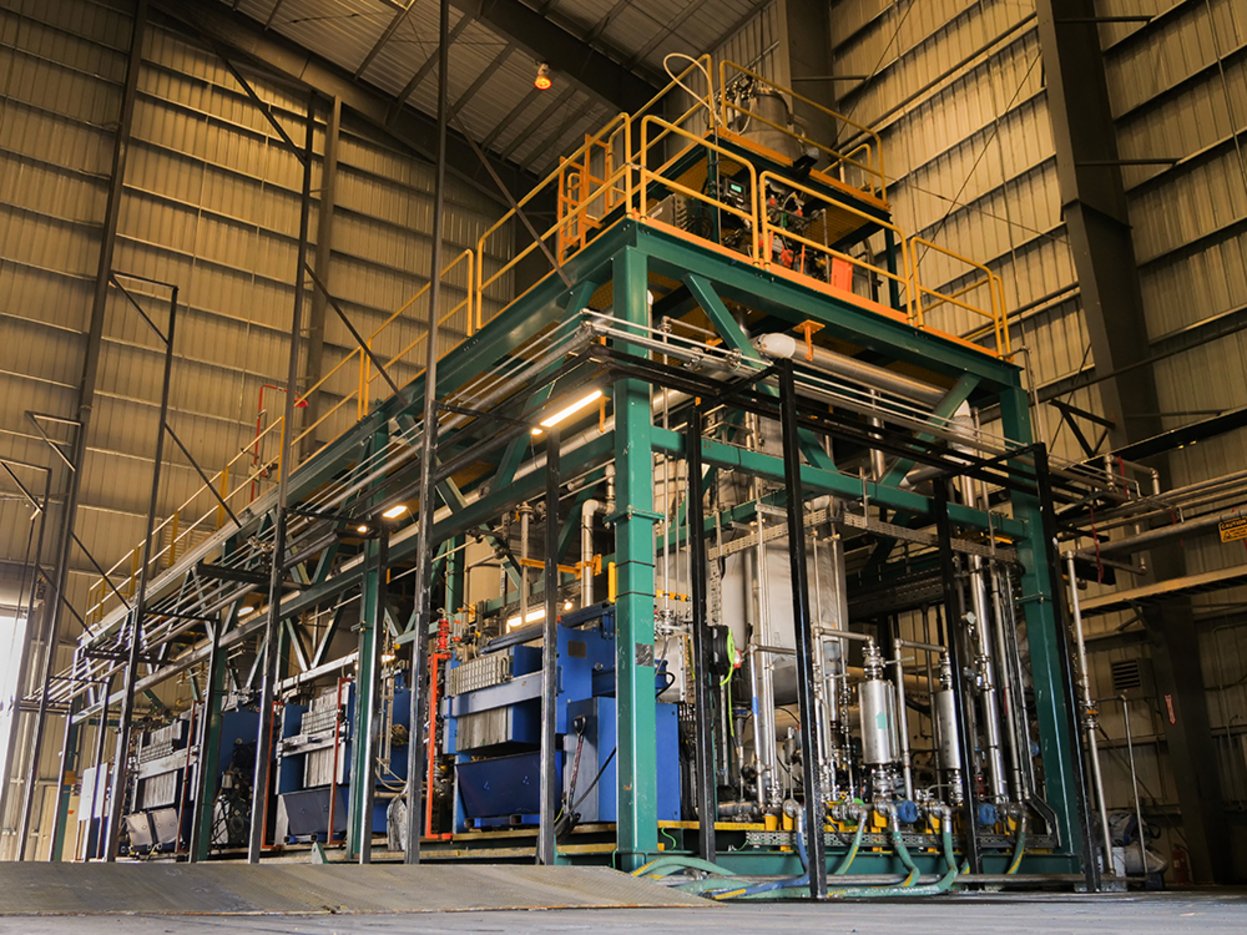
Farrant argues that traditional refining models developed in China benefited from decades of state-backed investment, scale advantages, and integrated supply chains.
Rather than attempting to replicate those massive centralized facilities, Green Li-ion has developed a modular "factory-in-a-box" refining system designed to be deployed rapidly and scaled incrementally. The company's technology produces precursor cathode active materials (PCAM), which Farrant estimates can represent between 50% and 75% of a battery's total value. The broader significance extends far beyond one company.
The interview serves as a case study in what Rare Earth Exchanges has termed Great Powers Era 2.0—a world where industrial capacity increasingly determines national power. In this emerging era, nations are discovering that economic resilience depends not merely on controlling resources, but on controlling the entire value chain from extraction and refining to manufacturing and advanced technology.
For decades, globalization optimized for efficiency and lowest cost. Great Powers Era 2.0 is optimizing for resilience, sovereignty, and strategic control. The nations that master refining, processing, and advanced manufacturing will likely hold the commanding heights of the next industrial age.
Follow the link to hear about the exciting progress of Green Li-ion and American Li-ion (opens in a new tab).
Source: Rare Earth Exchanges Podcast interview with Leon Farrant, CEO and Co-Founder of Green Li-ion and American Li-ion.
Register today: REEx Marketplace™ (opens in a new tab)
Discover companies, projects, pricing intelligence, and opportunities across the global rare earth value chain at the REEx Marketplace: https://marketplace.rareearthexchanges.com/signup (opens in a new tab)


0 Comments
No replies yet
Loading new replies...
Moderator
Join the full discussion at the Rare Earth Exchanges Forum →