
Highlights
- Argentina exported $6.1B in minerals in 2025, but 95% came from just gold, lithium, and silver—copper remains largely undeveloped.
- Nine advanced copper projects including Los Azules and Vicuña could exceed 1.5M tonnes annually by 2035, requiring over $28B in CAPEX.
- China is already embedded via Ganfeng and Zijin Mining, while Western nations must move beyond memoranda to offtake and project finance.
- Argentina's federal structure means national reforms face a two-level credibility test, with provinces controlling permitting, royalties, and water rights.
- Milei's RIGI incentive regime improves the investment case, but Argentina's history of defaults and policy reversals remains a long-term risk.
Argentina may be one of the Western Hemisphere’s biggest underdeveloped mining stories—but investors should distinguish what is producing from what remains largely PowerPoint supply. A new Institute of the Americas (opens in a new tab) report (opens in a new tab) identifies world-class lithium resources, nine advanced copper projects, and potash and uranium opportunities, while emphasizing infrastructure, financing, and provincial execution. Argentina already exported about $6.1 billion of minerals in 2025, but 95% came from just gold, lithium, and silver. Mining still represents only about 1% of GDP and directly employs roughly 39,700 people.
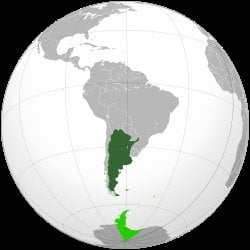
REEx Insight: Argentina Has Ore—China Has the System
Argentina's strategic opportunity is real, but this is not yet a rare-earth story comparable with China, Australia—or increasingly Brazil. SEGEMAR (Servicio Geológico Minero Argentino (opens in a new tab)) recently estimated approximately 190,395 tonnes of identified rare-earth resources, with deposits or indications across several provinces. That establishes geological optionality, not a commercial rare-earth supply chain. Argentina currently lacks meaningful REE mining, separation, metallization, and magnet manufacturing at scale.
That distinction matters. Mining more minerals does not automatically diversify the Western supply chain if concentrates ultimately flow into Chinese processing networks.
The Institute report itself recognizes this problem: China remains dominant across processing of many strategic minerals, while Chinese companies can offer Argentina an integrated package of capital, engineering, processing connections, and offtake that Western competitors often struggle to match.
Copper: The Sleeping Giant Must Wake Up
Argentina has mining history—but its current production base is surprisingly narrow. Gold and silver dominate today's metallic mining industry, while lithium is the growth engine. Gold production actually fell 42% from a decade earlier by 2025, while silver production was down 35% from 2019. Higher prices have disguised some of that physical decline.
Copper is the great missing piece. Argentina once produced copper at large scale through Bajo de la Alumbrera, but today it has no comparable major operating copper mine.
That could change dramatically. Nine advanced projects—including Vicuña/Josemaría-Filo del Sol, Los Azules, Taca Taca, El Pachón, Altar, MARA, and PSJ Cobre Mendocino—could collectively exceed 1.5 million tonnes annually by 2035, according to the Argentine government's pipeline assumptions. Required CAPEX exceeds $28 billion. Government projections go further: lithium and copper exports could eventually reach $32.7 billion annually, including $20.6 billion from copper. That is a scenario, however—not banked production, and of course the gap between the two in a place like Argentina can be quite large.
Milei Changes the Equation—But Not Argentina's History
President Javier Milei has materially improved the macroeconomic investment story. Inflation has fallen dramatically, fiscal discipline has strengthened, sovereign ratings have improved, and the IMF projects 3.5% real GDP growth for 2026.
RIGI (Régimen de Incentivo para Grandes Inversiones) adds long-duration tax, customs, and foreign-exchange protections intended specifically to make huge capital projects financeable.
But Argentina carries institutional scar tissue: repeated currency crises, capital controls, sovereign defaults, inflation, policy reversals, and difficult IMF relationships. Even after major stabilization progress, the IMF continues to describe risks as “exceptional,” while Argentina faces a large foreign-currency debt burden around the politically sensitive 2027 election. For a mine expected to operate for 25–40 years, one successful administration is not yet policy durability. There is another complication: Argentina is federal. Provinces own mineral resources and control critical permitting, royalties, environmental approvals, and water governance. National reform therefore faces what the Institute aptly calls a “two-level credibility test.”
The Bottlenecks Are Above Ground
The report is strongest where it refuses to confuse resources with supply. Roads, transmission, water, railways, ports, technical workers, and financing remain constraints. Several copper projects advancing simultaneously could even compete for the same engineers, contractors, regulators, and infrastructure.
Water is especially consequential across high-altitude lithium brines and large Andean copper projects. Social license, Indigenous and community relationships, cumulative basin impacts, and provincial regulatory capacity can become schedule and financing risks—not merely ESG footnotes.
Great Powers Era 2.0™ Comes to the Andes
The deeper REEx takeaway is geopolitical. China is already embedded through Ganfeng Lithium and Zijin Mining. The United States now has a bilateral critical-minerals framework with Argentina, while Europe, Japan, and Korea want diversified mineral supply. The Institute correctly argues that Western countries need to move beyond memoranda toward offtake, export credit, infrastructure, and project finance.
Argentina therefore becomes a laboratory for Great Powers Era 2.0™: Can Western capital build complete mineral networks faster than China's integrated financing-processing-offtake machine? Argentina does not need to choose one camp. Its greatest strategic leverage may come from ensuring that no camp becomes indispensable.
REEx Connect
| Company/Organization | Argentina Role |
|---|---|
| BHP / Lundin Mining | Vicuña copper district |
| Rio Tinto | Rincón lithium |
| McEwen Copper | Los Azules copper |
| First Quantum Minerals | Taca Taca copper |
| Glencore | MARA / El Pachón copper interests |
| Ganfeng Lithium | Multiple lithium assets |
| Zijin Mining | Tres Quebradas lithium |
| Integra Capital / PRC | Potasio Río Colorado |
| Institute of the Americas | Report author/publisher |
| Argentina Secretariat of Mining | Mining data and policy |
| U.S. DFC / EXIM / USTDA | Potential financing/infrastructure tools |
REEx Bottom Line: Argentina's geology deserves attention, but the investable thesis is whether Milei's reforms can survive political cycles and convert resources into mines, infrastructure, and eventually downstream capacity. The ore is there. The supply chain is not—yet.


0 Comments
No replies yet
Loading new replies...
Moderator
Join the full discussion at the Rare Earth Exchanges Forum →