
Highlights
- Trump administration completes federal permitting for Standard Lithium-Equinor's South West Arkansas project, aiming to produce 22,500 tonnes of battery-grade lithium carbonate annually starting 2029.
- The approval marks the 17th critical mineral project fast-tracked under FAST-41, signaling aggressive US industrial policy to reduce dependence on China-dominated lithium supply chains.
- Despite regulatory approval, execution risks remain around direct lithium extraction technology scalability, operating economics, and commercial-scale performance at Arkansas' Smackover Formation.
The Trump administration announced completion of federal permitting for the South West Arkansas (SWA) lithium project, a major milestone in America’s effort to rebuild domestic critical mineral supply chains. The project, a joint venture between Standard Lithium and Equinor (opens in a new tab), aims to produce 22,500 tonnes annually of battery-grade lithium carbonate from Arkansas brine resources beginning around 2029.
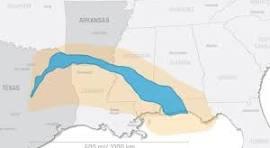
Source: Arkansas Times
Officials framed the approval as part of a broader “energy dominance” strategy tied to national security, EV batteries, grid storage, and industrial resilience.
The project became the 17th critical mineral or mining project to complete federal permitting under the FAST-41 framework during the Trump administration. FAST-41 was designed to accelerate transparency and coordination in permitting for nationally significant infrastructure projects.
For investors, the announcement matters beyond lithium alone. It signals Washington’s increasingly aggressive industrial policy toward strategic minerals, once supplied by foreign supply chains—especially China. Arkansas’ Smackover Formation (opens in a new tab) has emerged as one of America’s most promising lithium brine regions, attracting major corporate and geopolitical attention.
Still, important realities remain. Completion of federal permitting does not eliminate execution risk. Commercial-scale direct lithium extraction (DLE) technologies remain relatively early-stage compared to traditional hard-rock or evaporation-based lithium production. Questions surrounding operating economics, scalability, water management, and long-term processing performance remain critical as the project moves toward commercialization.


0 Comments
No replies yet
Loading new replies...
Moderator
Join the full discussion at the Rare Earth Exchanges Forum →