
Highlights
- Xi Jinping met with Taiwan's KMT senior figure Zheng Liwen in the first publicly reported high-level cross-strait engagement in roughly a decade, signaling a selective reopening of political dialogue within Beijing's established framework.
- Beijing outlined a four-pillar strategy emphasizing identity alignment, peaceful development anchored in the 1992 Consensus, economic integration incentives, and linking Taiwan's future to China's national rejuvenation.
- No breakthrough occurred—this represents recalibration on Beijing's terms, reinforcing persistent geopolitical risk for global markets in semiconductors, defense, and critical minerals as China actively manages the Taiwan issue.
In a closely watched meeting reported by Xinhua News Agency, Xi Jinping met with Zheng Liwen, a senior figure associated with Taiwan’s Kuomintang. The encounter marks the first publicly reported high-level engagement between Chinese Communist Party (CCP) leadership and a Kuomintang delegation in roughly a decade, signaling a symbolic reopening of cross-strait political dialogue.
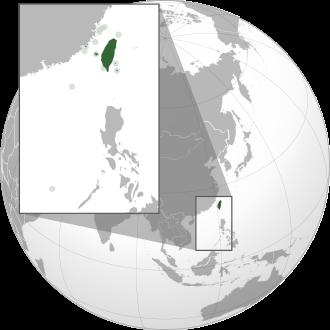
A Message Wrapped in Stability—and Pressure
Xi’s remarks emphasized continuity, not compromise. He framed cross-strait relations as part of an irreversible historical trajectory tied to “national rejuvenation,” regardless of shifts in the geopolitical environment or tensions in the Taiwan Strait. The underlying message was unmistakable: engagement with Taiwan’s opposition is not negotiation, but alignment within Beijing’s established political framework.
At the core was reaffirmation of the “1992 Consensus”—Beijing’s preferred formulation that both sides belong to “one China”—paired with explicit and repeated opposition to Taiwanese independence. Xi characterized“Taiwan independence” as the primary destabilizing force in the region and made clear it would not be tolerated.
Four Pillars of Beijing’s Approach
Xi outlined a structured four-part framework guiding Beijing’s cross-strait strategy:
- Identity alignment: Reinforcing shared cultural, historical, and national identity
- Peaceful development: Anchored in rejection of independence and external interference
- Economic and social integration: Expanding trade, youth exchanges, and access to mainland markets
- National rejuvenation: Linking Taiwan’s long-term future to China’s broader rise
Beijing again extended a familiar proposition: economic opportunity in exchange for political alignment, inviting Taiwanese individuals, businesses, and especially youth to deepen engagement with the mainland economy.
Why This Matters for Business
No concrete agreements or policy changes emerged. But the strategic signal is clear. Beijing is reinforcing a dual-track approach:
- Politically: Engage and legitimize opposition actors aligned with “one China” principles
- Economically: Increase integration incentives to draw Taiwan’s business and talent ecosystem closer together
For Western companies and investors, this reinforces a structural reality: cross-strait geopolitical risk remains persistent, even as China continues to leverage its economic scale to indirectly shape outcomes.
Breakthrough—or Strategic Signaling?
There is no breakthrough—no new framework, no de-escalation. But the significance lies in controlled continuity. Beijing is reasserting narrative and strategic control, positioning itself as the steward of stability while incrementally tightening the parameters for cross-strait engagement.
The Bottom Line
This is not a reset. It is recalibration on Beijing’s terms. Dialogue is reopening—but selectively, and within a predefined political architecture. For global markets—especially semiconductors, defense, and critical minerals—the signal is clear: the Taiwan issue is not cooling; it is being actively managed, shaped, and leveraged.
Disclaimer: This report is based on information published by Xinhua News Agency, a Chinese state-affiliated media outlet. The content reflects official government perspectives and should be independently verified before being used for investment, policy, or strategic decision-making.


0 Comments
No replies yet
Loading new replies...
Moderator
Join the full discussion at the Rare Earth Exchanges Forum →