
Highlights
- China's Ministry of Industry and Information Technology launched a comprehensive 2026 employment and industrial strategy focused on advanced manufacturing, AI, electric vehicles, and aerospace, integrating workforce development with industrial policy amid mounting economic pressures including demographic decline, overcapacity, and weak consumption.
- Beijing is prioritizing engineering education and vocational training to build skilled talent in critical sectors, recognizing that industrial sovereignty depends on workforce continuity in rare earths, advanced materials, batteries, semiconductors, and robotics—not just factories and mines.
- The Trump 2.0 era has accelerated what Rare Earth Exchanges calls "Great Powers Era 2.0"—a geopolitical shift fragmenting the world into competing industrial blocs racing to secure strategic supply chains and materials, making China's dominance in critical sectors progressively more expensive to maintain.
China’s Ministry of Industry and Information Technology (MIIT) has unveiled an expansive 2026 employment and industrial strategy centered on advanced manufacturing, artificial intelligence, electric vehicles, aerospace, and industrial upgrading. The initiative underscores Beijing’s increasingly integrated approach to workforce development and industrial policy. Yet beneath the confidence lies mounting economic pressure: demographic decline, industrial overcapacity, weak domestic consumption, rising debt burdens, and a renewed top-down command-and-control model that may ultimately constrain innovation. At the same time, Rare Earth Exchanges™ believes the Trump 2.0 era may unintentionally be accelerating a broader geopolitical realignment—what REEx calls “Great Powers Era 2.0”—where nations increasingly compete for direct control over strategic supply chains, industrial ecosystems, and critical materials. This raises the price markedly for China to maintain its current leverage across critical mineral and rare earth element supply chains.
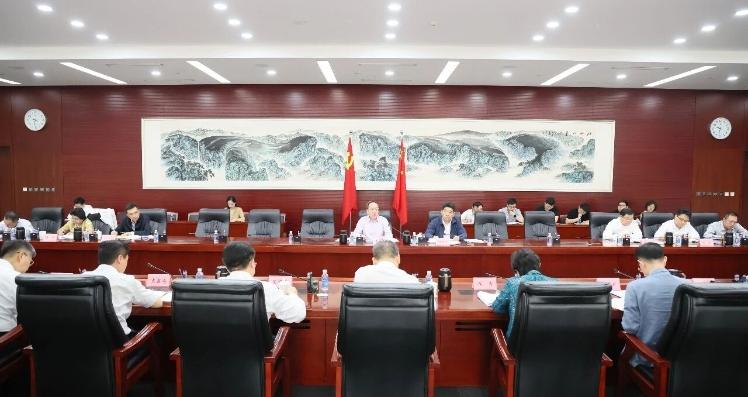
The Factory Floor Becomes National Strategy
On May 19, China’s Industry Minister Li Lecheng (opens in a new tab) chaired a national employment strategy meeting tying job creation directly to “new industrialization,” advanced manufacturing, and technological competitiveness.
The initiative prioritizes:
- “AI + Manufacturing”
- Intelligent EVs
- Aerospace
- High-end equipment manufacturing
- Industrial SME development
- Engineering and vocational training
For Beijing, employment policy is no longer merely social policy. It is increasingly industrial policy, national security policy, and economic stabilization policy merged together.
The Talent War Behind the Technology Race
One of the most important themes was workforce development. The ministry outlined plans for engineering education, industrial retraining, vocational expansion, AI startup incubation, and national technical talent programs tied directly to manufacturing priorities.
Rare Earth Exchanges has repeatedly warned that the West dangerously underestimates the importance of workforce continuity in sectors like rare earths, advanced materials, batteries, semiconductors, and robotics. Mines and factories alone do not create industrial sovereignty. Skilled metallurgists, chemists, machinists, automation specialists, and manufacturing engineers do.
China understands that deeply.
Beneath the Confidence: Structural Contradictions Are Mounting
Yet the announcement also reflects mounting pressure inside China’s economy. Beijing faces worsening demographic decline, youth unemployment concerns, property sector weakness, sluggish domestic consumption, rising debt burdens, and growing evidence of industrial overcapacity across multiple sectors including EVs, solar, batteries, and heavy manufacturing. At the same time, the resurgence of centralized state control and political oversight may improve coordination in the short term while potentially suppressing entrepreneurial dynamism and private-sector innovation over the longer run. China’s challenge increasingly resembles a paradox: maintain industrial dominance while preventing the system itself from becoming too rigid.
Great Powers Era 2.0 Has Arrived
Rare Earth Exchanges increasingly believes the Trump 2.0 era may have likely unintentionally accelerated a historic geopolitical shift already underway in what REEx has coined Great Powers Era 2.0. Rather than reversing globalization cleanly, the emerging phase appears to be fragmenting the world into competing industrial blocs racing to secure supply chains, strategic materials, refining capacity, manufacturing ecosystems, and technological independence.
That changes everything. For China, maintaining dominance in rare earths, batteries, magnets, AI hardware, and industrial manufacturing may become progressively more expensive as nations from the United States to India, Vietnam, Brazil, Australia, and the Gulf states pursue their own vertically integrated industrial strategies.
The age of cheap, frictionless globalization may be ending. The age of strategic redundancy, duplication, industrial competition, and higher structural costs may only be beginning.
Disclaimer: This report originates from Chinese state-linked government and media sources associated with the Ministry of Industry and Information Technology. Statements and strategic claims should be independently verified where possible.


0 Comments
No replies yet
Loading new replies...
Moderator
Join the full discussion at the Rare Earth Exchanges Forum →