
Highlights
- The Asian Development Bank is investing $12.5 billion in Uzbekistan to build critical minerals processing capacity and challenge China's 90% control over midstream refining and manufacturing.
- While the capital commitment and diversification strategy are credible, the initiative faces significant execution challenges in building the complex industrial infrastructure needed for chemical separation and metallurgical processing.
- Central Asia is emerging as a contested corridor in Great Powers competition, with U.S.-Japan-led institutions positioning the region as a strategic alternative to China-dominated supply chains.
A $12.5 billion push into Uzbekistan signals more than development—it signals positioning. The Asian Development Bank (ADB) is funding infrastructure, private sector growth, and a new “Critical Minerals-to-Manufacturing” initiative aimed at loosening China’s grip on supply chains. For a general reader: global powers are investing in Central Asia to secure access to key minerals used in energy, electronics, and defense.
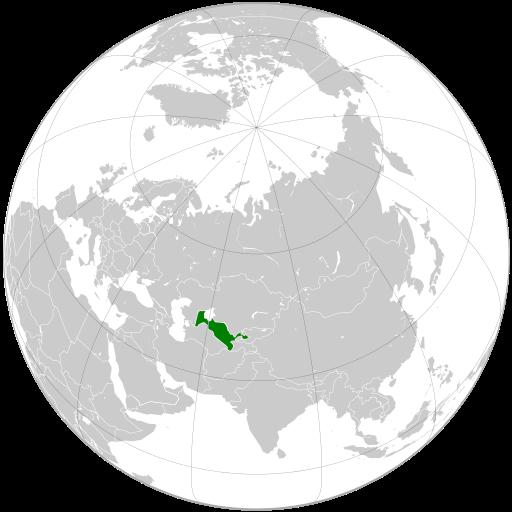
Where the Story Holds Weight
The fundamentals are credible. Central Asia—Uzbekistan included—holds meaningful deposits of critical minerals. Western-aligned institutions are actively seeking diversification away from China. The ADB’s focus on moving beyond mining into processing, manufacturing, and recycling is in the right direction. This reflects a growing understanding that value—and control—sits deeper in the chain.
The Missing Chapter: Industrial Gravity
But here is the gap: capital is not capability.
The article implies that financing and policy coordination can accelerate supply chain independence. It understates the difficulty of building midstream processing capacity—the chemical separation, refining, and metallurgical systems where China maintains ~90% dominance. These are not plug-and-play investments. They require years of engineering, permitting, and customer qualification.
Narrative Momentum vs. Execution Reality
There is a quiet optimism embedded in the framing. Terms like “diversification” and “partnership” suggest momentum. Yet history shows many such initiatives stall at feasibility or pilot scale. Without clear timelines, anchor customers, and technical operators, this risks becoming another well-funded but under-executed strategy.
Why This Matters Now
In Great Powers Era 2.0, Central Asia is emerging as a contested corridor—not just for trade, but for materials power. The ADB move signals alignment among the U.S., Japan, and partners.
Profile
The Asian Development Bank is a multilateral institution shaped not by a single country but by a weighted voting system in which influence reflects capital contributions. In practice, Japan and the United States—each holding roughly 15–16%—anchor the bank’s direction, with Japan traditionally supplying leadership and the U.S. guiding governance and strategic alignment. Emerging powers like China and India, each with about 6–7% stakes, are gaining influence, particularly in regional development priorities, while countries such as Australia, South Korea, Canada, and European states add collective weight often aligned with U.S.–Japan interests. As a result, ADB operates through consensus, but effectively reflects a U.S.–Japan-led framework increasingly shaped by a more multipolar Asia—especially in areas like critical minerals and supply chain strategy.
Bottom Line
The capital is real. The ambition is clear. The bottleneck—processing at scale—remains unresolved.


0 Comments
No replies yet
Loading new replies...
Moderator
Join the full discussion at the Rare Earth Exchanges Forum →