
Highlights
- Serra Verde entered commercial production in 2024 and targets ~6,400 metric tons of REO annually by end of 2027, but still produces mixed carbonate rather than separated oxides
- USA Rare Earth completed its ~$2.8B combination with Serra Verde in September, assembling a multinational chain spanning Brazilian feedstock through U.S. magnet manufacturing
- Brazil's critical-minerals policy promotes domestic processing, but foreign strategic capital is acquiring its resources before separation and magnet capacity is built
- Pereira's review warns investors to look beyond TREO grade toward recoverability, Nd-Pr-Dy-Tb content, impurities, and qualified saleable products across projects like Caldeira, Colossus, Carina, and Araxá
Brazil has the geology to become a rare-earth power, but geology alone does not create industrial power. In a newly accepted 59-page review, chemical engineer Antonio Clareti Pereira, PhD, of the Federal University of Minas Gerais (opens in a new tab) (UFMG) examines (opens in a new tab) Brazil's emerging mine-to-magnet chain and concludes that the country's bottleneck is migrating downstream—from discovering rare earths to selectively recovering them, separating Nd, Pr, Dy and Tb, producing magnet-grade materials, and ultimately manufacturing metals, alloys and magnets. Serra Verde has already demonstrated commercial production, while Caldeira, Colossus, Carina and Araxá represent an advancing but technically uneven pipeline.
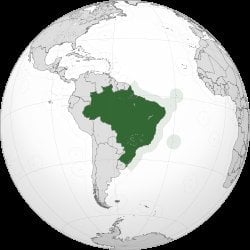
REEx Insight: Brazil Enters the Great Powers Era 2.0
The study captures a central REEx Great Powers Era 2.0™ thesis: strategic competition is increasingly ecosystem versus ecosystem. A country can possess enormous mineral resources and still depend on another power to turn them into strategically useful products. Pereira calls this Brazil's Resource-to-Value Gap. Brazil has resources, mining expertise and increasingly credible projects. But its domestic capacity for individual rare-earth separation, magnet-grade oxides, metals, alloys and large-scale permanent magnets remains far less developed.
Brazil clearly wants to change that. Its newly enacted critical-minerals policy specifically promotes domestic processing and higher-value production, while government-backed MagBras is developing Brazilian technology for permanent rare-earth magnets. There is a geopolitical tension, however: Brazil wants to move up the value chain just as foreign strategic capital is moving into its resources.
Serra Verde Illustrates Both the Opportunity—and the Tension
The clearest example is Serra Verde, Brazil's operating benchmark. Pereira notes that its Pela Ema operation entered commercial production in 2024 and targets approximately 6,400 metric tons of REO annually by the end of 2027, including the critical magnet elements Nd, Pr, Dy and Tb. But Serra Verde currently produces mixed rare-earth carbonate—an intermediate rather than a finished separated oxide or magnet.
Now ownership has changed. USA Rare Earth [NASDAQ: USAR] completed its combination with Serra Verde on September 3, following the approximately US$2.8 billion transaction announced in April. USAR is assembling a multinational chain spanning Brazilian feedstock, separation, metals/alloys and U.S. magnet manufacturing.
Serra Verde also has a 15-year U.S.-backed offtake arrangement covering Phase I production, with price floors of US$110/kg for Nd and Pr, US$575/kg for Dy and US$2,050/kg for Tb.
For Brazil, that is simultaneously validation and a warning: its resources are globally strategic, but where separation, metallization and magnet manufacturing ultimately occur determines where much of the value, know-how and strategic leverage accumulate.
Not All Brazilian Resources Are Equal
Pereira also punctures another industry simplification: enormous tonnage does not automatically mean an attractive project.
Caldeira's scale is impressive, but continuous recovery, impurities, water, reagents and product quality remain critical. Colossus must demonstrate consistent metallurgy and execution. Carina combines meaningful heavy rare earths with an advanced product strategy, but still faces permitting and execution. Araxá contains exceptional REE and niobium inventory but presents more complicated carbonatite metallurgy.
That is why the study argues investors and policymakers should look beyond TREO grade and resource size toward actual recoverability, Nd-Pr-Dy-Tb content, impurities, separation yields and qualified saleable products.
Methods and Limitations
Pereira screened 150 contemporary records, retained 60, and added six foundational sources; 49 of the resulting 66 sources were peer-reviewed. But this is a structured critical review—not a meta-analysis. Its R2V, TRL-REE and BREE-VCR frameworks are author-developed and not independently validated. Company projections were not independently audited, projects use different reporting bases, and fast-moving information was frozen at September 9.
The paper's strongest message survives those limitations: Brazil has largely proved that it possesses rare earths. Its next test is whether it can retain more of the value between the mine and the magnet.
In the Great Powers Era 2.0, that distinction separates a mineral supplier from an industrial power.
Citation: Pereira, A.C. (2026), Brazil's Rare Earth Elements Landscape: From Geological Endowment to Mine-to-Magnet Integration—Operations, Resources, Bottlenecks, Market Prospects, and Research Gaps. DOI 10.66104/7tpw1x21.


0 Comments
No replies yet
Loading new replies...
Moderator
Join the full discussion at the Rare Earth Exchanges Forum →