
Highlights
- Brazil keeps its rare earth sector open to U.S., Chinese, and global investment, refusing Washington's pressure to exclude Beijing while demanding domestic processing rather than mere extraction.
- The Great Powers Era 2.0 thesis: nations now compete for control of entire industrial supply chains—from refining to manufacturing—not just mineral deposits or end products.
- Brazil's Congress approved billions in incentives for domestic rare earth processing, reflecting a strategic shift where middle-supply-chain control may yield more geopolitical leverage than raw material ownership.
What’s the implication of Brazil’s decision to keep its rare earth sector open to both American and Chinese investment despite mounting geopolitical pressure from Washington? This latest episode reveals something much larger than a diplomatic balancing act. It reflects the accelerating arrival of the “Great Powers Era 2.0,” in which nations increasingly compete not only for resources but for ownership of the industrial supply chains that transform those resources into power, wealth, and geopolitical leverage.
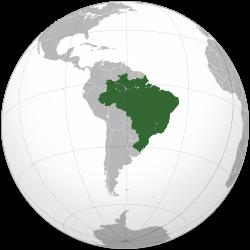
The meeting between Luiz Inácio Lula da Silva and Donald Trump was ostensibly about trade and strategic minerals. In reality, it was about something more fundamental: who would control the industrial architecture of the 21st century. Brazil’s message was unusually direct. Its rare earth reserves are open to investment from the United States, China, Europe, Japan, or anyone else willing to help develop processing and industrial capacity inside Brazil itself. That distinction matters enormously.
The Age of Passive Extraction Is Ending
For decades, much of the developing world exported raw materials while wealthier nations (first European colonizers, then the U.S.-led post-World War 2 order, and, over the last few decades, China) captured the profitable middle and downstream layers of industrial production. Brazil increasingly appears unwilling to repeat that model. Congress recently approved incentives to encourage domestic processing of strategic minerals, including billions in tax credits and guarantees to support industrial buildout.
This aligns precisely with the Rare Earth Exchanges™ “Great Powers Era 2.0” thesis: supply chains themselves are becoming instruments of national and or regional bloc power. Countries now seek not merely mines, but refining, separation chemistry, alloying, magnet manufacturing, engineering expertise, and technological sovereignty. China understood this decades ago.
The West is only beginning to rediscover it.
Reading Between Beijing’s Lines
The source material for much of this narrative (opens in a new tab) comes from over the weekend is the Global Times, a nationalist tabloid owned by the People’s Daily Press, itself the official publishing arm of the Chinese Communist Party. That does not automatically invalidate all of its reporting. But investors should understand the biased lens through which the story is being presented.
The article frames China as a defender of free trade and global supply-chain stability while portraying American “de-risking” efforts as politically disruptive. There is partial truth there. Yet the piece largely omits how China’s dominance was itself built over decades through state-directed industrial policy, export controls, subsidies, environmental laxity, and deliberate consolidation of the rare-earth ecosystem. And increasingly
Meanwhile, Washington’s own contradictions remain glaring. America wants diversified supply chains but often still thinks in terms of mines rather than ecosystems---although to the credit of the current leadership, this is starting to change under the Trump 2.0 administration.
Brazil increasingly appears to see the real game. In the emerging industrial order (if our REEx thesis is accurate), nations that control the middle of the supply chain may wield more influence than nations that merely possess the ore, or, for that matter, merely consume the end product.


0 Comments
No replies yet
Loading new replies...
Moderator
Join the full discussion at the Rare Earth Exchanges Forum →