
Highlights
- Monte Alto's rare earth grade is more than twice MP Materials' Mountain Pass and nearly three times Lynas Rare Earths' published grade
- Natural radiation-altered ore may allow BRE to skip intensive mineral-cracking, using milder acid-curing and leaching instead
- BRE targets concentrate production in 2030 and separated oxides in 2031, with a pilot plant commissioning underway
- The project could yield roughly one million pounds of uranium yellowcake annually, plus scandium, niobium, tantalum and titanium upside not yet in the scoping study
- BRE's strategy separates mining at Monte Alto from downstream separation at the established Camaçari industrial complex
When Bernardo da Veiga, Founder, Managing Director and CEO of Brazilian Rare Earths Limited (opens in a new tab) (ASX: BRE), first joined the Rare Earth Exchanges® podcast (opens in a new tab) in May 2025, BRE was largely an exploration story. Sixteen months later, da Veiga is back—and the conversation has shifted dramatically toward development, downstream processing and Brazil's emergence as a potentially important ex-China rare-earth hub.
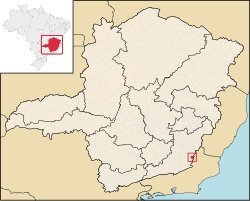
At the center is Monte Alto, BRE's flagship discovery in Bahia. Da Veiga says Monte Alto's grade is more than twice MP Materials' published Mountain Pass grade and nearly three times Lynas Rare Earths' published grade. Higher grade can mean substantially less material must be mined and processed for each unit of rare earth produced—with potentially important implications for capital intensity, operating costs and environmental footprint.
Nature May Have Done Part of the Processing
Monte Alto's unusual geology may be equally consequential. Da Veiga describes mineralization including chevkinite (a rare, complex titanium silicate mineral rich in rare-earth elements, iron, and thorium) and explains that naturally occurring uranium radiation over geological time altered portions of the ore's crystal structure, making the material more amenable to leaching.
According to da Veiga, this allows BRE's proposed flowsheet to avoid the intensive mineral-cracking stage required by many hard-rock rare-earth projects, instead using relatively mild acid-curing and leaching conditions. If demonstrated economically at commercial scale, that processing advantage could become as important as the deposit's headline grade.
Mine in One Place, Separate in Another
BRE's development strategy deliberately separates mining and concentration from chemical processing. Monte Alto would host a relatively compact mine and water-free ore-sorting/concentration operation, while concentrate would travel roughly 200 kilometers to the Camaçari industrial complex, where BRE plans its downstream processing and
separation facility.
Camaçari offers existing infrastructure, chemical supply, skilled labor and industrial services—potentially avoiding the expense and complexity of recreating them at a rural mine site.
Da Veiga says BRE's publicly stated targets remain concentrate production in 2030 and separated oxides in 2031, although permitting could potentially accelerate the schedule. At the time of the interview, BRE's permitted pilot plant was being commissioned, with initial concentrate production expected during September.
The Upside Not Yet in the Scoping Study
One of the podcast's most intriguing discussions concerns coproducts. Da Veiga said BRE expects Monte Alto could produce approximately one million pounds of uranium yellowcake annually, but the scoping study attributes no value to that potential production because Brazil's current framework would require uranium to be sold to the government under a cost-plus arrangement.
Potential scandium, niobium, tantalum and titanium recovery represents additional upside that has not yet been fully incorporated into the project's economics.
The conversation also goes beyond geology. Da Veiga explains how his background in economics, investment banking and nearly two decades running mining companies shapes BRE's approach to capital allocation, sequencing and partnerships. He provocatively argues that mining companies ultimately need to be run as businesses, supported by first-rate geologists, metallurgists and engineers.
Brazil's Rare-Earth Moment
For Rare Earth Exchanges®, BRE's evolution captures a larger shift underway in Brazil: moving beyond possessing world-class geology toward capturing processing, separation and downstream industrial value at home.
That distinction matters geopolitically. A Brazil capable of mining rare earths, processing them domestically and ultimately supporting magnets, EVs, robotics, drones and other advanced industries could become far more strategically important to the emerging ex-China supply chain.
Watch the full Rare Earth Exchanges interview with Bernardo da Veiga (opens in a new tab): Brazilian Rare Earths: From Ultra-High Grade Discovery to Development
About Rare Earth Exchanges
Rare Earth Exchanges advances transparency, accessibility, insight and commerce across the rare-earth and critical-minerals supply chain. Podcast (opens in a new tab) hosts Dustin Olsen and Daniel O'Connor interview the executives, scientists, engineers, and investors building the emerging ex-China supply chain.


0 Comments
No replies yet
Loading new replies...
Moderator
Join the full discussion at the Rare Earth Exchanges Forum →