
Highlights
- Brazil is expanding rare-earth exploration across São Paulo, Paraná, and Santa Catarina, backed by state financing from BNDES, positioning itself as a Western-aligned alternative to China's dominance in critical minerals.
- While Brazil possesses large rare-earth reserves, the real challenge lies in developing downstream capabilities such as solvent extraction, metallurgy, and magnet manufacturing—areas where China maintains industrial dominance.
- Brazil's strategic success depends on moving beyond raw material exports to building true midstream and downstream industrialization capabilities, making it a genuine competitor in the Great Powers Era 2.0.
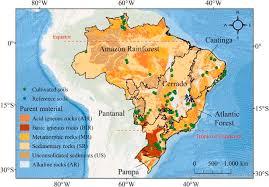
Brazil most certainly desires a seat at the Great Powers Era 2.0 table for rare earth elements and critical minerals. South America’s biggest and most populous nation is expanding exploration for rare earth elements (REEs) across states, including São Paulo, Paraná, and Santa Catarina, as governments and investors worldwide search for alternatives to China’s overwhelming dominance in critical minerals.
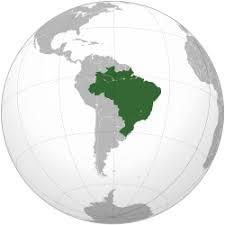
Certainly, Brazil possesses some of the world’s largest known rare earth reserves and is increasingly viewed as a comparatively stable, Western-aligned jurisdiction for long-term mining and industrial investment. Although Rare Earth Exchanges continues to chronicle, the Chinese are continuously working with the South American nation. Early Geological Survey of Brazil (SGB) (opens in a new tab) sampling reportedly identified unusually elevated total rare earth element (TREE) concentrations in several regions, while Brasília continues backing the sector through Brazilian Development Bank (opens in a new tab) (BNDES) financing and new recycling and innovation initiatives.
In a nutshell, Brazil no longer wants to merely export raw materials. It wants to become a meaningful player in the global rare earth supply chain. And for that, they can join the club of many nations, which suggests an ongoing Rare Earth Exchanges™ assessment.
The Seductive Mirage of “Reserves”
Here is where investors must slow down. Rare earth headlines frequently confuse geology with industrial capability. Discovering ore is not the same thing as building a functioning rare earth industry. The true bottlenecks sit downstream: solvent extraction separation, metallization, alloying, magnet manufacturing, environmental management, and customer qualification at an industrial scale.
Rare Earth Exchanges has repeatedly emphasized that China’s dominance was never simply about mining. Beijing controls much of the industrial ecosystem surrounding rare-earth processing, particularly heavy rare-earth separation and NdFeB magnet production. Much of the media and trade press gestures toward downstream ambitions but understate the extraordinary technical complexity, environmental burden, and capital intensity required to build these capabilities outside China.
Brazil’s Real Strategic Opening
Still, Brazil matters. Unlike many Western nations, Brazil possesses geological scale, relatively favorable mining conditions, growing state support, and increasing geopolitical relevance. Ongoing BNDES initiatives suggest that Brasília (the national capital) is increasingly recognizing that industrial policy—not free-market optimism alone—will shape the next phase of critical minerals competition.
But investors should focus on one question above all else: Can Brazil move beyond concentrated production into true midstream and downstream industrialization? That—not another flashy reserve estimate—will determine whether Brazil becomes a genuine strategic challenger in the emerging Great Powers Era 2.0.


0 Comments
No replies yet
Loading new replies...
Moderator
Join the full discussion at the Rare Earth Exchanges Forum →