
Highlights
- The 10th BRICS Industry Ministers' Meeting produced a joint declaration, a photovoltaic working group action plan, and SME cooperation frameworks.
- China's MIIT promoted industrial resilience and supply-chain cooperation, signaling a strategic shift from efficiency-first globalization to security and redundancy.
- China holds a dominant position in global solar manufacturing, making the new photovoltaic working group a potential lever over standards and upstream material sourcing.
- No new mines, critical-minerals agreements, investment funds, or binding production targets were announced—progress is structural and incremental.
- Great Powers Era 2.0 competition now spans the full chain from mining through magnets and batteries to logistics and end markets, not just mineral ownership.
The 10th BRICS Industry Ministers' Meeting (opens in a new tab), held August 6 in Jaipur, India, produced three concrete institutional outcomes: adoption of a joint declaration, approval of responsibilities and an action plan for a photovoltaic-industry working group, and cooperation frameworks for SMEs and startups. Representatives also discussed photovoltaic transformation, startup development, and logistics systems, while China's Ministry of Industry and Information Technology (MIIT) promoted deeper cooperation around industrial resilience, innovation, and supply chains.
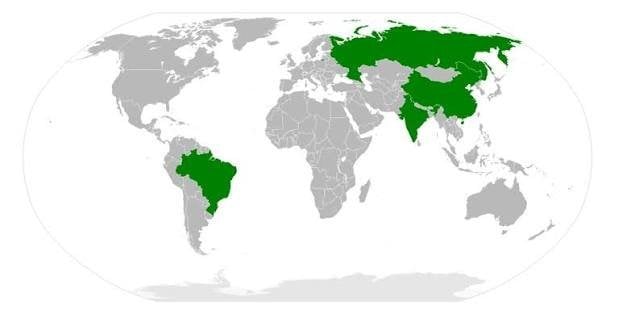
For investors, no new mine, critical-minerals agreement, investment fund, or manufacturing target was announced. The significance is structural. In what Rare Earth Exchanges® calls Great Powers Era 2.0™, strategic competition increasingly revolves around the industrial systems connecting critical minerals and rare earths to energy, technology, logistics, and advanced manufacturing.
REEx Insight | Great Powers Era 2.0 Moves Into the Supply Chain
The most revealing word in China's message was resilience. The previous globalization era prioritized efficiency, lowest cost, and just-in-time production. Great Powers Era 2.0 increasingly prioritizes security, redundancy, resource access, and control over strategic industrial capacity. Washington and Brussels are using friend-shoring, subsidies, and critical-mineral partnerships to reduce strategic dependence on China. Beijing, meanwhile, is strengthening relationships through BRICS that could deepen connectivity across manufacturing, energy, AI, and supply chains.
India's 2026 BRICS chairship emphasizes "Resilience, Innovation, Cooperation and Sustainability." BRICS energy ministers have separately identified critical minerals, energy storage, hydrogen, and resilient supply chains as cooperation priorities. India BRICS Energy Ministers communiqué (opens in a new tab)
For REEx investors, the connection is direct. Great-power competition is no longer merely about who owns mineral deposits. It extends through mining → separation → refining → metals → magnets and batteries → manufacturing → logistics → end markets.
From Working Groups to Industrial Architecture
MIIT Chief Engineer Wang Weiming highlighted existing platforms including the China-BRICS Artificial Intelligence Development and Cooperation Center and BRICS industrial-capability initiatives. China said it wants SMEs to participate more deeply in global markets while BRICS members develop a "safe, stable, efficient, open, inclusive and mutually beneficial" industrial and supply-chain system.
The photovoltaic working group deserves particular attention. China already occupies a dominant position across much of the global solar manufacturing chain. Deeper BRICS coordination could eventually influence technology standards, manufacturing localization, investment flows, and upstream material sourcing. But investors should not outrun the evidence. The MIIT account provides no financing amounts, production targets, binding commercial agreements, or implementation deadlines.
This is evolutionary rather than revolutionary. Yet that is precisely why it matters: Great Powers Era 2.0 is being constructed institution by institution and supply chain by supply chain. BRICS is adding more of the plumbing through which a potentially competing industrial architecture could eventually flow.
REEx Connect
- China Ministry of Industry and Information Technology (MIIT) (opens in a new tab) — Chinese industrial-policy authority; Wang Weiming, Chief Engineer.
- BRICS India 2026 (opens in a new tab) — India's 2026 BRICS chairship.
- India BRICS Energy Ministers communiqué (opens in a new tab) — critical-minerals, energy, and resilient-supply-chain context.
- United Nations Industrial Development Organization (UNIDO) — participated in the Jaipur ministerial discussions.
Source disclosure: This news originates from China's Ministry of Industry and Information Technology, a government ministry of the People's Republic of China, and was distributed through an official state communications channel. Claims concerning Chinese or BRICS achievements should be independently verified where material to an investment decision.


0 Comments
No replies yet
Loading new replies...
Moderator
Join the full discussion at the Rare Earth Exchanges Forum →