
Highlights
- Canada is executing a full-scale industrial pivot away from Trump-era U.S. tariff volatility, expanding oil and LNG exports to Asia via Trans Mountain and LNG Canada while drawing European financing into critical minerals processing and recycling.
- A controversial 2026 Canada–China trade deal allows ~49,000 Chinese EVs annually at reduced tariffs, triggering political backlash in Ontario as Stellantis explores CKD assembly at its Brampton plant—raising concerns about bypassing domestic suppliers and minimal job creation.
- The real strategic prize is midstream infrastructure: processing, refining, and recycling critical minerals and rare earths, with Canada mobilizing $18.5B and positioning itself as a “swing supplier” between competing global powers.
Canada’s 2025–2026 resource diplomacy is evolving into full-scale industrial policy: diversify away from Donald Trump-era U.S. tariff volatility, expand energy exports into Asia, and draw Europe into financing critical minerals. A Canada–China trade reset—centered on a limited EV tariff concession—has already sparked political backlash in Ontario, underscoring how trade, jobs, and national security are now tightly intertwined. We are arriving in the Great Powers Era2.0.
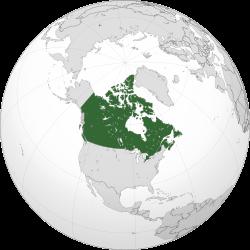
China: Tidewater Turns East—and EVs Light a Fuse
Energy is the clearest signal. The Trans Mountain Corporation expansion increased capacity to ~890,000 barrels per day, enabling a structural shift in exports. China has emerged as a leading marginal buyer, taking roughly ~200,000 bpd of TMX crude post-expansion (fluctuating by month, not fixed).
Canada has also entered global LNG markets via LNG Canada, a roughly C$40 billion project led by Shell with partners including PetroChina. The facility’s initial capacity is ~14 million tonnes per annum, positioning Canada as a long-term Pacific supplier.
Then came the EV flashpoint. In early 2026, Canada agreed to allow up to ~49,000 Chinese EV imports annually at a reduced ~6.1% tariff (from prior punitive levels), tied to agricultural trade concessions (notably canola).
Soon after, Stellantis explored assembling vehicles from Zhejiang Leapmotor Technology at its idled Brampton plant using CKD kits. The backlash was immediate: Unifor and provincial leadership warned this would bypass domestic suppliers and deliver minimal job creation—turning trade liberalization into a political liability.
Europe: Financing the Midstream Prize
At the Prospectors & Developers Association of Canada 2026, Canada and the European Investment Bank signed a non-binding LOI to explore financing across mining, processing, and recycling. Canada’s Critical Minerals Production Alliance reports mobilizing ~$18.5B since late 2025. Meanwhile, Canada–Germany cooperation is advancing rare earth supply chains, including efforts tied to Vacuumschmelze and Torngat Metals.
U.S. Tensions: Tariffs as Catalyst, Not Constraint
Tariff volatility under the Trump administration has accelerated Canada’s diversification. While the U.S. still dominates Canadian trade, its share has slipped (mid-60% range), reflecting a deliberate pivot toward Asia and Europe. Canada exported ~$29.8B in critical minerals to the U.S. in 2023, but is increasingly positioning itself as a “swing supplier” in global markets.
Deal Snapshot
Deal Snapshot
| Partner | Focus | Investment Size | Processing/Offtake | Strategic Risk |
|---|---|---|---|---|
| China | Oil, LNG, EVs | TMX C$34B; LNG Canada ~C$40B; Leapmotor stake $1.6B | ~207 kbpd crude; 14 mtpa LNG; 49k EVs/yr at 6.1% | High: security reviews, retaliation, job backlash |
| Europe | Critical minerals/REEs | EIB LOI (no $); CMPA $18.5B | EIB financing pathway; REO supply MoUs; recycling | Medium: permitting, policy alignment |
Three Takeaways
- Trade policy is reshaping Canada’s customer base—and its leverage.
- The real prize is midstream: processing, refining, and recycling—especially for rare earths.
- Chinese EV entry into Canada may reshape North American supply chains as much as mining itself.


0 Comments
No replies yet
Loading new replies...
Moderator
Join the full discussion at the Rare Earth Exchanges Forum →