
Highlights
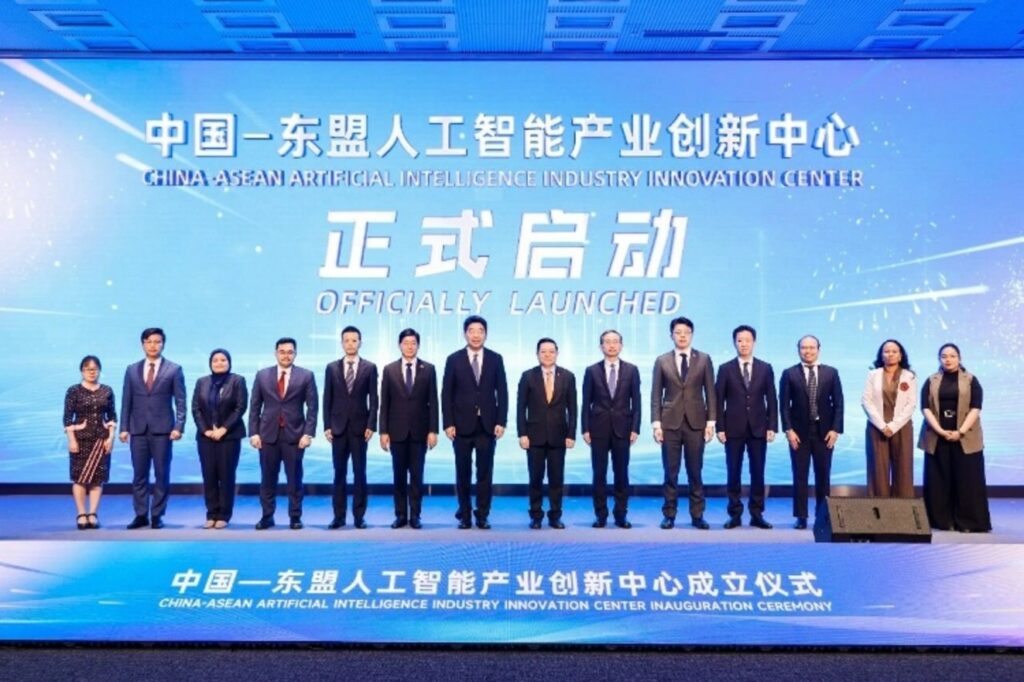
- China and ASEAN formally launched the China-ASEAN Artificial Intelligence Industry Innovation Center in Beijing to advance AI research, governance, and digital infrastructure across Southeast Asia.
- The initiative advances Beijing's Digital Silk Road strategy and the China-ASEAN Digital Cooperation Plan through 2030, embedding China deeper into the region's industrial architecture.
- AI expansion drives growing demand for rare earth magnets, gallium, germanium, graphite, and other critical minerals that underpin data centers, robotics, and advanced manufacturing.
- Analysts view the center as part of a broader strategy linking industrial policy, technological leadership, supply-chain security, and geopolitical influence in the Great Powers Era.
- Whoever builds the ecosystem around AI—including standards, governance, and supply chains—may gain more strategic advantage than those focused solely on AI model development.
When great powers talk about artificial intelligence, investors should listen carefully—but not always for the reasons being advertised. China and ASEAN have formally launched the China-ASEAN Artificial Intelligence Industry Innovation Center in Beijing, a new initiative designed to deepen cooperation in AI research, industrial applications, governance standards, investment, and digital infrastructure across Southeast Asia. According to China's Ministry of Industry and Information Technology (MIIT), the center will serve as a platform for advancing the "Digital Silk Road" and implementing the China-ASEAN Digital Cooperation Plan through 2030.
On the surface, this looks like an AI story. In reality, it may be a story about industrial influence.
Artificial intelligence is rapidly joining semiconductors, telecommunications, batteries, and rare earth magnets as a strategic technology sector. Nations that help define standards, governance frameworks, infrastructure, investment flows, and technical ecosystems often gain influence far beyond the technology itself.
That is what makes this announcement noteworthy. The new center will focus not only on AI research and development but also on industry cooperation, trade promotion, governance mechanisms, standards development, workforce training, and regional infrastructure. In effect, Beijing is attempting to embed itself deeper into the digital and industrial architecture of one of the world's fastest-growing economic regions.
For critical minerals investors, the implications should not be overlooked. AI data centers, robotics, advanced manufacturing systems, power infrastructure, autonomous technologies, and next-generation electronics all depend on secure supplies of rare earth magnets, copper, gallium, germanium, graphite, and other strategic materials. As AI expands, so does demand for the physical supply chains that support it.
Viewed through the lens of Rare Earth Exchanges'® Great Powers Era 2.0 framework, this announcement appears less like a standalone technology initiative and more like another step in a broader strategy linking industrial policy, technological leadership, supply-chain security, and geopolitical influence. The race for the future may not be won by whoever builds the smartest AI model. It may be won by whoever builds the ecosystem around it.
Disclosure: This article is based primarily on an announcement from China's Ministry of Industry and Information Technology (MIIT). The statements reflect official Chinese government positions and objectives. Rare Earth Exchanges has not independently verified the future effectiveness, participation levels, or outcomes of the initiative.
Register today: REEx Marketplace™ (opens in a new tab)
Discover companies, projects, pricing intelligence, and opportunities across the global rare earth value chain at the REEx Marketplace: https://marketplace.rareearthexchanges.com/signup (opens in a new tab)


0 Comments
No replies yet
Loading new replies...
Moderator
Join the full discussion at the Rare Earth Exchanges Forum →