
Highlights
- China's Commerce Ministry strongly opposed the UK's decision to exclude Mingyang Smart Energy turbines from British offshore wind projects on national security grounds, warning it undermines free market principles.
- The dispute reveals how renewable energy supply chains are becoming battlegrounds for national security and strategic independence, with control over advanced manufacturing and critical materials at stake.
- Beijing invoked PM Starmer's recent trade cooperation signals to pressure London, demonstrating the vanishing line between trade policy and security policy in the clean energy race.
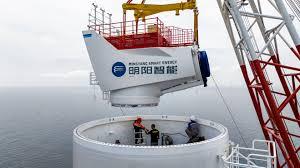
China’s Commerce Ministry said on April 14 that it firmly opposes what it described as the U.K.’s decision to exclude Chinese products from British wind power projects on national security grounds. The immediate trigger was a statement by the U.K.’s energy secretary (opens in a new tab), posted on Parliament’s website, saying the British government does not support the use of Mingyang Smart Energy (opens in a new tab) turbines in an offshore wind project in the U.K.
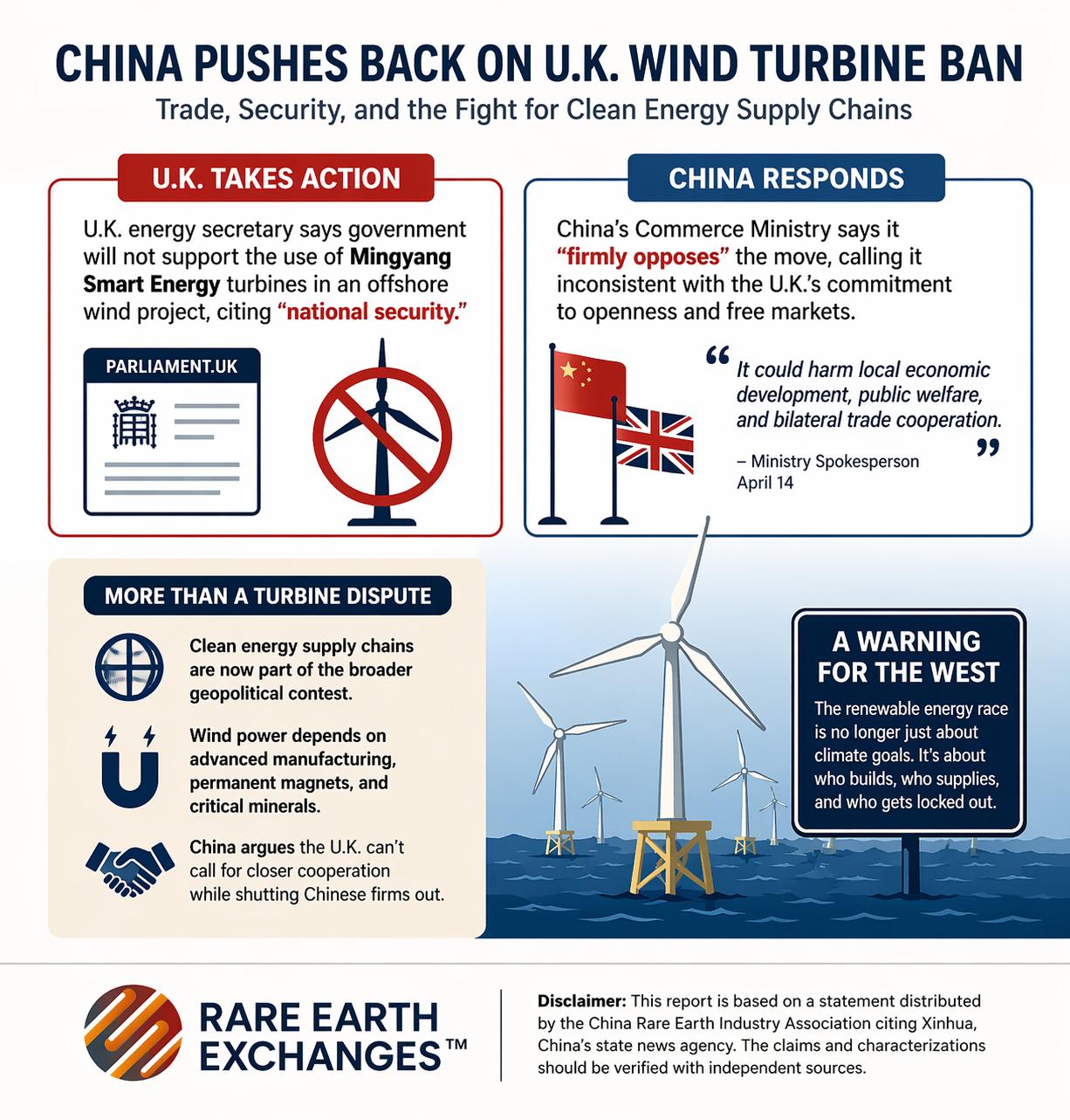
Beijing’s response was sharp. A ministry spokesperson said the British position runs against the U.K.’s long-stated commitment to “openness” and “free markets,” and warned that the move could hurt local economic development, public welfare, and practical bilateral trade cooperation.
More Than a Turbine Dispute
On its face, this is an energy-policy spat. Underneath, it is something bigger: a fresh sign that clean energy supply chains are being pulled into the wider contest over national security, industrial policy, and strategic dependence.
For Western readers, that matters. Wind power is not just about electricity generation; it is also about control over advanced manufacturing, grid equipment, permanent magnets, and critical minerals. China’s complaint suggests Beijing sees exclusion from offshore wind projects not merely as a lost sale, but as part of a broader Western effort to reduce reliance on Chinese industrial inputs.
A Warning for the West
The ministry also pointedly referenced Prime Minister Keir Starmer’s January visit to China, when he reportedly signaled interest in stronger trade, investment, finance, and environmental cooperation. Beijing is now using that earlier diplomatic language to pressure London, essentially arguing that the U.K. cannot publicly welcome cooperation while shutting Chinese firms out of strategic projects.
There is no breakthrough here—only escalation. But the business significance is clear: the line between trade policy and security policy is disappearing. For the U.S. and Europe, this is another reminder that the renewable energy race is no longer just about climate targets. It is increasingly about who builds, who supplies, and who gets locked out.
Disclaimer: This report is based on a statement distributed by the China Rare Earth Industry Association citing Xinhua, China’s state news agency. The claims and characterizations should be verified with independent sources.


0 Comments
No replies yet
Loading new replies...
Moderator
Join the full discussion at the Rare Earth Exchanges Forum →