
Highlights
- Four Baotou incubators gained national “standard-level” status under China’s new two-tier system, generating $950M+ revenue from 500+ companies and signaling systematic scaling of rare earth innovation.
- China is engineering full-stack rare earth dominance by linking upstream resource control with downstream industrial development through standardized innovation pipelines.
- Baotou’s evolution from mining hub to integrated rare earth innovation ecosystem demonstrates China’s shift toward controlling commercialization and tech development, not just extraction.
China is quietly strengthening its rare earth–anchored innovation ecosystem. According to China’s Ministry of Industry and Information Technology (MIIT), four incubators in Baotou—long considered the country’s rare earth capital—have been included in the first batch of “standard-level”national technology incubators.
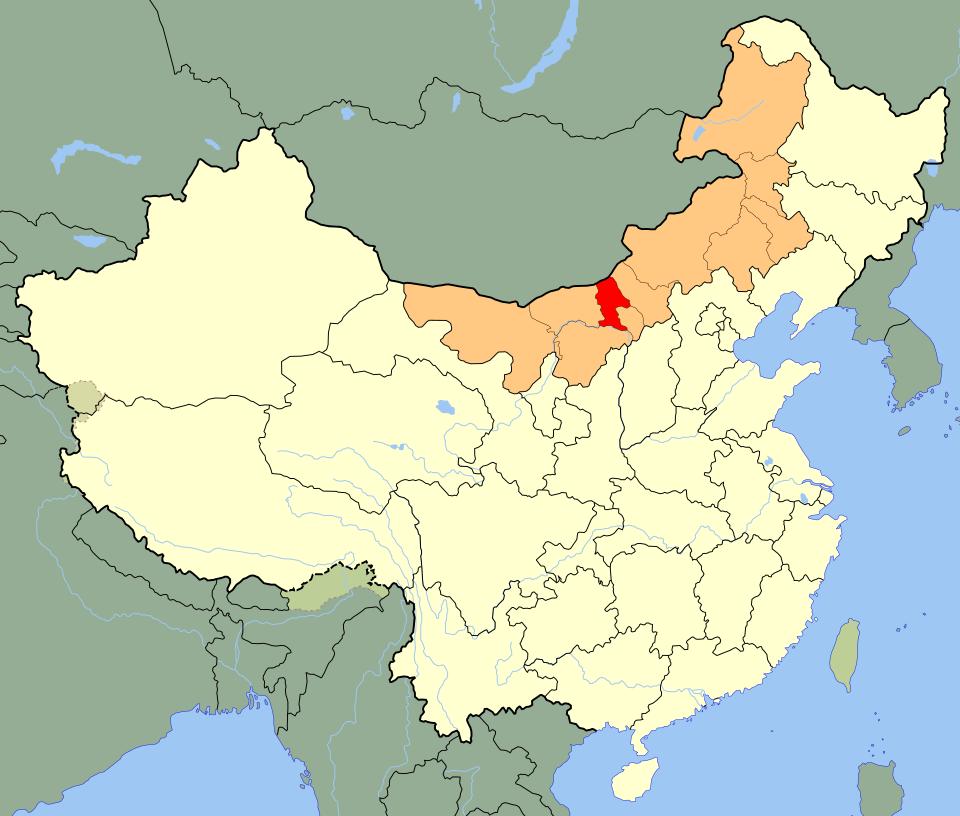
The entities include:
- Baotou Rare Earth High-Tech Zone Technology Entrepreneurship Service Center
- Inner Mongolia Overseas Returnees Entrepreneurship Park
- Baotou Big Data Innovation and Entrepreneurship Park
- Inner Mongolia Tongde Technology Business Incubator
Baotou ranked first in Inner Mongolia by the number of incubators selected.
A New National Playbook for Innovation
This designation follows the rollout of a new two-tier incubator system in 2025, dividing platforms into “standard-level” and “excellence-level.” The standard tier largely aligns with prior national incubator benchmarks, while the forthcoming excellence tier is designed to identify globally competitive platforms focused on emerging and future industries.
For Western observers, the signal is clear: China is systematizing its innovation pipeline—not just subsidizing it, but standardizing and scaling it nationwide.
Real Output, Not Just Policy Signals
These incubators are producing measurable results:
- ¥30+ million (~$4M USD) in combined operating revenue (2025)
- 500+ companies incubated
- ¥6.9+ billion (~$950M USD) in aggregate revenue from incubated firms
This suggests a shift from early-stage incubation to commercial-scale enterprise development, with tangible economic output.
Rare Earths Meet Advanced Industry
Baotou’s incubator ecosystem is feeding into sectors tied to rare earth materials, advanced electronics, robotics, biotech, and medical technology. One example cited: Inst Rare Magnetic Materials, a rare earth magnet company that has successfully listed on Shenzhen’s ChiNext board.
The broader takeaway is strategic: China is linking upstream resource dominance with downstream industrial and technological development—a full-stack approach.
Why This Matters for the U.S.
This development is not about four incubators—it’s about architecture:
- Pipeline Control: Structured pathways from research → startup → scale → capital markets
- Cluster Integration: Baotou is evolving into a rare earth–linked industrial ecosystem, not just a mining hub
- Commercial Velocity: State-backed incubators are accelerating time-to-market and industrial adoption
For the United States, the implication is sobering: competition is shifting beyond extraction and processing to who controls innovation built on those materials.
Bottom Line
China is not just investing in rare earths—it continues to engineer vertically integrated innovation systems around them. Baotou’s evolution into both a materials and startup hub signals that the next phase of global competition will be decided at the intersection of resources, technology, and commercialization scale.
Disclaimer: This report is based on information published by Chinese government-affiliated sources. The content should be independently verified and interpreted with appropriate caution.


0 Comments