
Highlights
- China Minmetals General Manager met Guizhou Vice Governor to discuss mineral resource development, industrial-chain coordination, and technology innovation with no specific project announced.
- Guizhou holds over 40% of China's known phosphate reserves and significant deposits of gallium, manganese, antimony, and other critical metals vital to advanced supply chains.
- The meeting explicitly referenced China's upcoming 15th Five-Year Plan, signaling a push to convert mineral resource advantages into integrated industrial capacity.
- China's state-directed model coordinates local governments, state-owned enterprises, and research institutions to institutionalize resource security at a national scale.
- While the West debates critical mineral policy, China is operationalizing strategic mineral security through coordinated execution across extraction, processing, logistics, and manufacturing.
A June 9 meeting between China Minmetals and Guizhou Province may look like routine official business. It is not.
China Minmetals General Manager Zhu Kebing met with Guizhou Vice Governor Luo Qiang for working talks focused on mineral resource development, industrial-chain coordination, technology innovation, talent exchange, and local-enterprise cooperation.
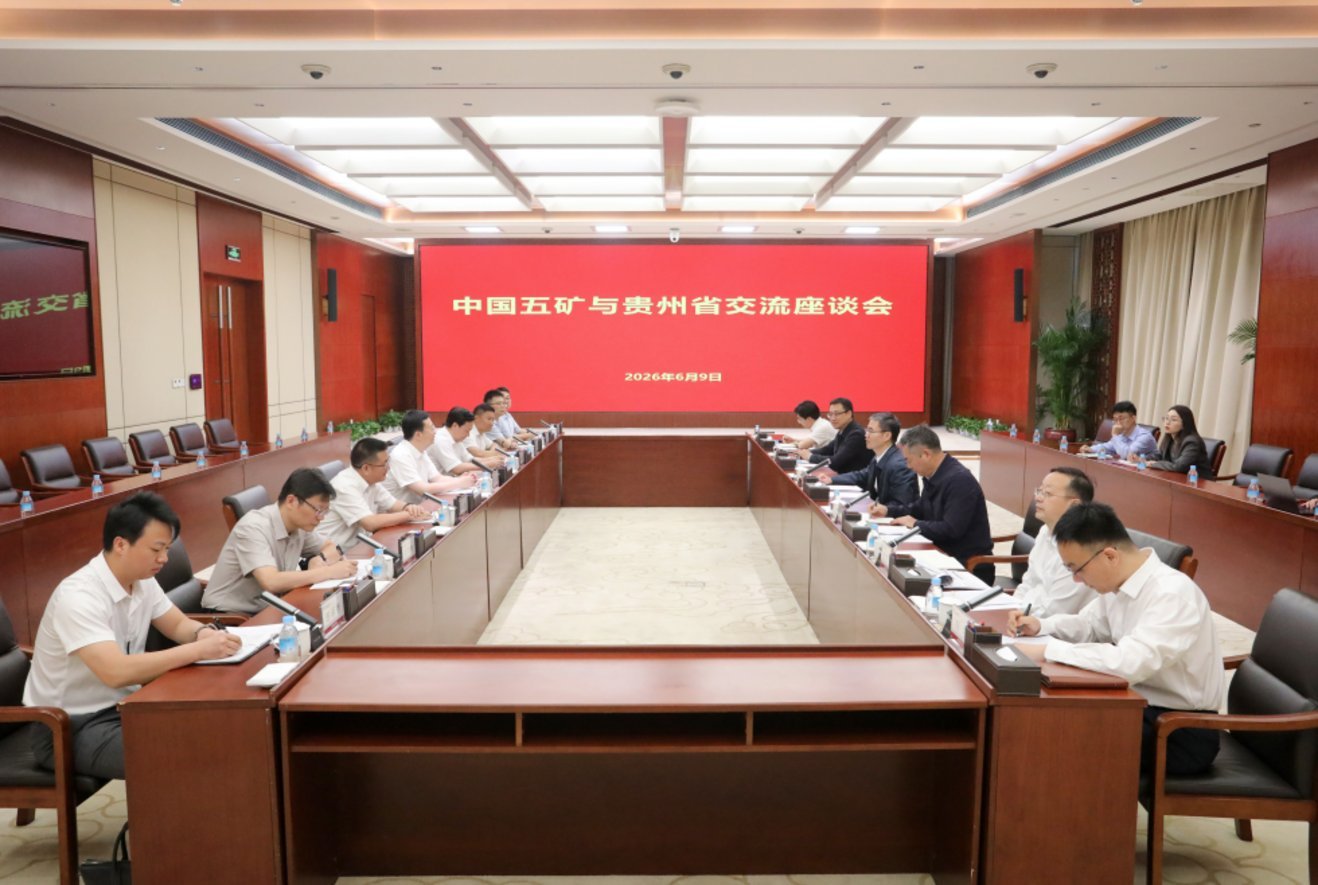
No project, investment figure, or new mine approval was announced. Yet the language used by both sides points to a larger strategic direction: China is tightening coordination between state-owned enterprises and provincial governments as it prepares for the next phase of resource competition.
The Province
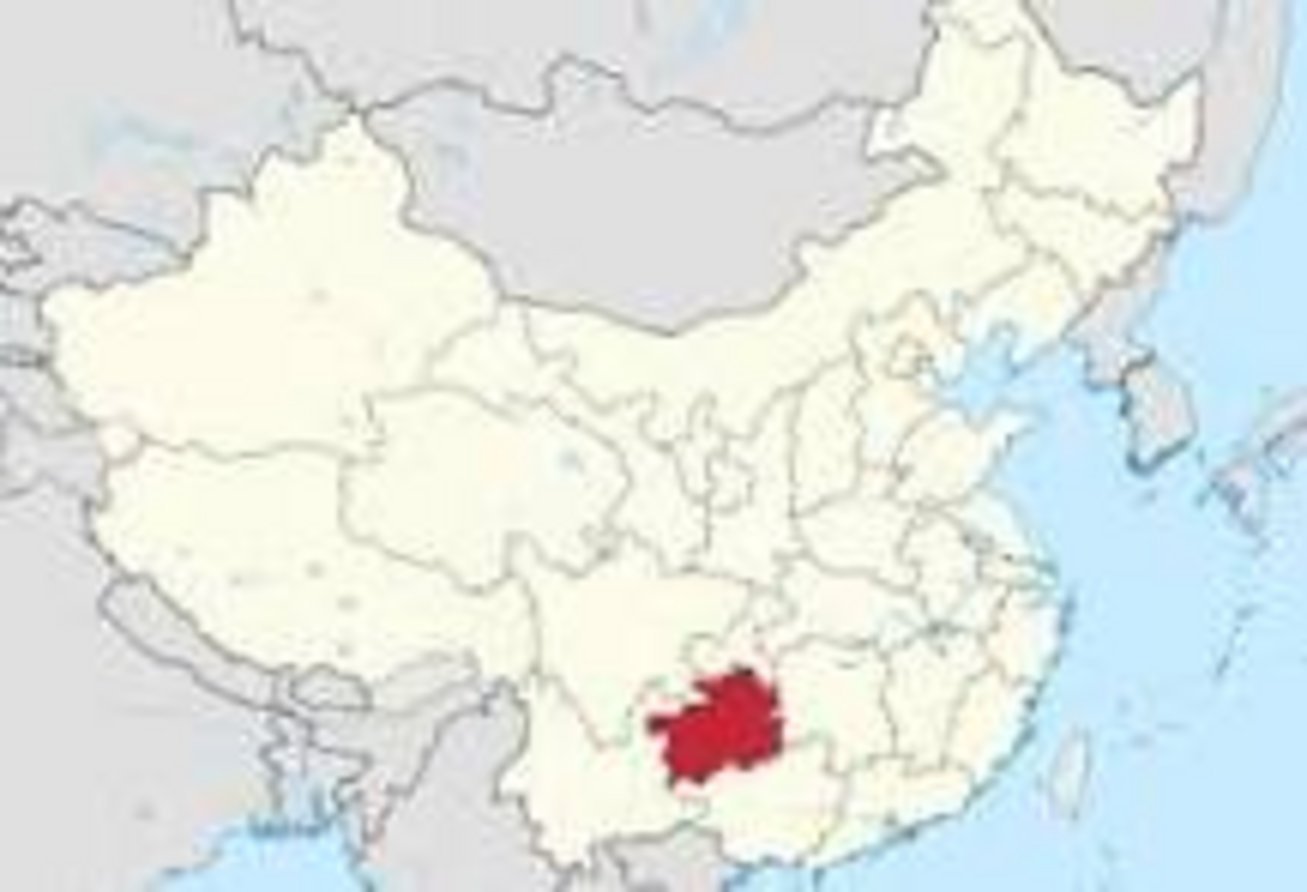
Located in southwest China and bordered by Sichuan, Yunnan, Guangxi, Hunan, and Chongqing, Guizhou Province has emerged as one of the country's most strategically important resource regions. Long known as China's "Hometown of Phosphate," the province contains identified reserves of more than 110 minerals and serves as a critical hub for energy, chemicals, advanced materials, and increasingly, battery supply chains. Guizhou holds more than 40% of China's known phosphate reserves—over 2.6 billion tons—making it central to fertilizer production as well as the rapidly growing lithium iron phosphate (LFP) battery sector. The province also possesses significant coal resources, substantial barite reserves (ranking first nationally), and large deposits of fluorite, limestone, gypsum, and oil shale.
Beyond industrial minerals, Guizhou is rich in strategic and critical metals. It ranks among China's leading regions for bauxite, the primary source of aluminum, and hosts associated gallium resources that are increasingly important for semiconductors and advanced electronics. The province also contains significant manganese, lead-zinc, antimony, gold, and mercury deposits, with some polymetallic deposits containing critical byproducts such as germanium and indium. In recent years, Guizhou has sought to move beyond raw resource extraction by emphasizing downstream processing, advanced materials manufacturing, battery components, and green mining practices. As China prepares its next phase of industrial development, Guizhou's combination of abundant mineral resources and growing processing capacity positions it as an increasingly important contributor to the nation's strategic mineral security and industrial supply chains.
The 15th Five-Year Plan Enters the Conversation
The most important signal was Guizhou’s explicit reference to China’s upcoming 15th Five-Year Plan.
Luo said the province wants to align with the national development blueprint, use key technology breakthroughs and practical projects as anchors, and convert mineral resource advantages into industrial development strengths. That phrase matters. It suggests Beijing’s resource strategy is moving beyond exploration alone. The goal is to build integrated industrial capacity around minerals: extraction, processing, technology, logistics, financing, engineering, and downstream manufacturing.
Why China Minmetals Matters
China Minmetals is not a conventional mining company. It is a central state-owned enterprise with reach across metals and minerals, metallurgical construction, technology, trade and logistics, finance, and real estate development. That breadth is the point. In China’s model, resource security is not treated as a single-company issue. It is coordinated across government, provincial authorities, state-owned enterprises, research institutions, and industrial customers.
The meeting with Guizhou reinforces that model.
The REEx View
For Western investors, the story is not that a new mine was announced. It was not. The story is that China continues to institutionalize resource security. Meetings like this reveal the machinery behind the strategy: local governments supply resource access, policy support, and permitting coordination; state-owned enterprises bring capital, engineering, logistics, processing capability, and national mandates.
As the West debates critical mineral policy, part of an initial thrust to reindustrialize, China is operationalizing it. In Great Powers Era 2.0, strategic mineral security is no longer just about geology. It is about coordination, execution, and the ability to turn resources into industrial power.
Key Takeaways
- China Minmetals and Guizhou Province discussed deeper cooperation on mineral development and industrial-chain coordination.
- No specific project, investment, or mine approval was announced.
- The meeting explicitly referenced alignment with China’s upcoming 15th Five-Year Plan.
- Strategic mineral security was a central theme.
- The announcement highlights China’s state-directed model for converting resource advantages into industrial capacity.
Disclaimer: This report is based on information released by China Minmetals, a Chinese state-owned enterprise. The announcement reflects official corporate and government messaging and should be independently verified where possible.
Register for REEx Marketplace™: https://marketplace.rareearthexchanges.com (opens in a new tab)


0 Comments
No replies yet
Loading new replies...
Moderator
Join the full discussion at the Rare Earth Exchanges Forum →