
Highlights
- China's Ministry of Commerce is using 2026 auto trade-in subsidies and urban EV stimulus as a macro-stabilizer to absorb industrial overcapacity while reinforcing domestic demand under its dual circulation strategy.
- Every incremental EV sold increases demand for rare earth permanent magnets, tightening global supply chains and potentially limiting magnet availability for non-Chinese automakers if export controls intensify.
- Multi-agency coordination signals structural reinforcement, not temporary stimulus, using electrified mobility as both an economic shock absorber and strategic demand engine for China's vertically integrated industrial base.
China’s Ministry of Commerce (opens in a new tab) (MOFCOM) is not merely “supporting auto sales.” It is activating a familiar but potent lever within the 14th and evolving 15th Five-Year Plan architecture: use greenification and digitization to prime domestic demand—especially in urban corridors—while absorbing industrial overcapacity and reinforcing global export dominance.
At a February 6 symposium with automakers and regulators, Vice Minister Sheng Qiuping (opens in a new tab) framed autos as a “strategic pillar industry.” That phrase matters. In Beijing policy language, autos are not cyclical consumer goods—they are macro-stabilizers, employment anchors, and industrial policy vehicles rolled into one.
The Urban Demand Flywheel
The announced 2026 push—expanded trade-in subsidies, distribution reform pilots, and coordinated regulatory support—fits squarely within China’s “dual circulation” strategy. When exports soften or overproduction pressures rise, Beijing stimulates urban demand for upgraded, electrified, digitally integrated vehicles.
Mr. Sheng Qiuping
Member of the CPC Leadership Group of the Ministry of Commerce and Vice Minister
Trade-in programs are particularly strategic. They accelerate fleet electrification in Tier 1 and Tier 2 cities while clearing inventory across domestic OEMs. That supports:
- EV manufacturers
- Battery and power electronics suppliers
- Smart vehicle and AI-enabled systems
- Rare earth magnet demand (especially NdPr-based permanent magnets for traction motors)
Rare Earth Exchanges™ has previously documented how Beijing uses targeted consumption stimulus as a release valve for industrial capacity. Green mobility in dense urban corridors is a primary mechanism.
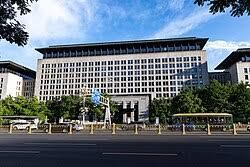
Ministry of Commerce

Rare Earth Implications: Hidden but Significant
Every incremental EV sold increases demand for high-performance permanent magnets—key inputs tied to China’s vertically integrated rare earth ecosystem. A robust 2026 domestic auto stimulus reinforces:
- Magnet demand growth.
- Rare earth oxide consumption stability.
- Downstream motor and powertrain scaling.
This is among one way that China attempts to mitigate overproduction risk upstream while consolidating downstream manufacturing dominance.
For the West and U.S., the strategic takeaway is clear: even absent export announcements, domestic stimulus in China can tighten global supply chains indirectly. If Chinese EV uptake accelerates materially, magnet supply availability for non-Chinese OEMs could face renewed pressure—particularly if export controls or licensing tighten again.
Not Just Stimulus—Structural Reinforcement
The multi-agency presence—Commerce, MIIT, Transport, financial regulators—signals system-level reinforcement, not temporary stimulus. This aligns with Five-Year Plan objectives emphasizing advanced manufacturing, electrification, smart mobility ecosystems, and industrial upgrading.
No breakthrough technology was announced. The breakthrough is coordination.
Beijing is using urban electrification and digitized mobility as macroeconomic shock absorbers—and as strategic demand engines for its own industrial base.
Disclaimer: This report is based on information released through media associated with Chinese state-owned entities and the Ministry of Commerce. Policy details and projected outcomes should be independently verified through additional sources.


0 Comments
No replies yet
Loading new replies...
Moderator
Join the full discussion at the Rare Earth Exchanges Forum →