
- China's Maoniuping rare earth mine in Sichuan has verified 9.66 million tons of new REO resources, making it the world's second-largest active rare earth deposit with 10.4 million tons total, behind only Bayan Obo.
- Advanced deep drilling technology (~1,000 meters) and updated exploration models enabled this breakthrough discovery, demonstrating China's improved geological intelligence and ability to identify hidden high-grade mineralization.
- The expansion strengthens China's rare earth dominance through geographic diversification, full-chain integration under China Rare Earth Group, and co-located fluorite and barite deposits that enhance strategic value and economics.
Has China discovered a massive resource upgrade? As Rare Earth Exchanges™ has already reported, the nation has reported a major resource expansion at the Maoniuping rare earth mine in Sichuan, with newly verified additions of 9.66 million tons of rare earth oxides (REO), bringing total identified resources to approximately 10.4 million tons. Based on Chinese government assessments, this position Maoniuping as the second-largest known active rare earth resource base globally, behind Bayan Obo in Inner Mongolia.
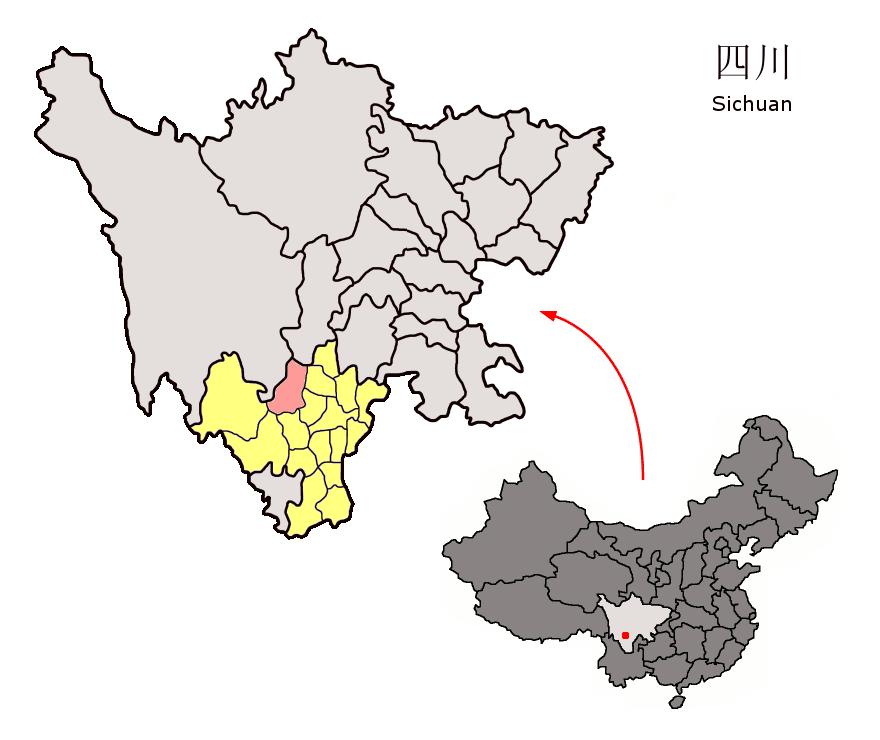
The deposit also includes significant associated minerals—fluorite (27 million tons) and barite (37 million tons)—both commercially and strategically relevant for industrial and chemical applications.
Rewriting China’s Resource Geography
China’s rare earth system has long followed a “north light, south heavy” structure—light rare earths (LREEs) concentrated in Inner Mongolia, with heavy rare earths (HREEs) in southern ionic clay deposits.
Maoniuping materially alters that equation. It represents a large-scale light rare earth resource in southern China, effectively reducing geographic concentration risk and increasing Beijing’s operational flexibility across regions.
Technology-Driven Exploration Breakthrough
This is not just a reserve increase—it reflects advances in exploration capability.
Chinese geological teams used updated prospecting models and deep drilling (approaching ~1,000 meters) to identify previously concealed, high-grade mineralization. The project has been cited by Chinese scientific bodies as a major breakthrough in carbonatite-hosted rare earth exploration, suggesting improved ability to locate and quantify deep or hidden deposits.
In practical terms, China is improving both its geological intelligence and its ability to convert that knowledge into scalable resources.
Centralized Control, Full-Chain Integration
The asset is now controlled by a subsidiary of China Rare Earth Group, reinforcing Beijing’s consolidation strategy across the sector.
Equally important, Sichuan has already developed a fully integrated rare earth industrial chain, including:
- Mining and resource development
- Separation and refining
- Materials processing and end-use applications
Provincial policy targets call for ¥100 billion (~$14B USD) in rare earth industry output by 2027, indicating continued scale-up.
Why This Matters for the U.S. and Allies
Key implications are structural:
- Resource depth expanding: China is already increasing its dominant reserves
- Internal diversification: Reduced reliance on a single flagship basin (Bayan Obo)
- Favorable economics: The deposit is described as relatively accessible and processable
- Multi-mineral leverage: Fluorite and barite enhance project economics and strategic value
For the West, the signal is unmistakable: China is not plateauing in rare earths—it is extending its lead through geology, technology, and industrial coordination.
Bottom Line
Maoniuping represents more than a reserve update—it signals the next phase of China’s rare earth strategy: scale, sophistication, and system control. As upstream resources expand and downstream capabilities mature, the competitive gap with Western supply chains risks widening further unless countered with coordinated industrial policy.
Disclaimer: This report is based on information from Chinese government-affiliated sources and should be independently verified before making investment or policy decisions.


0 Comments
Discuss this article