
Highlights
- China's SASAC chairman Zhang Yuzhuo met with Brazilian minister Esther Dweck to expand cooperation in critical minerals, including rare earths, niobium, lithium, and graphite—positioning Brazil as a strategic resource frontier outside China.
- Beyond resource access, Brazil expressed interest in adopting China's state-owned enterprise governance model, suggesting Beijing is exporting its state-directed development framework alongside industrial capacity.
- The meeting signals China's long-term industrial diplomacy in the Western Hemisphere, raising strategic concerns for the U.S. and Europe as Beijing extends influence over critical mineral supply chains.
A new meeting in Beijing late last month between China’s top state asset official and a senior Brazilian minister may look diplomatic on the surface. But beneath the formal language sits a deeper strategic signal: Beijing appears to be intensifying efforts to deepen engagement with Brazil’s state-linked industrial and mineral ecosystem—including sectors tied to critical minerals and strategically important supply chains. The meeting involved Zhang Yuzhuo (opens in a new tab), chairman of China’s powerful State-owned Assets Supervision and Administration Commission (SASAC), and Esther Dweck. (opens in a new tab)
For Western observers, the key point is this: SASAC is not a conventional economic ministry.
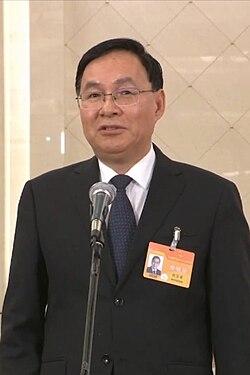
Zhang Yuzhuo, Chairman, SASAC
The Agency Behind China’s Industrial Giants
SASAC oversees many of China’s largest and most strategically important state-owned enterprises across sectors, including energy, mining, telecommunications, infrastructure, aerospace, heavy industry, advanced manufacturing, and materials science.
That includes influence across important segments of China’s rare earth and critical mineral ecosystem, where state-backed coordination increasingly links mining, refining, advanced materials, magnets, batteries, grid infrastructure, and industrial policy into a broader national development strategy.
The official Chinese statement emphasized expanding China-Brazil cooperation in “mineral resources,” alongside biotechnology, artificial intelligence, digital economy initiatives, energy, and infrastructure.
That wording matters.
Brazil Emerges as a Strategic Critical Mineral Frontier
Brazil is rapidly emerging as one of the world’s most strategically important critical mineral jurisdictions outside China. The country possesses major reserves of rare earth elements, niobium, graphite, nickel, lithium, manganese, and other materials increasingly tied to EVs, robotics, semiconductors, defense technologies, and energy infrastructure. For Beijing, deeper engagement with Brazilian state-linked enterprises could help diversify upstream resource access while extending Chinese industrial influence deeper into Western Hemisphere supply chains.
For the United States and Europe, the development raises more uncomfortable questions.
Washington increasingly frames critical minerals as a national security priority. Yet China continues advancing long-term industrial diplomacy through state-backed enterprise relationships, infrastructure financing, technology transfer, and vertically integrated industrial cooperation.
Embracing Chinese State-owned Models? Esther Dweck, Minister of Management and Innovation in Public Services

Beyond Mining: China Also Exports the State-Industrial Model
Perhaps most notable was Brazil’s apparent interest in learning from China’s SOE governance framework itself.
According to the release, Brazilian officials sought exchanges related to strategic planning, technological innovation, performance evaluation systems, incentives, and low-carbon industrial transformation.
That suggests China may increasingly export not only capital and industrial capacity—but also elements of its state-directed development model.
In what Rare Earth Exchanges™ has described as the emerging “Great Powers Era 2.0,” the long-term contest may revolve not only around who controls resources, but whose industrial systems become the dominant global template.
Disclaimer: This report is based on an official release from State-owned Assets Supervision and Administration Commission of the State Council (SASAC), a Chinese state entity. The claims, strategic interpretations, and implications discussed should be independently verified through additional reporting and external sources.


0 Comments
No replies yet
Loading new replies...
Moderator
Join the full discussion at the Rare Earth Exchanges Forum →