
Highlights
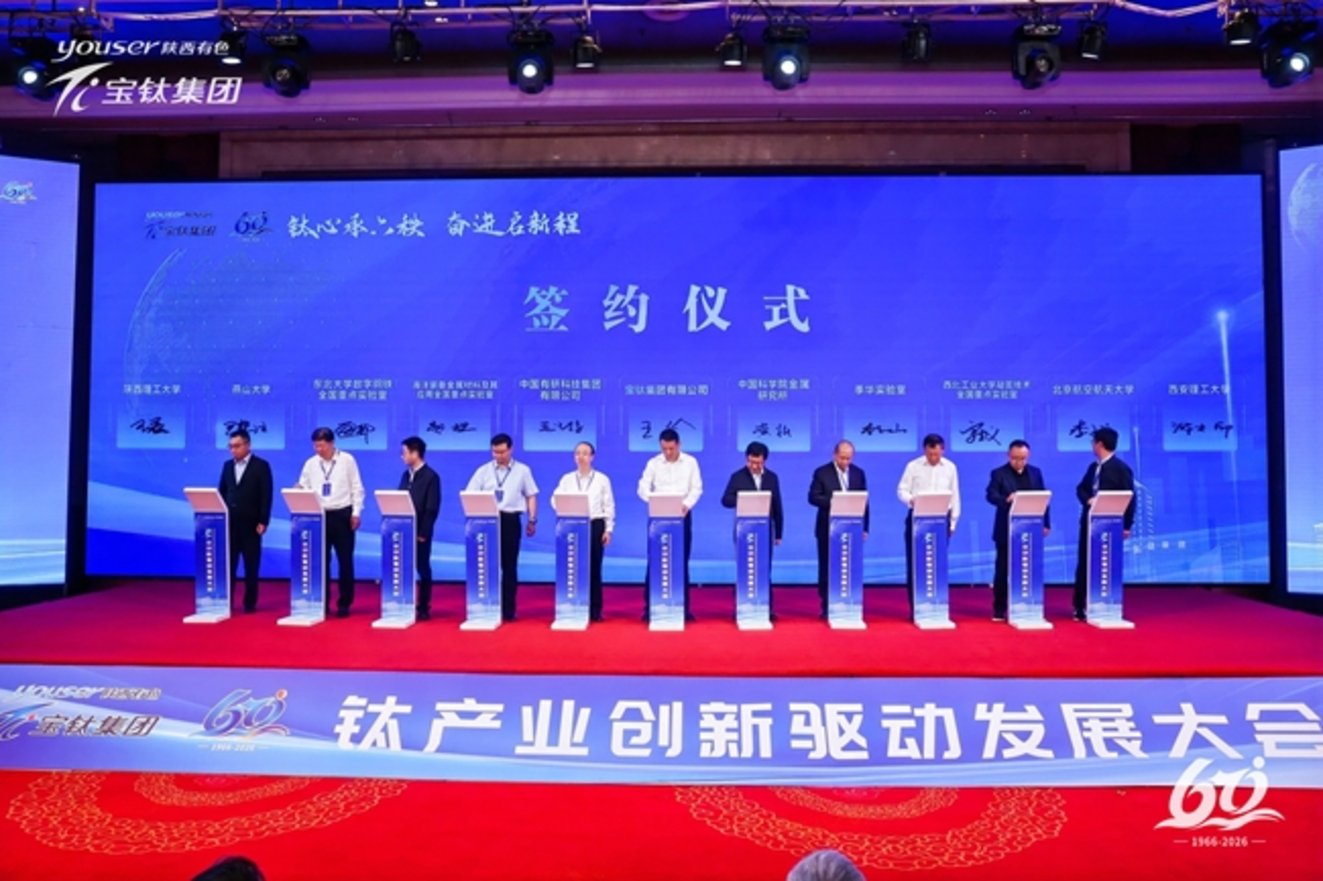
- GRINM Group and Baoti Group signed a new strategic cooperation agreement at a conference in Baoji, Shaanxi, marking Baoti's 60th anniversary.
- Baoti Group traces its origins to China's 1960s Third Front industrial mobilization, making it one of China's most comprehensive titanium alloy R&D and manufacturing bases.
- China continues reinforcing coordination between state-backed research institutes, industrial manufacturers, and provincial governments in advanced metals sectors.
- Titanium alloys are as strategically critical as rare earths for aerospace, defense, naval, semiconductor, and next-generation industrial manufacturing applications.
- Western supply chains remain fragmented compared to China's vertically integrated model spanning research, metallurgy, processing, manufacturing, and state coordination.
A major Chinese titanium industry gathering this week revealed more than ceremonial speeches and historical nostalgia. It highlighted how China continues tightening coordination across its advanced metals ecosystem—linking research institutions, state-backed industrial champions, and strategic materials manufacturing into a deeply integrated national system.
At the center of the event was a new strategic cooperation agreement between GRINM Group (formerly China General Research Institute for Nonferrous Metals) and Baoti Group, one of China’s flagship titanium and titanium alloy producers.
A Titanium Powerhouse With Cold War Roots
The conference, held in Baoji, Shaanxi Province, commemorated the 60th anniversary of Baoti Group, whose origins trace back to China’s “Third Front” industrial mobilization campaign during the 1960s.
According to the report, China’s Ministry of Metallurgy relocated core equipment and scientific personnel from Beijing to inland Shaanxi in 1965 to establish what became known as “Factory 902,” now Baoti Group.
Today, Baoti is described as one of China’s most comprehensive titanium and titanium alloy R&D and manufacturing bases. That history matters.
Western supply chains often focus heavily on rare earths, but titanium alloys remain equally strategic for:
- aerospace,
- defense systems,
- naval applications,
- chemical processing,
- semiconductors,
- and next-generation industrial manufacturing.
The Real Story: China Doubles Down on Industrial Coordination
During the conference, GRINM and Baoti signed a new strategic cooperation agreement aimed at deepening collaboration across the titanium sector.
The article provides few operational details, but the symbolism is significant. China continues reinforcing tight coordination between:
- state-backed research institutes,
- industrial manufacturers,
- provincial governments,
- and sectoral trade organizations.
That model contrasts sharply with the more fragmented Western approach to critical minerals and advanced materials development. The report also emphasized preservation of historical industrial archives and honored engineers who helped construct the original Baoji titanium complex decades ago. While ceremonial, this reflects another recurring feature of China’s industrial policy: the cultivation of long-term institutional continuity and industrial identity.
Why Western Industry Should Pay Attention
The article contains no immediate technological breakthrough or commercial production announcement. However, strategically, it reinforces an important trend: China is continuing to strengthen vertically integrated advanced materials ecosystems spanning:
- research,
- metallurgy,
- processing,
- manufacturing,
- workforce development,
- and state coordination.
For the United States and Europe, the broader implication is clear. Competition in strategic materials increasingly extends beyond mining into coordinated industrial systems capable of sustaining advanced manufacturing over decades.
Rare earths may dominate headlines, but titanium—and the institutional ecosystems supporting it—remain central to aerospace, defense, and industrial competitiveness.
Disclaimer: This report originates from Chinese state-linked industrial media associated with GRINM Group and related state industrial organizations. The information should be independently verified where possible. The reporting may reflect broader Chinese industrial policy narratives and institutional messaging priorities.


0 Comments
No replies yet
Loading new replies...
Moderator
Join the full discussion at the Rare Earth Exchanges Forum →