
Highlights
- Defense Metals launched pilot flotation testing at SGS Lakefield for its Wicheeda rare earth project, processing 30 tonnes of drill core to produce a 50% TREO concentrate—an important technical milestone moving beyond laboratory conditions into continuous pilot operations.
- While Wicheeda advances as one of North America’s most developed rare earth projects, investors should note that pilot flotation is not commercial separation, and the project remains years from proven commercial-scale hydrometallurgy, oxide separation, metallization, and magnet production.
- In rare earth development, metallurgy—not geology—determines commercial success, and Wicheeda still faces major industrial bottlenecks including solvent extraction, alloying, magnet qualification, and customer integration that took China decades to master.
Defense Metals (opens in a new tab) (DEFN.V) announced the start of a pilot flotation test program at SGS Lakefield for its Wicheeda rare earth project in British Columbia. For casual investors, this may sound like another routine mining milestone. It is not. Pilot-scale metallurgy is where rare-earth projects begin to confront industrial reality. The announcement matters because Wicheeda is attempting to move beyond resource estimates and laboratory testing into continuous pilot operations capable of generating representative concentrate for downstream hydrometallurgical work. But investors should also understand what this does not mean: Wicheeda is still years from proven commercial-scale separation, metallization, alloying, and magnet production. In the rare earth business, metallurgy—not geology—is often where fortunes are made or destroyed.
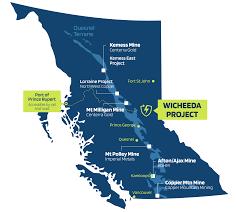
The Part That Actually Matters
Defense Metals says the SGS Lakefield campaign will process roughly 30 tonnes of drill core material to produce a flotation concentrate targeting approximately 50% TREO (total rare earth oxides). The concentrate will then feed downstream hydrometallurgical pilot testing designed to refine the project’s process flowsheet.
That is important.
Pilot-scale continuous operation begins testing whether metallurgical assumptions survive outside controlled bench conditions. It also generates engineering, tailings, handling, and process data needed for future feasibility work.
This is one of the few places where rare-earth projects begin to enter the hard physics of commercialization.
Where the Press Release Naturally Glows
The release emphasizes Wicheeda as one of North America’s “most advanced” undeveloped rare earth projects. That may be directionally fair from a resource-development perspective.
But investors should remain careful not to confuse:
- pilot flotation
- with commercial separation
- or concentrate production
- with a functioning magnet supply chain
The difficult industrial bottlenecks still lie ahead:
- hydrometallurgy
- solvent extraction
- oxide separation
- metallization
- alloying
- magnet qualification
- and long-term customer integration
China spent decades mastering those layers.
The REEx Read
This is a legitimate technical milestone—not promotional fiction.
But it is also another reminder that rare earth development moves in phases, not headlines.
Wicheeda is progressing. The supply chain, however, remains far from complete.


0 Comments
No replies yet
Loading new replies...
Moderator
Join the full discussion at the Rare Earth Exchanges Forum →