
Highlights
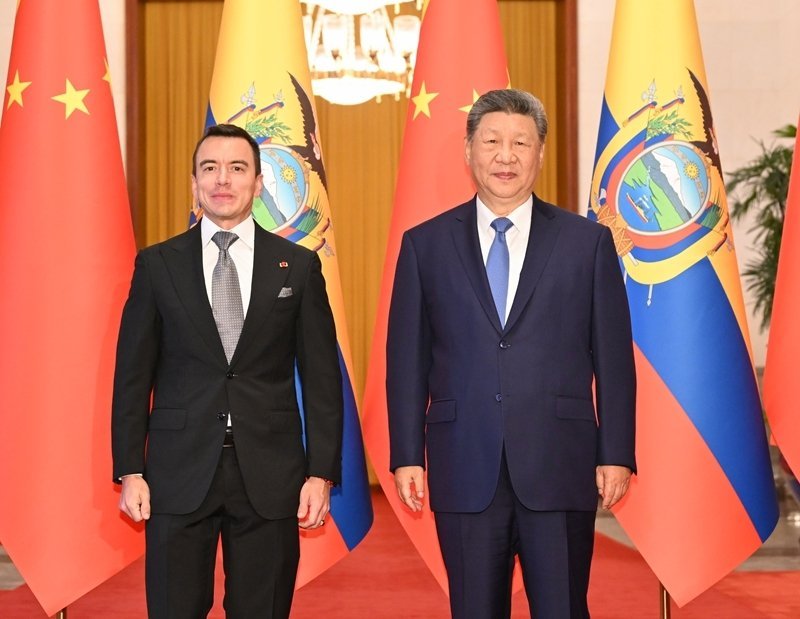
- Xi Jinping and Ecuador's Noboa agreed August 18 to deepen cooperation in minerals, energy, infrastructure and technology
- Chinese firms now control Ecuador's two major copper platforms: Mirador via Ecuacorriente and Cascabel via Jiangxi Copper's 2026 SolGold acquisition
- Ecuador's geology shows early rare earth signals including lanthanum, cerium, neodymium and scandium zones, though no reserves have been confirmed
- Ecuador's growing strategic importance places it at the center of U.S.-China resource competition in the Andean region
Chinese President Xi Jinping and Ecuadorian President Daniel Noboa agreed in Beijing on August 18 to deepen cooperation in minerals, energy, infrastructure, finance, renewable energy and technology. The diplomatic language matters because Chinese companies now control Ecuador's two defining copper platforms—operating Mirador and giant Cascabel. Ecuador also possesses intriguing, though still unproven, rare earth potential. In Great Powers Era 2.0, this small Pacific nation is becoming strategically larger than its map suggests.
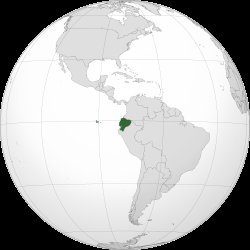
REEx Insight: China's Andean Chessboard
Ecuador sits on the mineral-rich Andean metallogenic belt, with copper, gold and silver as the immediate prizes.
China's position has strengthened dramatically. Tongling Nonferrous-linked Ecuacorriente (opens in a new tab) operates Mirador, Ecuador's first large-scale copper mine. Then, in March 2026, Jiangxi Copper completed its acquisition of SolGold, gaining Cascabel—a potentially world-class copper-gold-silver system.
For Washington, this deserves attention. China's resource strategy increasingly resembles a portfolio: secure major deposits, infrastructure relationships and political access before scarcity becomes acute.
Beneath the Copper, an REE Question
Ecuador should not yet be called a rare earth producer. But its geology deserves watching. A 2026 study from Ecuador's Geological and Energy Research Institute identified prospective environments including carbonatites, alkaline intrusions, pegmatites, laterites, ion-adsorption clays and placers, particularly along the Sub-Andean Belt and Cordillera Real.
Earlier work at Tres Lagunas reported anomalies or elevated concentrations involving lanthanum, cerium and neodymium, while 2025 research identified prospective lanthanum and scandium zones in southern Ecuador. Another study documented uranium, vanadium and associated heavy-REE geochemistry at La Sota. These are exploration signals—not reserves or proof of economic deposits.
Beijing Connects the Dots
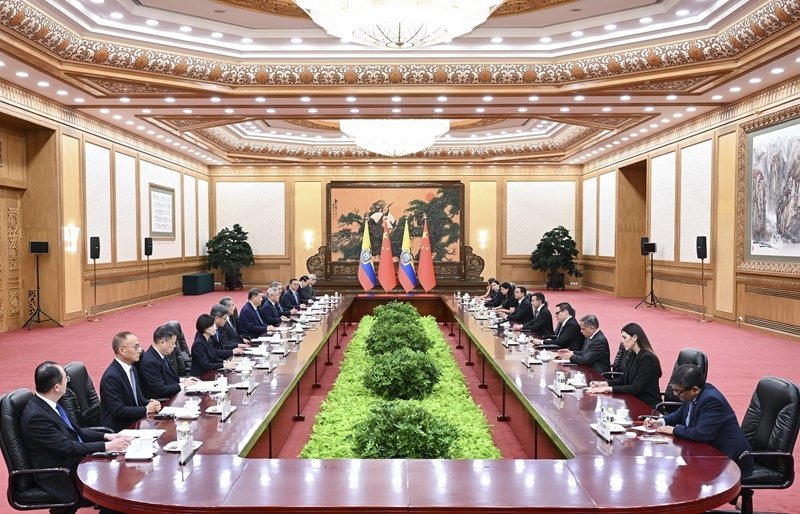
Xi explicitly called for implementing projects involving energy and minerals, while Noboa welcomed additional Chinese investment. The presidents also witnessed agreements covering green industry, trade and the digital economy. The message for investors: Ecuador's strategic relevance is no longer hypothetical. Copper is already pulling it deeper into U.S.–China resource competition; rare earth potential adds an intriguing geological option on the future.
REEx Connect
| Player | Strategic Role |
|---|---|
| Government of Ecuador | Resource owner; balancing investment, development and sovereignty |
| Jiangxi Copper / SolGold | Controls the Cascabel copper-gold-silver project |
| Ecuacorriente / Tongling Nonferrous | Operator/investor behind Mirador copper |
| Ecuador Geological and Energy Research Institute | National geological research; studying REE potential |
| Government of China | Major diplomatic, trade and investment partner |
REEx Disclosure: The underlying diplomatic report originates from Xinhua, China's state-owned news agency. Statements describing government intentions should be treated as official positions rather than independent analysis and verified against Ecuadorian and independent sources. Geological indications of rare earth potential do not constitute mineral resources, reserves or evidence of commercial viability.


0 Comments
No replies yet
Loading new replies...
Moderator
Join the full discussion at the Rare Earth Exchanges Forum →