
Highlights
- EIB estimates EU attracts only 3% of global exploration spending, far behind Canada at 20% and Australia at 16%.
- Euromines proposes an EU Exploration Acceleration Facility with €1 of public funding per €4 of private investment.
- Junior miners generated 63% of global mineral discoveries over the past decade, making their financing critical to Europe's strategy.
- Exploration spending creates discovery potential but does not guarantee economically recoverable deposits or production capacity.
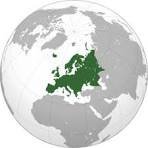
Europe wants domestic critical minerals, but its exploration pipeline is too thin to deliver them. A new European Investment Bank (opens in a new tab) (EIB) study estimates EU mineral exploration spending must rise from roughly €200 million to €2 billion annually over the next five years. Euromines (opens in a new tab) argues that capital, tax incentives, junior miners, and faster permitting must move to the front of Europe's strategy. The Rare Earth Exchanges® distinction: funding exploration can create discoveries, but it cannot guarantee mines—or rare earth supply.
REEx Insight — Europe Cannot Process What It Has Not Found
Europe's critical-minerals strategy has an uncomfortable hole at the beginning of the supply chain: discovery.
The EIB estimates the EU attracts only 3% of global exploration spending, versus 20% for Canada and 16% for Australia. Its proposed remedy includes better geological data, predictable permitting, tax incentives, and stronger financing for junior explorers.
For rare earth investors, however, the distinction matters. Exploration spending is not production capacity. A discovery still requires resource definition, metallurgy, permitting, financing, separation capacity, and customers.
From Policy Ambition to Drill Bit
Euromines makes the upstream case forcefully. Its February 2026 paper says juniors generated 63% of global mineral discoveries across commodities over the previous decade and proposes an "EU Exploration Acceleration Facility," with €1 of public money accompanying every €4 of qualifying private investment.
The EIB study independently reinforces the financing problem and points toward investor tax incentives, including approaches modeled on Canada. It also examines expanding early-stage financing beyond the countries currently covered by the European Bank for Reconstruction and Development (EBRD) Junior Mining Program (JUMP) framework.
The caveat is crucial: Euromines represents the mining industry, so its recommendations naturally emphasize capital access and permitting reform. Neither report establishes that increased spending will produce economically recoverable European rare earth deposits.
Europe has identified the missing first link. Now geology gets the vote.


0 Comments
No replies yet
Loading new replies...
Moderator
Join the full discussion at the Rare Earth Exchanges Forum →