
Highlights
- Neo Performance Materials achieves first production of terbium and dysprosium at its Silmet facility in Estonia, operating at nameplate capacity with separated heavy rare earth oxides.
- The milestone supports Neo's strategy to build Europe's first vertically integrated rare earth-to-magnet value chain, linking to a 2,000-tonne magnet plant in Narva.
- While technically significant, production remains limited in scale with external feedstock, highlighting Europe's ongoing reliance on China for heavy rare earth separation.
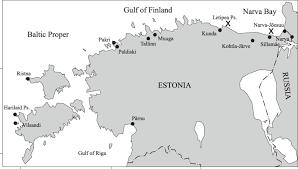
Neo Performance Materials has taken a meaningful step toward Europe’s rare earth ambitions, announcing first production of separated heavy rare earth oxides—terbium and dysprosium—at its Silmet facility in Estonia. The April 10 update confirms the newly commissioned solvent extraction (SX) line is operating at nameplate capacity, albeit at an early, limited scale, using mixed rare earth carbonate feedstock.
This is not trivial. Heavy rare earths such as terbium and dysprosium are essential for high-temperature, high-performance permanent magnets used in electric vehicles, offshore wind, and defense systems—and remain among the most China-concentrated segments of the global supply chain.
Building Europe’s First Integrated Magnet Chain
CEO Rahim Suleman (opens in a new tab) positioned the milestone as part of a broader strategy to build a vertically integrated rare-earth-to-magnet value chain in Europe. Output from Silmet is expected to support Neo’s downstream magnet plant in Narva, Estonia—targeted for production with an initial capacity of ~2,000 tonnes per year of sintered NdFeB magnets, representing one of Europe’s first scaled entries into magnet manufacturing.
The strategic ambition is clear: link separation, refining, and magnet production within a single regional ecosystem—a capability the West has largely lacked for decades.
Strategic Progress—But Scale Still the Constraint
This is a technically credible milestone, but not yet a structural shift. Production volumes remain modest, feedstock is still externally sourced, and Europe’s reliance on China—particularly for heavy rare earth separation at scale—remains substantial.
Still, Silmet’s progress signals something more important: the “missing middle” is beginning to re-emerge. Not at scale. Not yet competitive. But no longer theoretical.


0 Comments
No replies yet
Loading new replies...
Moderator
Join the full discussion at the Rare Earth Exchanges Forum →