
Highlights
- FAR signed a non-binding MoU with California-based Maglut Heavy Industries for up to 1,000 tonnes annually of mixed rare earth concentrate from its Balasausqandiq vanadium project in Kazakhstan.
- Early chromatography tests achieved over 99% purity for Nd, Pr, Dy, Tb, and Y with an average separation recovery of 91.4%, though testing remains at liter-scale columns.
- FAR is evaluating an intermediate 100-tonne-per-year MREC project before scaling to 1,000 tonnes, while SRK updates the resource estimate to incorporate yttrium.
- The rare earth extraction leverages residual solutions from existing vanadium processing, potentially lowering incremental production costs if validated at commercial scale.
- REEx cautions that promising metallurgy and a $3.6 billion in-situ yttrium figure do not equal bankable production, with throughput, capex, and commercial-scale costs still unproven.
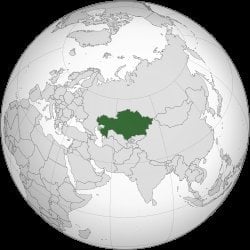
A vanadium project in Kazakhstan may have discovered a second act. Ferro-Alloy Resources (opens in a new tab) (FAR) (LON: FAR) signed a non-binding MoU with California-based Maglut Heavy Industries (opens in a new tab) covering up to 1,000 tonnes annually of mixed rare earth concentrate (MREC) recovered as a by-product from Balasausqandiq. (opens in a new tab) Early chromatography tests produced >99% purity for Nd, Pr, Dy, Tb and Y with a reported average separation recovery of 91.4%. The chemistry looks intriguing; commercial scale remains unproven.
Vanadium, a hard, silvery-gray metal, is used primarily to make steel stronger, tougher, and more resistant to wear and corrosion; roughly 90% of vanadium consumption is associated with steel and alloys.
REEx Insight: The Ore Is Interesting. The Shortcut Is More Interesting.
The strategic significance is not simply another non-Chinese mineral occurrence. FAR proposes extracting REEs from residual solutions already created by vanadium processing. If validated economically, that potentially shifts part of the mining and primary-processing burden onto the core vanadium operation—a structural advantage that could lower the incremental cost of rare-earth production.
But investors should not confuse separation success with supply-chain success. Maglut's testing reached only liter-scale columns. The unanswered variables are throughput, resin life, reagent consumption, impurity behavior, capex, and cost per kilogram at commercial scale. Maglut itself is moving from pilot toward demonstration scale.
From Test Tube to Tonnes
FAR is evaluating an intermediate 100-tonne-per-year MREC project before the potential 1,000-tonne operation. Meanwhile, SRK is updating Ore-Body 1's resource estimate to incorporate yttrium, with other REEs potentially following after Intertek assays.
The headline-grabbing $3.6 billion in-situ yttrium value deserves a warning label: FAR explicitly says it is not revenue, cash flow, or project value.
REEx verdict: promising metallurgy, strategically interesting feedstock integration—but still several gates away from bankable rare-earth production.
Company Profile
Ferro-Alloy Resources Limited (LON: FAR) is a junior mining and development company advancing the Balasausqandiq vanadium and carbon deposit in southern Kazakhstan, with shares listed in London and on the Astana International Exchange. Its Phase 1 feasibility study envisions processing 1.65 million tonnes of ore annually to produce approximately 8,500 tonnes of vanadium pentoxide (V₂O₅) and 247,000 tonnes of carbon black substitute, with a planned second phase potentially expanding the operation substantially. The company reports a Phase 1 post-tax NPV of $932 million, 31% IRR, and $355 million construction cost, although these remain feasibility-study projections rather than operating results.
FAR is led by CEO Nicholas Bridgen, a former Rio Tinto executive who has lived in Kazakhstan since 2000, while former Xstrata CEO Sir Mick Davis serves as chairman; Davis's Vision Blue Resources is also FAR's largest disclosed shareholder at 22.5%. The emerging rare-earth opportunity is particularly noteworthy because it could add another by-product revenue stream to what remains fundamentally a vanadium-led development project.


0 Comments
No replies yet
Loading new replies...
Moderator
Join the full discussion at the Rare Earth Exchanges Forum →