
Highlights
- German Foreign Minister Johann Wadephul toured Brazil, Argentina, Paraguay, and Chile, urging expansion of Germany's €1 billion raw materials fund to secure non-Chinese mineral supplies.
- Europe's real strategic bottleneck lies not in mining access but in the rare earth midstream—separation, refining, metals, alloys, and permanent magnets—where China holds overwhelming dominance.
- The EU-Mercosur agreement could lower investment barriers, but financing mines alone does not guarantee supply-chain resilience without downstream processing capacity.
- Investors are cautioned to look beyond political headlines and focus on who controls the full value chain from mine to magnet, not just mineral extraction rights.
Germany is making clear that critical minerals are now foreign policy, not merely industrial policy. Following a diplomatic tour of Brazil, Argentina, Paraguay, and Chile, Foreign Minister Johann Wadephul (opens in a new tab) called for expanding Germany's €1 billion raw materials fund to accelerate access to non-Chinese supplies of strategic minerals. The strategy relies on public investment, financial guarantees, and deeper commercial ties under the EU-Mercosur agreement. Rare Earth Exchanges® assessment: this represents a meaningful geopolitical shift, but investors should distinguish political intent from industrial capability. Financing mines is only the opening move. The true strategic bottleneck remains the rare earth midstream—separation, refining, metals, alloys, and permanent magnets—where China continues to hold overwhelming global dominance.
Germany Isn't Chasing Rocks—It's Chasing Supply Chains
Europe has finally begun speaking the language of supply-chain realism. After a four-country tour through South America's mineral belt, German Foreign Minister Johann Wadephul argued that Berlin must expand its raw materials fund before strategic opportunities disappear. His warning was unmistakable: China has spent decades building influence across critical mineral supply chains, while Europe risks arriving after the most valuable partnerships have already been secured.
The message reflects a broader realization in Western capitals that economic security increasingly depends on access to the materials underpinning defense systems, electric vehicles, robotics, semiconductors, and artificial intelligence.
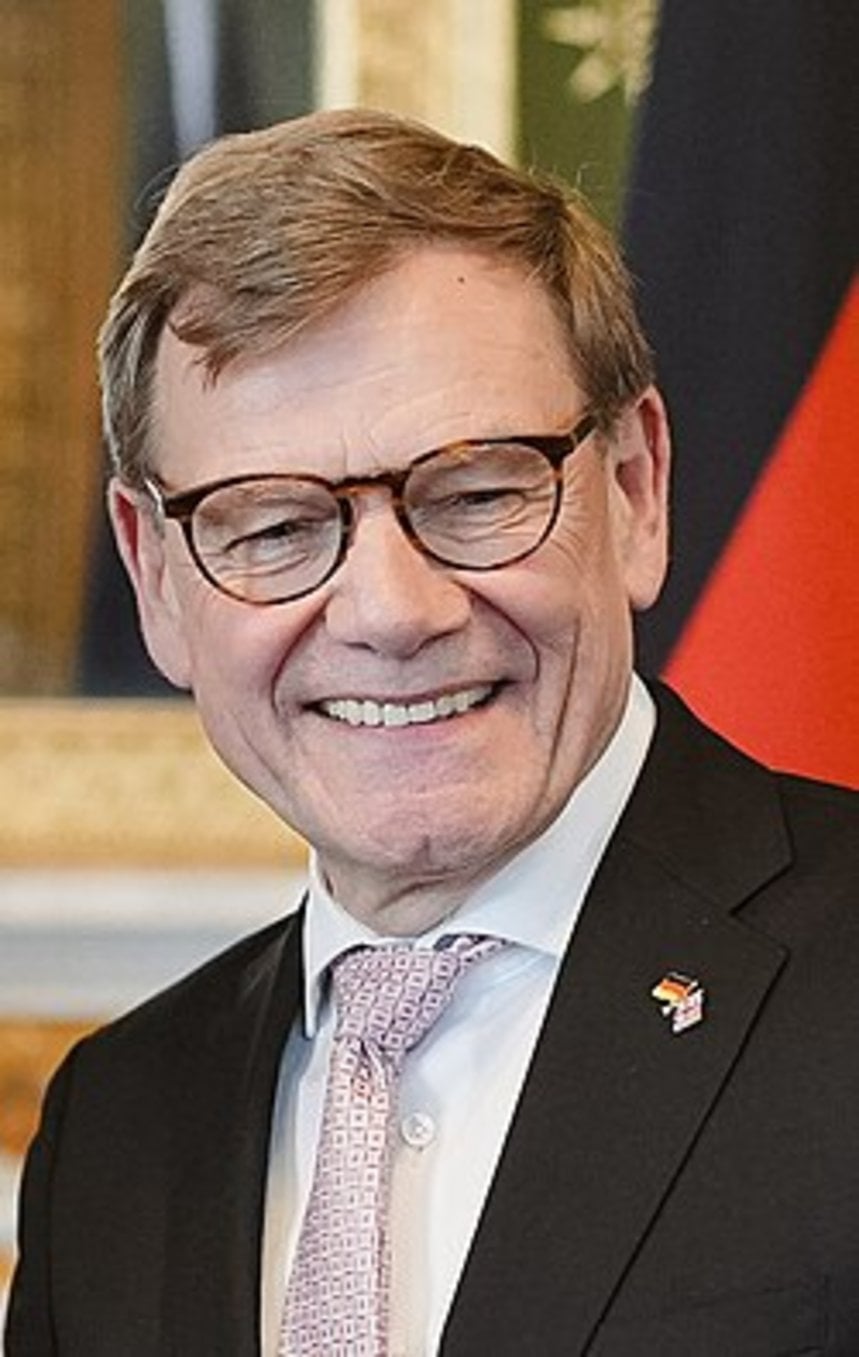
Johann Wadephul, Minister for Foreign Affairs
The Story Beneath the Story
Germany already operates a raw materials fund designed to support overseas mining investments and provide guarantees that encourage German companies to diversify supply. Brazil, Argentina, Chile, and Paraguay all possess significant strategic mineral resources, and the provisional implementation of the EU-Mercosur agreement could lower barriers to future investment and trade.
Yet much of the popular media narrative stops where the real strategic challenge begins.
Owning or financing mines does not guarantee secure rare earth supply. The decisive value creation—and the greatest geopolitical leverage—occurs downstream in chemical separation, oxide refining, metal production, alloy manufacturing, magnet fabrication, and advanced recycling. Those industrial capabilities remain concentrated in China after decades of coordinated investment.
Investors Should Follow Processing Capacity, Not Political Headlines
Wadephul's proposal signals a genuine shift in European strategic thinking rather than political theater. What deserves greater scrutiny, however, is the implicit assumption that greater access to mineral deposits automatically translates into supply-chain resilience. Today, that assumption is not supported by industry fundamentals.
For investors, the defining question is no longer who owns the mine. It is who controls the journey from mine to magnet. Until Europe invests across the entire value chain—not simply extraction—expanding Germany's raw materials fund is best viewed as an important strategic down payment, not a complete solution to China's enduring competitive advantage.
Register today: REEx Marketplace™ (opens in a new tab)


0 Comments
No replies yet
Loading new replies...
Moderator
Join the full discussion at the Rare Earth Exchanges Forum →