
Highlights
- Gilgit-Baltistan holds potential rare earth reserves but lacks the legal framework and institutional stability needed to attract serious international investment.
- The 2018 Governance Order centralizes mineral rights in Islamabad with no enforceable protections, making the region unsuitable for ventures requiring 10-20 year commitments.
- Without modern resource assessments and governance reforms, GB's mineral wealth remains speculative promise rather than commercial reality for global supply chains.
Gilgit-Baltistan (GB) is back in the headlines—this time framed as Pakistan’s untapped rare earth frontier. The Dawn op-ed paints a compelling picture: glaciers hiding strategic minerals, a youthful population ready to work, new airports and roads promising access, and hydropower that could anchor processing. It’s an alluring narrative for a region wedged between China’s industrial belt and South Asia’s expanding energy ambitions.
Table of Contents
But what the article gets right about geology and geography, it offsets with a far less romantic truth: GB remains legally unfit for serious rare earth investment.
GB is an administrative territory in the northern part of the larger Kashmir region, administered by Pakistan and claimed by India. It is a mountainous area known for its unique geography, rich culture, and strategic importance.
The Region
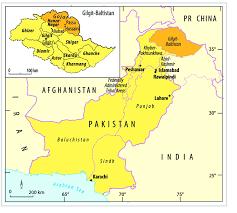
Great Mountains, Missing Institutions
The op-ed is accurate in highlighting that any rare earth venture—exploration, separation, refinery development—requires stable rule of law and fixed mineral rights. GB has neither.
Under the Gilgit-Baltistan Governance Order 2018, the Pakistani prime minister holds sweeping authority, from mineral legislation to judicial appointments. Article 60 centralizes mineral power entirely in Islamabad. Article 118 prevents GB’s courts from challenging the system. Investors see this for what it is: a jurisdiction without enforceable rights.
This is not commentary—it is a structural fact.
In rare earths, where payback cycles span 10–20 years and environmental liabilities persist for decades, no global operator will deploy capital if concessions can be revoked by executive whim.
Where Optimism Slips Into Assumption
The Dawn piece presumes GB’s mineral richness is both proven and strategically competitive. This is where speculation creeps in.
There is no publicly available, modern JORC- or NI 43-101-compliant rare earth resource for GB. Traces exist, yes—but “traces” do not equal projects. Without core drilling, metallurgical analysis, or processing studies, the region’s rare earth potential remains conceptual, not commercial.
What’s certain is that Pakistan’s past proclamations of trillion-dollar mineral wealth—especially in Reko Diq and Thar—have historically overshot reality.
The Real Rare Earth Signal: Governance, Not Grade
What makes this story notable for global supply chains is not GB’s speculative geology but Pakistan’s governance problem.
The 2019 Supreme Court-endorsed Governance Reforms Order—which would establish clearer rights, stronger courts, and investor protections—is mentioned accurately and represents the only credible foundation for rare earth investment. Until that legal shift happens, China, Australia, Brazil, and the U.S. will continue to attract the capital, and Pakistan will remain on the sidelines.
Bottom Line: GB’s Rare Earths Are Potential Energy—Not Yet Power
GB may indeed hold valuable minerals. But geology without governance is fantasy. Until Pakistan buries its colonial-era legal model and adopts a rule-based framework, the region’s rare earth story will remain an untapped promise rather than a supply-chain disruption.
© 2025 Rare Earth Exchanges™ – Accelerating Transparency, Accuracy, and Insight Across the Rare Earth & Critical Minerals Supply Chain.


0 Comments
Discuss this article