
Highlights
- Graphite is 22% of every lithium-ion battery by weight — more than lithium, nickel, or cobalt — yet receives a fraction of the strategic attention.
- China controls roughly 93% of natural graphite supply and dominates synthetic production, giving it a chokehold on battery anodes that mirrors its rare earth position.
- Synthetic graphite — used in 60–80% of anodes — emits ~17 kg of CO₂ per kg produced, creating a sustainability problem that low-carbon alternatives are nowhere near solving at scale.
- A new Nature Reviews Materials perspective from Rice University researchers reframes graphite as the next critical mineral. The market has not caught up.
Lithium gets the headlines. Cobalt gets the ESG scrutiny. Nickel gets the geopolitics. And graphite — the single largest material input in every lithium-ion battery — gets ignored. That blind spot is becoming expensive.
A 2025–2026 perspective in Nature Reviews Materials (opens in a new tab), led by Sohini Bhattacharyya and Pulickel M. Ajayan, argues that graphite — not lithium — is the real cornerstone of battery supply chains. The data backs it up. And the strategic implications look uncomfortably familiar to anyone tracking rare earths.
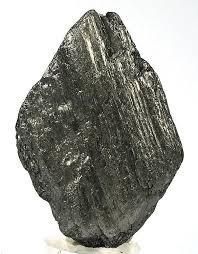
The 22% Nobody Talks About
Every lithium-ion battery is, by mass, mostly graphite. It makes up ~22% of cell weight and is the structural backbone of the anode — the side of the battery that actually accepts and releases the lithium ions during charge and discharge.
Without graphite, there is no fast charging. No high cycle life. No EV economics.
It is, in other words, exactly the kind of input you'd expect to see treated as strategic. It is not.
Why China Quietly Owns the Anode
The supply concentration story should sound familiar:
- ~93% of natural graphite supply originates in a handful of countries, with China dominating both production and downstream processing.
- China controls the bulk of synthetic graphite manufacturing, where most battery-grade material now comes from.
- Spheronization and coating — the value-add steps that turn raw graphite into anode-ready powder — are almost entirely Chinese.
This is the same playbook China ran on rare earth separation: own the midstream, where the chemistry is hard and the margin is real, and let everyone else fight over upstream mining and downstream cells.
Synthetic Graphite's Carbon Problem
The industry's quiet pivot to synthetic graphite — now in 60–80% of anodes — solves one problem and creates another. Synthetic production requires ~3,000°C process temperatures and emits roughly 17 kg of CO₂ per kg of finished graphite.
That carbon math is incompatible with the climate narrative the EV industry sells. It is also a regulatory time bomb in jurisdictions that price carbon, and an ESG flag for any battery cell certified as "green."
The Substitutes Aren't Ready
Bhattacharyya et al. survey the alternatives. They are real — and uniformly early-stage:
- Biomass-derived graphite from agricultural waste
- Molten salt electrochemical processes at lower temperatures
- Microwave and plasma synthesis routes
- Anode recycling from spent batteries
None is proven at an industrial scale. Several produce material that performs differently from conventional graphite, requiring full battery redesigns to deploy. The honest read: a viable, commercial, ex-China low-carbon graphite supply chain is at least five years away — likely longer.
What This Means for the Battery Investment Thesis
If the analysis is correct, capital is mispriced.
Lithium and nickel projects attract billions in financing. Graphite — despite being the larger material input by mass and the more concentrated supply chain — attracts a fraction. That mismatch creates two openings:
- Anode-grade processors outside China are dramatically undervalued relative to the strategic role they play.
- Recycling infrastructure for spent battery anodes is the most underbuilt segment of the entire battery circular economy.
For policymakers, the implication is sharper: a battery industrial policy that ignores graphite is a battery industrial policy that has already failed.
REEx Take
Graphite is the rare-earth story of the next five years — and the Western response is roughly where rare earths were in 2018: aware, underfunded, and several execution cycles behind China. The technology to break the dependency exists. The capital, the timelines, and the political urgency do not yet match it.
Bottom Line
The energy transition has been sold as a lithium story. It is actually a graphite story wearing a lithium costume. Until the West treats anode supply with the same seriousness it now treats magnets, the battery industrial base will scale on borrowed time — and on China's terms.
Citation: Bhattacharyya S., Ajayan P. M., et al. Graphite: the new critical mineral. Nature Reviews Materials (2026).


2 Comments
2 replies
Loading new replies...
New member
New member
Join the full discussion at the Rare Earth Exchanges Forum →