
Highlights
- U.S. Energy Secretary Chris Wright clarified that Washington's interest in Greenland centers on national security positioning rather than rare earth mining, signaling a deliberate policy shift.
- The critical supply chain vulnerability is not rare earth geology but downstream processing—separation, metallization, and magnet manufacturing—where China maintains dominance.
- Investors should focus on rare earth processing capacity rather than mining projects, as control over industrial separation and magnet production determines strategic leverage in the market.
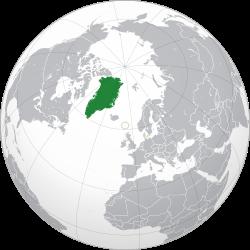
At a conference hosted by the French Institute of International Relations in Paris on February 18, U.S. Energy Secretary Chris Wright downplayed Greenland’s mineral significance, stating Washington’s interest in the island centers on national security rather than rare earth extraction. He added that rare earth elements are “everywhere” and that there are “far more attractive places” to mine them.
In simple terms: the administration is signaling that military positioning—not mining—drives Greenland policy.
That distinctionis deliberate.
Abundance in the Crust, Scarcity in the Market
Wright is technically correct. Rare earth elements are not rare in crustal abundance. They are widely distributed globally.
However, economically recoverable, environmentally permitted, and infrastructure-supported deposits are far less common. More importantly, the global choke point is not geology—it is midstream processing.
Mining producesconcentrate. Value emerges in separation, metallization, alloying, andmagnet manufacturing. China continues to dominate these downstream stages as noted in a recent Bloomberg (opens in a new tab) entry.
If the administration is pivoting away from Arctic mining enthusiasm and toward processing independence, that reflects supply chain realism—not retreat.
Greenland’s Projects: Real Geology, Real Friction
Greenland hosts significant deposits, including Kvanefjeld and Tanbreez. Both are geological materials. Both also face environmental scrutiny, political sensitivity, and permitting complexity.
Arctic extraction is expensive. Logistics are challenging. Social license is uncertain.
Framing Greenland primarily as a security asset avoids overpromising on mineral timelines that may stretch years.
Messaging Shift or Strategic Reprioritization?
Earlier geopolitical rhetoric emphasized mineral access in Greenland and Ukraine as counters to Chinese supply dominance. Wright’s comments signal a recalibration.
This is not necessarily abandonment. It may reflect a growing recognition that:
- Alternative feedstock sources exist globally
- Domestic processing capacity is the real vulnerability
- Military positioning in the Arctic hasindependent strategic value
Investors should view this as prioritization, not contradiction.
What Rare Earth Investors Should Focus On
The key takeaway:
The supply chain battle is downstream.
If policymakers increasingly emphasize processing rather than mining, it reinforces a core REEx thesis:
Control separation and magnet production, and you control strategic leverage.
Rare earth ores are common. Rare earth processing independence is not.
Final Assessment
Wright’s remarks are factually grounded in geological reality but strategically calibrated for policy messaging.
Greenland remains geopolitically significant. But from a rare earth perspective, the decisive arena is not Arctic rock—it is industrial chemistry.
And that contest is still underway.
Source: Mark Burton, Bloomberg, February 18, 2026.


0 Comments
No replies yet
Loading new replies...
Moderator
Join the full discussion at the Rare Earth Exchanges Forum →