
Highlights
- Humanoid robots are entering factories and pilot programs in 2026, but mass deployment remains years away, with safety standards not expected until around 2028.
- Each humanoid requires roughly 1.3 kg of NdPr magnet material, making them a materials market as much as an AI market.
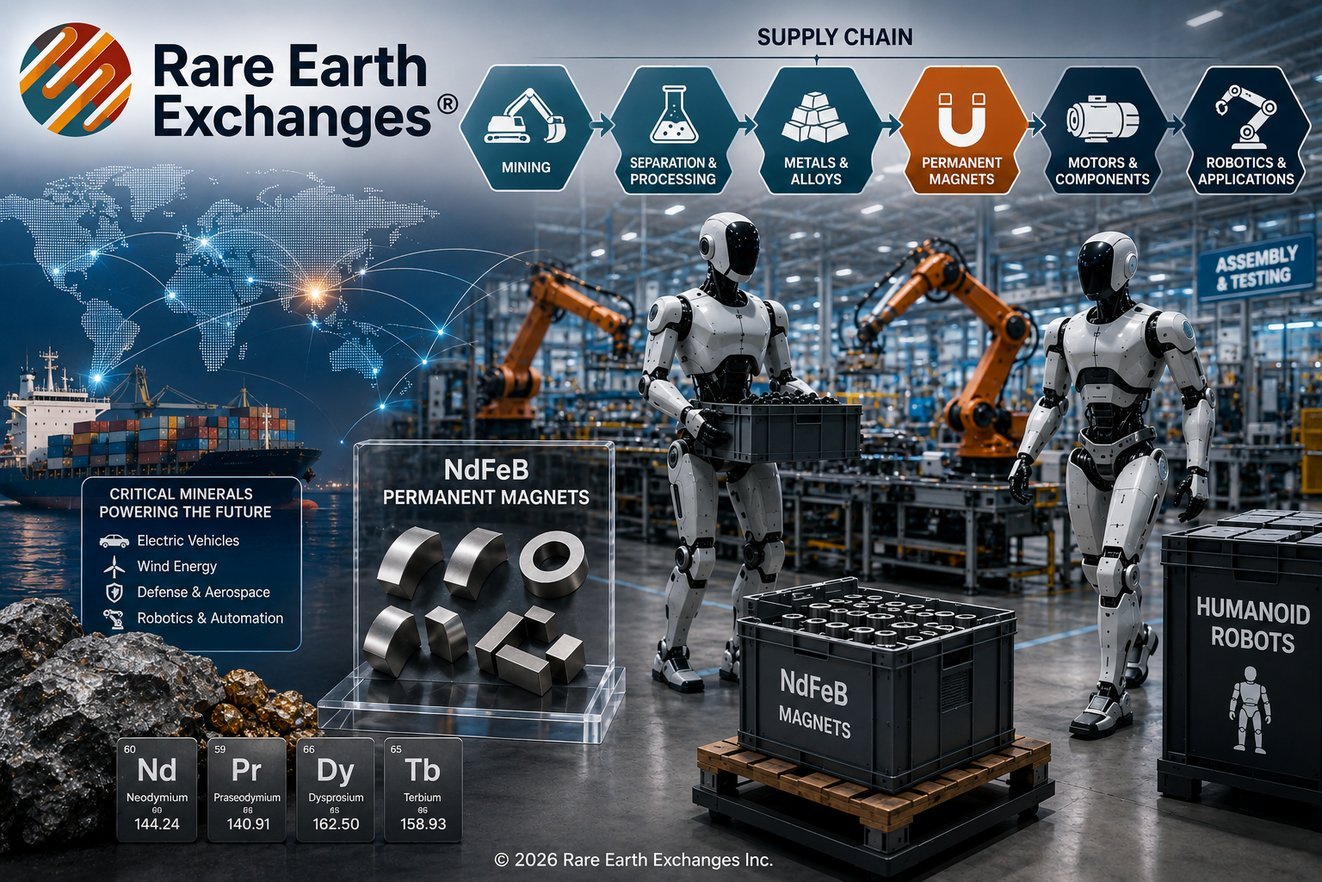
- China controls the full industrial stack beneath humanoid production: rare earth separation, alloys, magnet manufacturing, motors, and precision components.
- Western firms lead in AI software but lack the physical execution layer China has built, from mining through magnet integration.
- Humanoid volumes won't move rare earth markets near-term, but at hundreds of thousands or millions of units annually, they become a critical new demand layer.
Humanoid robots are no longer just conference theater. In 2026, they are entering factories, warehouses, trade shows, and pilot programs—but the industry remains early, uneven, and still far from mass deployment. The latest Wall Street Journal reporting (opens in a new tab) focuses less on spectacle and more on safety: 150–200-pound machines operating near humans, emergency-stop systems, sensor fusion, functional safety software, and ISO standards expected around 2028. That shift matters. When an industry starts debating safety certification, liability, and factory deployment, it has moved beyond pure imagination—but not yet into mature commercialization.
For Rare Earth Exchanges®, the deeper story is not the robot’s face. It is the robot’s joints.
Humanoids are magnet-dense machines. Their arms, legs, hands, torso, and balance systems depend on compact, high-torque electric actuators. Those actuators typically rely on NdFeB permanent magnets using neodymium and praseodymium, with dysprosium and terbium added where heat resistance matters. A working assumption of roughly 1.3 kilograms of NdPr magnet material per humanoid remains reasonable for scenario modeling, though actual demand will vary by design.
China’s advantage is therefore structural. It is not simply ahead because it has ambitious robotics companies such as Unitree, UBTech, Fourier Intelligence, and AgiBot. It is ahead because it controls much of the industrial stack beneath them: rare earth separation, metals, alloys, magnet manufacturing, motor supply chains, batteries, electronics, precision components, and final assembly. Western companies may lead in advanced AI software, but China has built the physical execution layer.
That matters because humanoids are not only an AI market. They are a materials market.
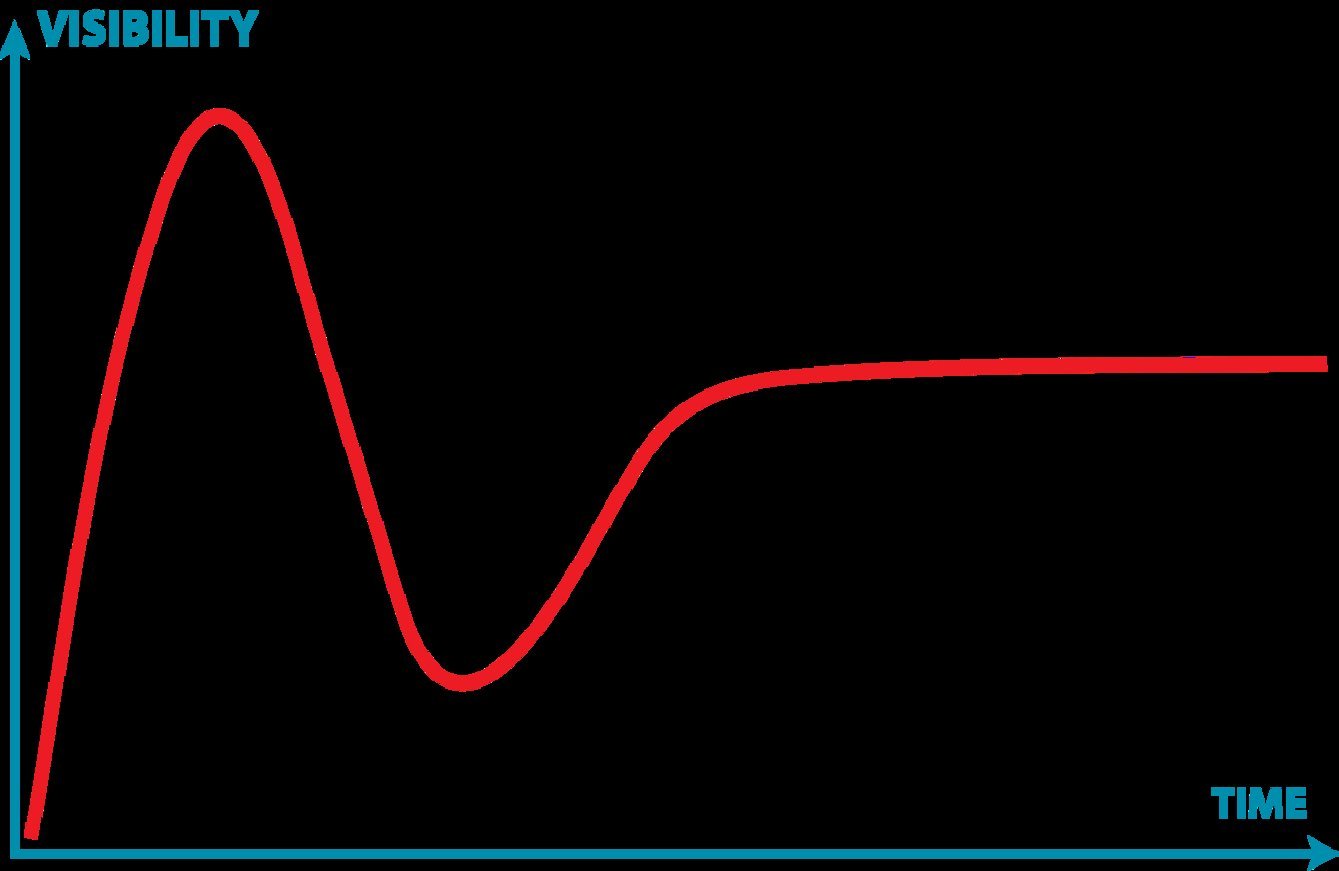
In 2026, the industry appears to sit late in the Innovation Trigger phase and we suggest approaching what we would reference as the Peak of Inflated Expectations on the Gartner Hype Cycle®. The excitement is real: funding is rising, pilots are expanding, China is pushing national strategy, and Western firms are racing to scale. But the gap between viral videos and commercial deployment remains wide. Safety, reliability, dexterity, battery life, cost, and maintenance remain unresolved at scale.
REEx would place humanoids at roughly 70–80% of the way toward the Peak of Inflated Expectations—not yet at the top. The peak likely arrives when production targets, media coverage, and investor expectations outrun near-term deployment reality. That could occur between now and 2028. The likely trough follows when companies discover that humanoids are harder to deploy than wheeled robots, fixed automation, or conventional industrial arms.
This does not make the theme less important. It makes it more investable—but only with discipline.
Near-term humanoid volumes will not move NdPr markets by themselves. Even thousands or tens of thousands of robots are statistical noise against global rare earth magnet demand. The risk emerges at scale. If humanoids reach hundreds of thousands or millions of units annually, they become another serious demand layer on top of EVs, wind turbines, drones, defense systems, robotics, and industrial automation.
That is where China’s supply-chain position becomes decisive. The West often talks about rebuilding mining capacity. But mining is only chapter one. The true bottleneck remains separation, refining, metal making, alloy production, magnet manufacturing, motor integration, and qualified industrial supply. China already has that system. The U.S. and allies are rebuilding it, but from a much thinner base.
REEx Bottom Line: Humanoids are not yet at mass adoption. They are nearing the hype peak in the next year or two. The coming correction will separate robotics theater from industrial reality. But China’s position is already formidable because it controls the rare earth and critical mineral supply chains that turn AI into motion. In the humanoid race, algorithms may be the brain—but magnets are the muscles.
Register today: REEx Marketplace™ (opens in a new tab)


0 Comments
No replies yet
Loading new replies...
Moderator
Join the full discussion at the Rare Earth Exchanges Forum →