
Highlights
- India is fast-tracking FDI approvals across seven strategic sectors including rare earth processing, targeting 600 stalled proposals with a 60-day approval window while cautiously easing restrictions on Chinese-linked investments.
- The policy correctly identifies processing, separation, and magnet manufacturing as the real bottleneck in rare earth supply chains, where China controls 90% of refining capacity.
- Critical gaps remain in technology transfer guarantees and production timelines, raising questions whether capital inflows will translate into actual industrial capability and independence.
India is opening the door—but the question is to whom, and at what cost. The government is preparing to fast-track foreign direct investment approvals across seven strategic sectors, including rare earth magnets and processing, while cautiously easing restrictions on firms with limited Chinese ownership. The move is designed to unlock roughly 600 stalled investment proposals and accelerate domestic industrial capacity in critical supply chains. At its core, this is India signaling urgency—an attempt to convert pol icy into production and ambition into capability.
But beneath the headline lies a more complicated reality.
The Department for Promotion of Industry and Internal Trade ( (opens in a new tab)DPIIT) issued a Press Note 2 of the 2026 series. But the Cabinet must be convinced, not yet a stakeholder. According to reports India “consultations are underway to align it with the Foreign Exchange Management Act (FEMA).”

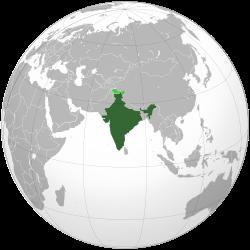
India is an important place. Now the world’s most populous and simultaneously democratic nation, the southern country emerges as the fourth-largest economy and the second-largest English-speaking country.
India has correctly identified the real bottleneck. Rare earth supply chains are not constrained by mining—they are constrained by processing, separation, and magnet manufacturing. This is where China dominates, controlling roughly 90% of refining and an even larger share of magnet production. Targeting these segments is not just smart—it is essential. The introduction of a 60-day approval window also addresses a longstanding weakness: bureaucratic delay, reports Rajeev Jayaswa in Hindustan Times (opens in a new tab).
Yet the policy carries a critical assumption—that capital will translate into capability.
That assumption deserves scrutiny. Rare earth processing is not a commodity business. It is complex chemistry that requires years of technical refinement, operational discipline, and customer qualification. Capital alone does not build that. Expertise does. And here the omissions become telling.
There is little clarity on technology transfer. Allowing minority Chinese ownership may unlock investment, but does it deliver the underlying know-how? Or does it risk embedding a softer form of dependence—where capital flows in, but control and capability remain elsewhere?
Equally absent are timelines tied to actual production. Approvals are not output. Investors would be wise to distinguish between policy momentum and industrial reality.
What makes this development notable is not just India’s ambition, but the broader signal: the rare earth race is entering a new phase. Governments are no longer just talking—they are trying to build.
But the fundamentals have not changed.
Alignment is not independence. Access is not control. And in rare earths, execution—not policy—decides winners.


0 Comments
No replies yet
Loading new replies...
Moderator
Join the full discussion at the Rare Earth Exchanges Forum →