
Highlights
- India's Lok Sabha openly debated the tension between environmental protection and rare earth resource development, with Minister Jitendra Singh acknowledging past illegal mining and smuggling issues tied to monazite extraction.
- Despite abundant rare earth-bearing coastal deposits, India's supply chain development is constrained by governance challenges, regulatory enforcement gaps, and significantly underdeveloped midstream separation and refining capacity.
- India has the geological resources but lacks the institutional systems and industrial scale to become a dominant force in the global rare earth supply chain, remaining a potential rather than a current major player.
In a notable moment in India’s Lok Sabha, lawmakers ("House of the People” or the lower house of India's bicameral Parliament, with 543 elected members representing constituencies across the nation) openly debated (opens in a new tab) a core tension in the rare earth sector: how to balance environmental protection with resource development. Minister Jitendra Singh (opens in a new tab) confirmed that India is actively extracting beach sand minerals—key sources of rare earth elements—but acknowledged past challenges, including illegal mining tied to graphite operations that enabled unauthorized monazite extraction.
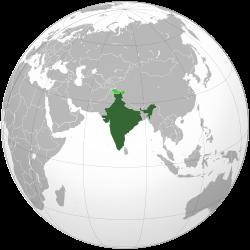
The Subsurface Story: Control, Not Just Resources
The exchange reveals a deeper truth often missed in headlines.
India is not short on rare earth-bearing minerals, particularly in coastal placer deposits rich in monazite. But the issue is governance and control. Past smuggling and regulatory lapses forced the government to impose temporary embargoes and tighter oversight.
This underscores a global pattern: resources alone do not create supply chains—institutions do.
What This Means for the Global Supply Chain
For investors and policymakers, the implications are clear:
- Environmental constraints will slow development timelines
- Regulatory enforcement remains a gating factor
- India’s midstream capacity—separation and refining—still lags significantly
Bottom line:
India has the geology, but not yet the system. Until enforcement, processing, and industrial scale align, it remains a potential player—not a dominant force—in the rare earth supply chain.
Rare Earth Exchanges™ continues to monitor the unfolding dynamics of the rare earth element/critical mineral supply chain.


0 Comments
No replies yet
Loading new replies...
Moderator
Join the full discussion at the Rare Earth Exchanges Forum →