
Highlights
- Hindustan Zinc has executed a Composite License with Uttar Pradesh to explore the 210-hectare Nawatola Laband REE block in Sonbhadra district.
- The license covers reconnaissance and prospecting only—no mining rights have been granted, and no resource estimates or metallurgical data have been disclosed.
- India's critical minerals strategy is directionally sound, but the real bottleneck is downstream: separation, refining, alloy production, and magnet manufacturing remain China-dominated.
- Exploration licenses are increasingly common in Great Powers Era 2.0; vertically integrated rare earth supply chains remain exceptionally rare and represent the true competitive prize.
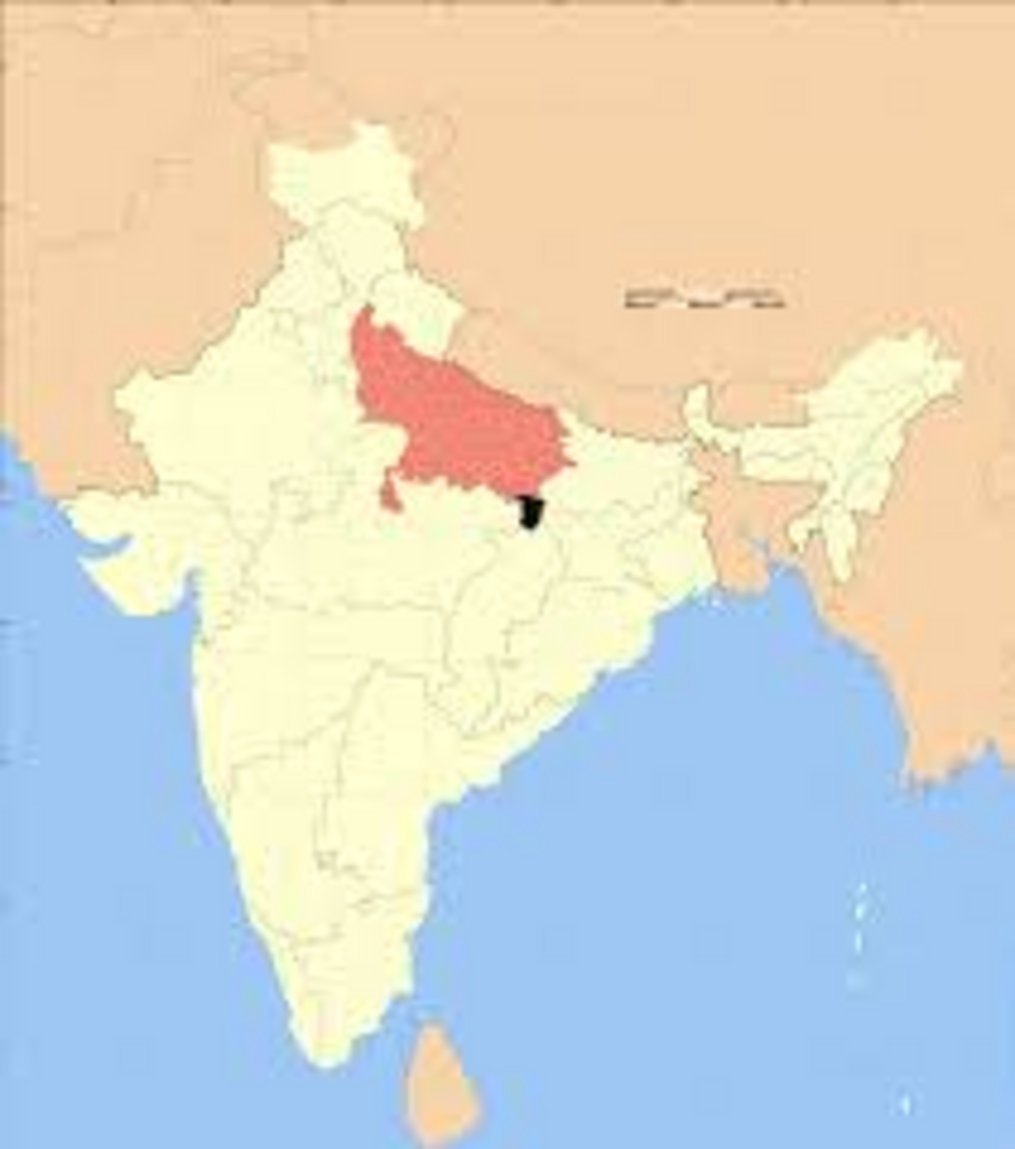
India's Hindustan Zinc Ltd., (NSE: HINDZINC, BSE: 500188) part of the Vedanta Group (opens in a new tab), has executed a Composite License with the Government of Uttar Pradesh to explore the 210-hectare Nawatola Laband Rare Earth Elements block in Sonbhadra district (opens in a new tab). The license authorizes reconnaissance, prospecting, and exploration—but not mining. Rare Earth Exchanges® view: this is another sign that India is expanding its critical minerals strategy under the leadership of the Ministry of Mines and Minister G. Kishan Reddy (opens in a new tab). Yet investors should distinguish between acquiring exploration rights and building a globally competitive rare earth supply chain. In Great Powers Era 2.0, discovering deposits is only the opening move.
Sonbhadra District, Uttar Pradesh
India Wants Rare Earths. But a License Doesn't Build a Supply Chain
Every nation wants rare earths. Few build the industrial ecosystem required to profit from them.
Hindustan Zinc has formally executed its Composite License for the Nawatola Laband REE block in Uttar Pradesh after previously being named the preferred bidder in India's fifth tranche of critical mineral auctions. If exploration succeeds—and only if it succeeds—the company could later qualify for a mining lease under India's Mines and Minerals (Development and Regulation) Act.
The Facts Are Solid. The Economics Remain Unknown
The licensee is real, validated by the company itself. So is India's policy shift toward securing domestic supplies of critical minerals.
What remains unknown is far more important. No NI 43-101 or JORC-style resource has been published. No mineralogy, metallurgy, recovery rates, or rare earth distribution has been disclosed. Investors do not yet know whether the deposit contains economically recoverable light rare earths, heavy rare earths, or both—or whether they can be processed commercially.
The Real Bottleneck Isn't Geology
Hindustan Zinc CEO Arun Misra has made clear the company's ambition to diversify into critical minerals, while the Indian government has accelerated auctions for strategic mineral blocks to reduce import dependence.
That strategy is directionally sound.
But Rare Earth Exchanges has consistently argued that the world's competitive advantage lies not in discovering rare earths, but in mastering separation chemistry, refining, metal making, alloy production, permanent magnet manufacturing, and customer qualification. China still dominates nearly every one of those downstream steps.
The Investor Takeaway
This license represents a credible strategic milestone for Hindustan Zinc and another signal that India intends to become a more serious critical minerals player. It is not, however, evidence that India has solved the rare earth challenge. In Great Powers Era 2.0, exploration licenses are increasingly common. Commercially qualified, vertically integrated rare earth supply chains remain exceptionally rare—and that is where the real investment opportunity, and the real competitive advantage, will ultimately be decided.
Profiles
Hindustan Zinc Limited (NSE: HINDZINC, BSE: 500188) is India's only integrated producer of zinc, lead, and silver and one of the country's largest mining companies. Incorporated in 1966 and headquartered in Udaipur, Rajasthan, the company is a subsidiary of Vedanta Limited, while the Government of India retains a significant minority stake of approximately 27.9%. Hindustan Zinc commands roughly 75% of India's primary zinc market and ranks among the world's largest integrated zinc producers and top silver producers, operating major mining assets including the Rampura Agucha and Sindesar Khurd mines along with multiple smelting complexes. Beyond its core metals business, the company has expanded its strategic focus to critical minerals—including rare earth elements—as well as renewable energy, operating captive solar, wind, and thermal power assets while exploring green hydrogen applications. With a market capitalization of approximately ₹2.19 trillion and a recent share price of ₹518.85 (NSE: HINDZINC), the company is increasingly positioning itself to participate in India's long-term critical minerals strategy as the country seeks to strengthen domestic supply chains for strategic materials.
Vedanta Group (officially Vedanta Limited) is one of India's largest multinational mining, metals, and oil & gas conglomerates. Headquartered in Mumbai, it is controlled by billionaire founder Anil Agarwal and operates globally, producing essential commodities spanning zinc, silver, aluminum, iron ore, steel, and commercial power.
Register today: REEx Marketplace™ (opens in a new tab)


0 Comments
No replies yet
Loading new replies...
Moderator
Join the full discussion at the Rare Earth Exchanges Forum →