
Highlights
- Indonesia lacks regulations defining how trace rare earth content in non-rare-earth exports like alumina and ferronickel should be treated, causing shipment delays.
- Key EV and industrial materials including mixed hydroxide precipitate and ferronickel have been caught in export limbo despite no formal ban being issued.
- Presidential Chief of Staff Dudung Abdurachman stated exports should not be blocked simply due to the absence of a regulatory framework for byproduct rare earths.
- The episode reveals that regulatory ambiguity alone—not just export bans—can disrupt critical mineral supply chains at a global scale.
- Western buyers and manufacturers face growing compliance complexity as rare earth elements appear incidentally across interconnected industrial value chains.
Indonesia is confronting an unexpected export bottleneck after regulatory uncertainty surrounding trace rare earth content disrupted shipments of alumina, ferronickel, and mixed hydroxide precipitate (MHP)—key materials used in aluminum, stainless steel, and electric vehicle battery production. While the issue appears administrative rather than geopolitical, it highlights a broader reality: as governments assign greater strategic value to rare earth elements, even incidental quantities can complicate global trade. Rare Earth Exchanges® believes the episode illustrates a growing challenge for manufacturers and traders—the need for clear rules governing critical mineral byproducts embedded within increasingly complex supply chains.
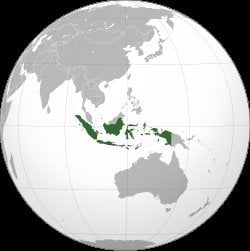
Regulatory Gap Creates Export Delays
According to Mining Weekly, citing Reuters, Indonesia's Presidential Office convened government agencies, law enforcement officials, and industry representatives after companies reported export disruptions involving mineral products containing rare earth elements.
Officials acknowledged that Indonesia currently lacks regulations defining how rare earth content should be treated when it appears in exported products that are not themselves classified as rare earth commodities. Without clear guidance, exporters have encountered shipment delays while authorities determine how existing regulations should be applied.
Industry sources told Reuters that exports of alumina, the primary feedstock for aluminum smelting, have been affected, along with ferronickel, a key stainless steel ingredient, and mixed hydroxide precipitate (MHP), an intermediate product used in electric vehicle battery supply chains. The quantity of delayed shipments has not been disclosed.
Rare Earth Policy Meets Industrial Reality
Indonesia has designated rare earth elements as strategic resources intended to support domestic industrial development, and President Prabowo Subianto has established a dedicated body to oversee their utilization. At the same time, officials acknowledged that existing regulations do not adequately address situations in which rare earth elements occur as incidental byproducts within other mineral exports.
Following the coordination meeting, Presidential Chief of Staff Dudung Abdurachman said exports should not be obstructed simply because no regulatory framework currently exists governing these byproduct rare earths.
Implications for Global Supply Chains
The report announces no new export ban, licensing requirement, or policy change. Instead, it exposes how regulatory ambiguity alone can disrupt critical mineral supply chains. As governments increasingly classify rare earths as strategic assets, regulatory scrutiny is extending beyond standalone rare earth products to industrial materials in which rare earth elements occur incidentally. For producers, refiners, and manufacturers, compliance is becoming a supply chain challenge that extends well beyond mining and processing.
For Western buyers, the lesson reaches beyond Indonesia. Future supply chain resilience will depend not only on production capacity, but also on regulatory clarity, traceability, and legal frameworks capable of managing critical minerals that increasingly appear across interconnected industrial value chains.


0 Comments
No replies yet
Loading new replies...
Moderator
Join the full discussion at the Rare Earth Exchanges Forum →