
Highlights
- Brazil proposes a state-owned company, Terrabras, to develop the world's second-largest rare earth reserves, moving beyond raw exports to domestic processing and manufacturing.
- Despite holding vast reserves, Brazil produces less than 1% of the global rare earth supply, with 13 Congressional bills now targeting critical minerals policy reform.
- Brazil's multi-polar strategy involving the U.S., EU, and China threatens Western supply chain access, as resource nationalism meets downstream Chinese dominance in the clean energy transition.
Brazil is considering (opens in a new tab) a major shift in critical minerals policy, with lawmakers proposing a state-owned company—“Terrabras”—to develop the country’s vast rare earth reserves and move beyond raw material exports into domestic processing and manufacturing. Backed by President Luiz Inácio Lula da Silva’s broader industrial strategy, the initiative reflects a growing global trend: resource-rich nations seeking to capture more value from the clean energy supply chain rather than feeding foreign industries.
According to Mauro Sousa, director-general of Brazil's National Mining Agency (ANM), via press conference, the nation’s politicians are revealing 13 bills in Congress linked to rare earths and critical minerals. Yet this would not be initiated by the government, according to a Reuters piece this week.
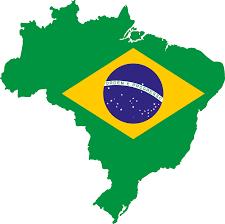
Brazil holds the world’s second-largest rare earth reserves, yet produces less than 1% of the global supply. Much of its resource base lies in ionic clay deposits—similar to those in southern China—making extraction potentially lower-cost and strategically valuable, particularly for heavy rare earths.
But the implications extend well beyond Brazil. For the United States and Europe, this raises a familiar challenge: access does not equal control. Even as Washington finances projects like Serra Verde, Brazil is signaling it will not align exclusively with Western supply chains, instead pursuing a “multi-polar” strategy involving the U.S., EU, and China.
The risk? A tightening global market where upstream resource nationalism meets downstream Chinese dominance—all in the context of what Rare Earth Exchanges™ refers to as Great Powers Era 2.0. Without rapid investment in refining, magnet production, and coherent industrial policy, the West may once again find itself financing supply—without securing it.


0 Comments
No replies yet
Loading new replies...
Moderator
Join the full discussion at the Rare Earth Exchanges Forum →