
Highlights
- Saudi Energy Minister announced 110 million tonnes of mineralized material at Jabal Sa'id containing heavy rare earth elements and uranium at the IAEA General Conference.
- Geologists have known about Jabal Sa'id's unusual mineralogy since at least a 1956 radiometric survey, making this an expansion of a known system rather than a new discovery.
- No REE grades, element distribution, recovery rates, or economic studies have been released, making commercial significance impossible to assess.
- Investors must distinguish Jabal Sa'id's pegmatite-type REE occurrence from the nearby Jabal Sayid copper mine operated by Ma'aden and Barrick.
- Saudi Arabia's strategic opportunity lies in combining geology, energy, capital, and Western processing partnerships to become an allied critical minerals midstream platform.
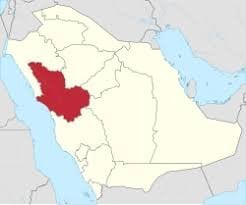
Saudi Arabia says new exploration has identified approximately 110 million tonnes of mineralized material at Jabal Sa’id in the Madinah region containing high concentrations of rare earths—particularly heavy rare earth elements (HREEs)—alongside promising uranium concentrations. Energy Minister Prince Abdulaziz bin Salman (opens in a new tab) announced the estimate at the IAEA General Conference (opens in a new tab). Reuters independently confirms the 110-million-tonne uranium-bearing announcement, while Arab News reports the minister's HREE language. This is potentially important—but 110 million tonnes of mineralized rock is not 110 million tonnes of rare earths, and no current REE grades, element distribution, recoveries, or economic study have yet been released.
REEx Insight — The Discovery That Wasn't Really a Discovery
The geology has been whispering this story for decades. A 1985 USGS study of Jabal Sa’id drill core found bastnaesite, doverite, monazite, and synchisite, with yttrium abundant in doverite and also occurring in several other minerals. A 2009 peer-reviewed study traced exploration back to a 1956 radiometric survey and documented uranium mineralization. More recently, a 2024 study identified xenotime, bastnaesite, monazite, pyrochlore, and other minerals carrying REEs, Y, Nb, Th, and U.
That changes the interpretation. This is less a bolt-from-the-blue discovery than modern Saudi exploration potentially enlarging and defining a mineral system known for generations.
Two Vantages—One Strategic Prize
The bullish case: HREEs remain one of the West's weakest supply-chain links. If Saudi Arabia can establish commercially recoverable dysprosium, terbium, yttrium, or other strategic HREEs, its energy, capital, and emerging U.S. processing partnerships could support a new ex-China supply node.
The skeptical case: mineralogy can be unforgiving. REEs dispersed among multiple accessory minerals—and accompanied by uranium and thorium—can make liberation, separation, waste handling, and permitting difficult. The 110-million-tonne headline tells investors almost nothing about economics.
REEx synthesis: Saudi Arabia's opportunity is bigger than mining. Under Great Powers Era 2.0™, the strategic prize is to combine geology + energy + capital + separation + Western qualification. Saudi Arabia could become an allied midstream platform, but only if metallurgy turns interesting rocks into specification-grade products.
A Crucial Jabal Sayid Naming Trap
There is another wrinkle investors should know. JOGMEC specifically warns that sources sometimes confuse the Jabal Sayid VMS copper deposit, operated by the Ma’aden-Barrick joint venture, with the nearby Jabal Sa’id pegmatite-type rare-earth occurrence several kilometers south.
That distinction matters. Saudi government materials describe the producing Jabal Sayid mine as a copper-dominant VMS system. REEx would therefore avoid implying that the newly announced HREE-uranium resource is simply an extension of the operating copper mine until Saudi authorities publish coordinates and technical documentation.
What the Numbers Still Don't Tell Us
The historical benchmark is revealing. The 2022 OECD/IAEA uranium assessment listed 34 million tonnes inferred at 415 ppm U and 1,698 ppm Th for Jabal Sayid, containing about 14,135 tonnes of uranium. It classified Saudi uranium occurrences associated with REE-Nb-Zr-Ta-Th mineralization as unconventional resources.
The new 110-million-tonne figure is therefore potentially significant—but investors now need TREO grade, individual HREE distribution, mineral-resource classification, mineralogy, recoveries, radionuclide handling requirements, and economics. Until those arrive, calling this one of the world's most significant rare-earth resources is an aspiration, not yet a demonstrated geological-economic conclusion.
REEx Connect
| Organization / Person | REEx Relevance |
|---|---|
| Saudi Ministry of Energy | Source of new 110 Mt announcement |
| Prince Abdulaziz bin Salman | Energy Minister announcing results |
| Saudi Geological Survey | Key national geological authority |
| IAEA / OECD-NEA | Historical Saudi uranium-resource data |
| U.S. Geological Survey | Documented Jabal Sa’id REE mineralogy in 1985 |
| Ma’aden | Saudi national mining champion |
| Barrick Mining | 50% partner in nearby Jabal Sayid copper operation |
| MP Materials | Partner with Ma’aden on Saudi REE processing ambitions |
| JOGMEC | Identified important Jabal Sayid/Jabal Sa’id naming distinction |
| Arab News | Independent outlet reporting HREE portion of announcement |
| Reuters | Independently confirmed 110 Mt uranium-bearing announcement |
REEx Bottom Line: Saudi Arabia may indeed be sitting on an important HREE-uranium system. The fascinating part is that geologists have known the rocks were unusual for roughly 70 years. What changed in 2026 is the scale being claimed—and Saudi Arabia's growing determination to turn geology into an integrated critical-minerals industry.


0 Comments
No replies yet
Loading new replies...
Moderator
Join the full discussion at the Rare Earth Exchanges Forum →