
Highlights
- Japan launches a consortium with Daikin, Shin-Etsu Chemical, and Hitachi to recover rare earth magnets from 10,000 air conditioning compressors annually starting in 2027.
- The initiative uses AI-powered automation and robotic disassembly to industrialize magnet recycling, backed by $238M in government funding for rare metal recovery.
- Japan is operationalizing magnet recycling as a supply chain strategy to reduce dependence on China and strengthen a domestic circular supply for critical materials.
Japan is stepping up efforts to reduce dependence on imported rare earths, launching a coordinated push to recover magnets from end-of-life equipment—a move with clear implications for global supply chains.
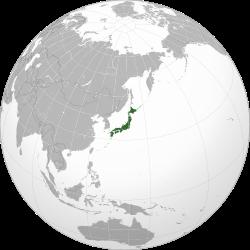
According to a report circulated by the China Rare Earth Industry Association, companies including Daikin, Shin-Etsu Chemical, Hitachi, and Tokyo Eco Recycle plan to jointly launch an initiative to recover and reuse rare-earth magnets from commercial air-conditioning compressors.
From Waste to Supply: Building a Magnet Recycling Pipeline
The initiative targets compressors—the core component of air conditioners—which contain neodymium-based permanent-magnet motors.
Key milestones:
- 2026: Development of automated recovery equipment
- 2027: Full-scale operations begin
The consortium aims to:
- Collect ~10,000 compressors annually
- Recover several tons of rare earth magnets per year
That’s modest in volume—but strategically important.
A Missing Link in Japan’s Supply Chain
The effort addresses a critical gap:
Japan currently lacks a formal recycling system for rare earth magnets in commercial HVAC equipment.
Under the plan:
- Daikin will handle compressor collection
- Tokyo Eco Recycle (with Hitachi) will extract magnets
- Shin-Etsu Chemical will use recovered material to produce new magnets
A centralized digital system will track the process from collection through remanufacturing.
Automation + AI: Industrializing Recycling
The project leans heavily on automation and AI:
- Robotic disassembly tailored to different compressor models
- Image recognition systems to improve sorting and recovery efficiency
This signals a shift toward industrial-scale, tech-enabled recycling rather than manual recovery.
Policy Backing: Government Funding Steps In
Japan’s Ministry of the Environment (Japan) has allocated ¥37.9 billion (~$238 million USD) in its FY2026 budget to support the recycling of rare metals, including rare earths.
This aligns with broader efforts to:
- Reduce reliance on China
- Strengthen domestic circular supply chains
- Improve resource security in critical industries
Why This Matters for the West
No breakthrough technology—but a meaningful shift:
Japan is operationalizing magnet recycling as a supply strategy—not just a sustainability initiative.
If scaled, this approach could:
- Provide a secondary source of rare earth materials
- Reduce exposure to upstream supply shocks
- Complement—not replace—primary mining and processing
For the U.S. and Europe, the signal is clear:
Recycling is moving from pilot projects to coordinated industrial systems.
REEx Reflection
Japan is not solving the rare earth problem—but it is tightening the loop.
In a constrained supply chain, even incremental domestic recovery becomes strategic leverage.


0 Comments
Discuss this article