
Highlights
- Japan's Sojitz Corporation is expanding rare earth sourcing into Southeast Asia—targeting Laos, Cambodia, and India—to reduce dependence on China-dominated supply chains.
- The strategic shift focuses on China-adjacent geology without Chinese political control, as southern China's ionic clay deposits share mineralization with neighboring Southeast Asian regions.
- This marks Great Powers Era 2.0 dynamics: China controls industrial ecosystems, Japan diversifies supply, and Southeast Asia becomes contested critical mineral terrain.
Japan’s Sojitz Corporation is looking beyond Australia and deeper into Southeast Asia for future rare earth supply. Laos, Cambodia, India, and other regions are now on Sojitz’s radar as Tokyo continues its efforts to reduce dependence on China-dominated rare-earth supply chains. For Rare Earth Exchanges™ readers, this is not merely another mining story. It is another sign that the Great Powers Era 2.0 is redrawing the geopolitical map of critical minerals across Southeast Asia. Not one consolidated bloc led by the USA, for example, acting in concern. Today represents something quite different. We are in a new era.
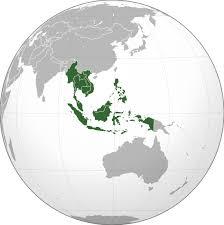
The Quiet Land Rush Beneath China
At first glance, the VietnamPlus reporting (opens in a new tab) reads cautiously. But the implications are enormous.
Sojitz CFO Makoto Shibuya specifically highlighted regions connected to southern China—including Laos and Cambodia—as having strong rare-earth potential. That geography matters. Southern China already dominates ionic clay rare-earth production, especially heavy rare earths such as dysprosium and terbium used in high-performance magnets. Much of the surrounding geology in Southeast Asia shares similar mineralization characteristics. In practical terms, Japan appears to be searching for “China-adjacent geology without China-adjacent political control.”
What the Article Gets Right—And What It Misses
The report correctly notes that Japan has spent years diversifying its rare-earth supply chains through partnerships such as its long-running JOGMEC–Lynas alliance. But the article understates the hardest reality: Finding ore is not enough.
Even if Laos, Cambodia, or India emerges as a meaningful rare-earth producer, China still overwhelmingly controls separation, metallization, alloying, and magnet manufacturing. That remains the true chokepoint.
Southeast Asia Becomes the New Strategic Frontier
What makes this story important is not its immediate production.
It is a strategic positioning. Japan is clearly preparing for a world in which rare-earth supply security cannot depend on stable Chinese exports forever. Meanwhile, Southeast Asian nations increasingly recognize they may possess geopolitical leverage through critical mineral development.
This is at least one way we suggest how Great Powers Era 2.0 unfolds:
- China dominates industrial ecosystems
- Japan searches for diversification
- Southeast Asia becomes contested terrain
- and the West scrambles to rebuild the industrial capability it outsourced decades ago
The rare earth map is changing again. And traders such as Sojitz will be key change agents.


0 Comments
No replies yet
Loading new replies...
Moderator
Join the full discussion at the Rare Earth Exchanges Forum →