
Highlights
- Kazakhstan is positioning itself as a strategic U.S. partner for critical minerals with $17B in new agreements and a flagship tungsten project backed by Cove Capital.
- While mineral reserves are real, processing capacity for tungsten refining and rare earth separation remains limited—mine-to-magnet integration is still mostly aspiration.
- The pitch signals geopolitical alignment, but lacks detail on Chinese processing dominance, financing certainty, downstream offtake partners, and technical risks.
Kazakhstan is pitching itself as a serious, scaled partner to the United States for critical minerals and supply chain resilience—not just a resource holder, but a full-stack player spanning mining, processing, and logistics. The centerpiece: a massive tungsten project tied to U.S. investors. The message is clear—but so are the gaps.
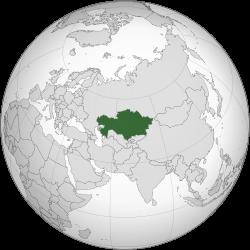
A Steppe Awakens: From Resource Basin to Strategic Player
Kazakhstan is no longer whispering—it is signaling loudly to Washington: we can help rebuild your supply chains in the Times of Central Asia (opens in a new tab). Backed by over $60 billion in cumulative U.S. investment and 29 new agreements reportedly worth $17 billion, the country is positioning itself as Central Asia’s industrial anchor. The tungsten project with Cove Capital stands out as a flagship, framed as one of the largest undeveloped resources globally and a cornerstone for non-Chinese supply.
The pitch is compelling: geology + infrastructure + political alignment = resilience. But investors should pause before declaring victory.
Beneath the Surface: What Holds Up—and What Doesn’t
Kazakhstan’s mineral endowment is real. It is a top uranium producer and holds significant reserves of tungsten, tantalum, and rare-earth elements. Its logistics ambitions—especially the “Middle Corridor”—are strategically relevant in a fractured Eurasian trade map.
But here’s the friction: mine-to-magnet is still mostly aspiration. Processing capacity—especially for tungsten refining and rare earth separation—remains limited. The article leans heavily on potential integration without detailing existing midstream capabilities, financing certainty, or timelines. That’s not trivial. In this sector, processing—not mining—is the choke point.
The Quiet Omissions: What Isn’t Said
There is no serious discussion of:
- China’s entrenched dominance in tungsten and rare earth processing
- Technical, environmental, and financing risks
- Whether Cove’s project has secured downstream offtake or processing partners
The tone in the recent entry borders on promotional. Kazakhstan is presented as “uniquely positioned,” but not uniquely proven.
Why This Matters Now
This is a geopolitical signal. The U.S. is actively scanning for credible ex-China supply chains. Kazakhstan is raising its hand early—and that matters. But investors should remember a core truth: resources are not supply chains. Until processing, separation, and manufacturing are built—or contracted—this remains a strategic bet, not a solved problem.


0 Comments
No replies yet
Loading new replies...
Moderator
Join the full discussion at the Rare Earth Exchanges Forum →