
Highlights
- Hyundai Motor secured up to 1,500 metric tonnes of NdPr oxide annually from Arafura's Nolans Project in Australia's Northern Territory.
- SK Innovation and Posco International are also evaluating major Australian natural gas investments as part of Korea's broader critical minerals pivot.
- Arafura's Nolans Project is expected to produce ~4,440 tonnes of NdPr oxide annually, representing roughly 4% of projected global demand.
- Upstream diversification does not equal supply-chain independence—China still dominates midstream processing, alloy production, and permanent magnet manufacturing.
- True rare earth resilience requires competitive mine-to-magnet ecosystems, not just mine-to-oxide agreements.
South Korean industrial leaders are accelerating efforts to diversify away from Chinese critical mineral supply chains by investing in Australia's Northern Territory. Hyundai Motor (opens in a new tab) has secured long-term NdPr oxide supply from Arafura Rare Earths Ltd. (opens in a new tab) (ASX: ARU; OTC Pink: ARAFF) Nolans Project, while SK Innovation E&S and Posco International are evaluating major Australian natural gas opportunities. The strategic shift is real and significant. However, investors should not confuse upstream diversification with supply-chain independence. The greatest vulnerabilities remain further downstream—in the midstream rare earth processing, metals, alloys, and permanent magnet manufacturing, where China continues to dominate.
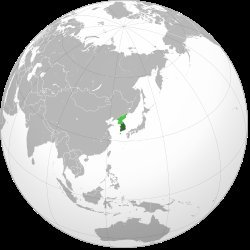
Australia's Outback Is Becoming Korea's Strategic Backyard
South Korea is quietly rewriting its critical minerals playbook. According to The Korea Herald, Hyundai Motor Group, SK Innovation Co., Ltd. (opens in a new tab) (KRX: 096770; OTC: SKOVF) Energy & Solution (E&S), and POSCO International Corp (opens in a new tab). (KRX: 047050) are expanding investments in Australia's Northern Territory in response to China's tightening export controls and overwhelming dominance in rare earth processing. Hyundai's long-term agreement with Arafura Rare Earths will provide up to 1,500 metric tonnes of NdPr oxide annually from the Nolans Project once commercial production begins. Meanwhile, Korean energy companies are pursuing new Australian gas supplies to strengthen long-term energy security.
A Strong Move—But Only One Move
The reporting is largely accurate and highlights an important strategic trend. Arafura's Nolans Project is one of the world's most advanced non-Chinese rare earth developments. If completed as planned, it is expected to produce approximately 4,440 tonnes of NdPr oxide annually—about 4% of projected global demand—making Hyundai's offtake agreement one of the project's foundational commercial commitments.
Yet investors should recognize what Nolans actually produces: rare earth oxide, not finished magnets.
The most strategically valuable stages of the supply chain—metal making, alloy production, magnet manufacturing, and qualification into automotive and defense supply chains—remain heavily concentrated in China.
The Story Between the Headlines
The article authored by Byun Hye-jin rightly celebrates diversification but leaves out the industry's central reality. China's advantage is no longer simply mining or even separation. It is the integrated industrial ecosystem that converts rare earth oxides into qualified magnets at massive commercial scale.
For investors, this is the key takeaway. Hyundai's agreement meaningfully reduces upstream supply risk and strengthens Australia as a trusted strategic partner. And as we continually reinforce via the REEx platform, true supply-chain resilience will not be measured by mine-to-oxide success alone. It will be won by those who can build competitive mine-to-magnet ecosystems capable of supplying automakers at industrial scale. Until that gap closes, Korea's dependence on China will diminish—but it will not disappear.


0 Comments
No replies yet
Loading new replies...
Moderator
Join the full discussion at the Rare Earth Exchanges Forum →