
Highlights
- Larsen & Toubro is preparing a bid for India's ₹7,280 crore (~$763M) rare earth permanent magnet incentive program and is actively seeking a technology partner.
- The program targets 6,000 tonnes per year of integrated sintered NdFeB capacity, covering oxide-to-metal, metal-to-alloy, and alloy-to-finished-magnet production.
- At least 15 bids have been submitted, including a consortium involving Japan's Proterial and two Indian automakers, reflecting strong industry interest.
- L&T's search for a technology partner highlights the critical gap between engineering capability and commercial magnet-making expertise that China has built over decades.
- Investors should focus on post-subsidy milestones: technology transfer, metallization, alloy yields, finishing, qualification, and repeatable commercial output.
India's magnet ambitions are attracting industrial heavyweights. Larsen & Toubro (opens in a new tab) (L&T) reportedly plans to bid for India's ₹7,280 crore rare-earth permanent-magnet incentive program and is seeking an experienced technology partner. At the August 25 exchange rate of roughly ₹95.41 per dollar, the program equals approximately US$763 million—not a new L&T investment commitment.
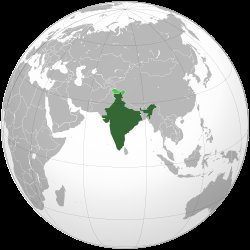
REEx Insight: Money Can Buy Furnaces—Not Know-How
This matters because India is confronting the same lesson facing the United States: owning rare-earth resources is not the same as manufacturing qualified magnets. India's program targets 6,000 tonnes per year of integrated sintered NdFeB capacity, spanning oxide-to-metal, metal-to-alloy, and alloy-to-finished-magnet production. L&T brings serious engineering and manufacturing capabilities, but its reported search for a technology partner exposes the critical bottleneck: commercial magnet-making expertise. That is precisely where China's advantage becomes difficult to reproduce.
Fifteen Bidders, One Industrial Test
The Telegraph Online reports (opens in a new tab) 15 bids already submitted, including a consortium involving Japan's Proterial and two Indian automakers, with L&T preparing its own bid. That claim has not yet been independently detailed by India's government. What is verified is substantial industry interest: at least 25 companies attended the government's April pre-bid conference.
One correction matters. China does not simply control "90% of global output." Recent estimates vary by supply-chain stage; its dominance is especially acute in separation and sintered magnet manufacturing.
For investors, the scoreboard begins after subsidies: technology transfer, metallization, alloy production, yields, finishing, qualification, and repeatable commercial output.
REEx Connect
| Organization | Role | Key Contact |
|---|---|---|
| Larsen & Toubro | Prospective magnet manufacturer | S.N. Subrahmanyan, (opens in a new tab) Chairman & MD |
| Proterial | Japanese magnet technology leader | Sean Stack, (opens in a new tab) Representative Executive Officer |
| Ministry of Heavy Industries | ₹7,280 crore program | H.D. Kumaraswamy, Union Minister (opens in a new tab) |


0 Comments
No replies yet
Loading new replies...
Moderator
Join the full discussion at the Rare Earth Exchanges Forum →