
Highlights
- Libyan delegation met with the U.S. Geological Survey to advance cooperation on mapping untapped critical mineral resources, including strategic elements in southern regions like the Murzuq and Tibesti corridors.
- Libya holds significant geological potential with iron ore reserves up to 1.6 billion metric tonnes, as well as phosphate, potash, and other strategic minerals, positioning it as a potential player in global supply chains.
- This U.S.-Libya engagement represents strategic positioning in Great Powers competition for critical minerals, offering Western nations alternatives to Chinese-dominated processing ecosystems.
A largely underreported development signals a potentially important shift in global critical mineral strategy: a delegation from Libya has engaged directly with the U.S. Geological Survey (opens in a new tab) in Washington, D.C. to advance cooperation on mapping and developing the country’s untapped mineral resources, including strategic and rare earth elements.
The talks build on prior engagements in late 2025 and early 2026 and focus on launching advanced geological survey programs aimed at systematically assessing Libya’s subsurface potential. Senior Libyan officials—including ministers overseeing oil, economy, and infrastructure—participated, underscoring that this is not a technical exercise alone, but a coordinated national strategy to diversify beyond hydrocarbons and position mining as a second economic pillar.
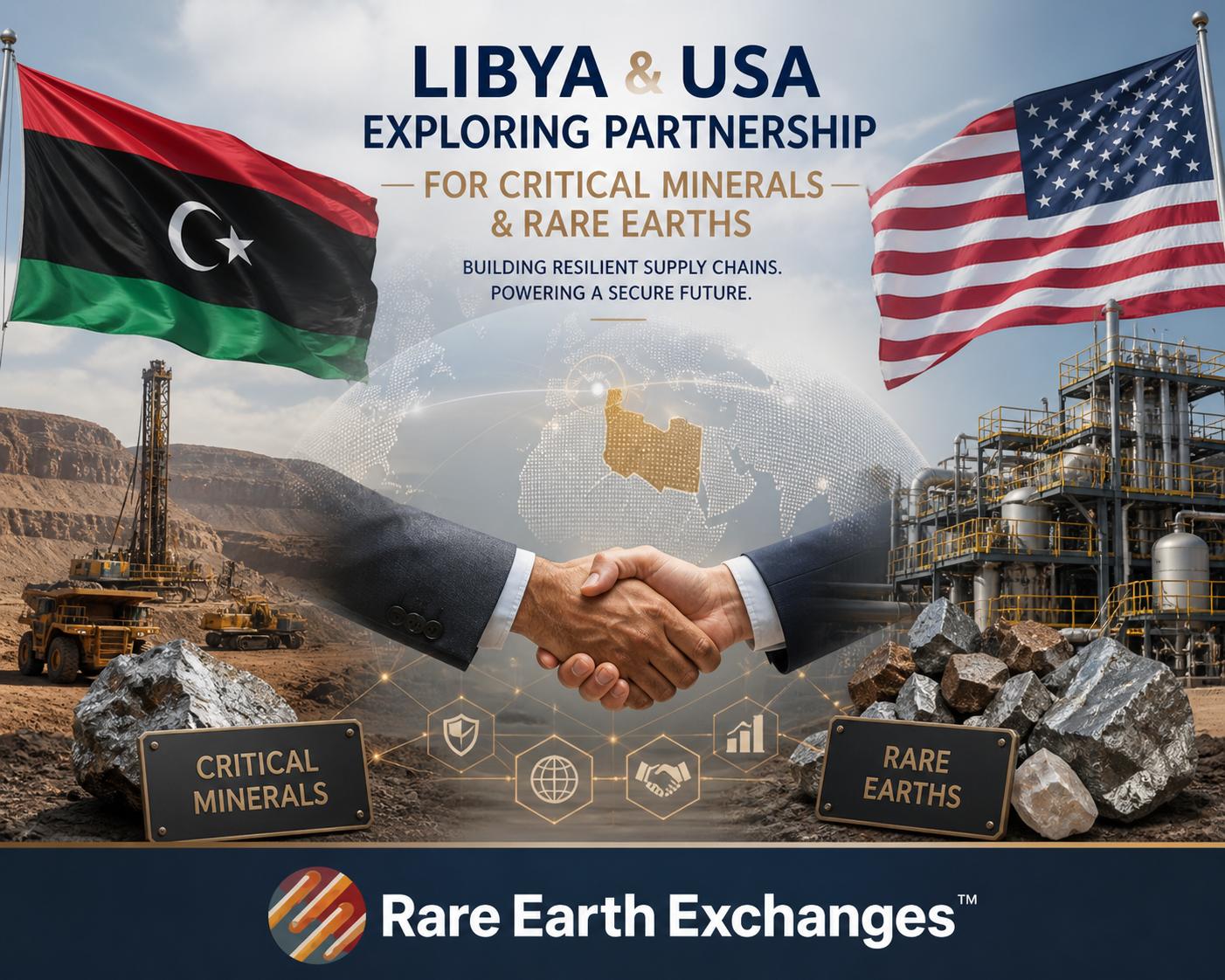
Libya, long defined by its oil and gas wealth, holds significant but largely untapped potential in rare earth elements (REEs) and other critical minerals, particularly in its southern Murzuq and Tibesti corridors. These regions are believed to host deposits of REEs alongside gold and other strategic resources, positioning Libya as a possible future player in global critical mineral supply chains. Beyond rare earths, the country also contains substantial iron ore reserves in Wadi ash-Shati—estimated between 795 million and 1.6 billion metric tonnes—as well as notable deposits of phosphate in the Murzuq Basin, potash in the Sirte Basin, and other industrial minerals such as gypsum, manganese, and sulfur.
Despite this geological potential, Libya’s mining sector remains underdeveloped, currently limited to basic materials like cement and salt, largely due to political instability, regulatory uncertainty, and infrastructure gaps. However, with targeted investment and improved governance, the sector could emerge as a significant economic pillar and a strategic opportunity in the evolving global race for critical minerals.
As reported in the Libya Herald (opens in a new tab) by several senior U.S. officials attended the session, as well as the Libyan delegation: the Minister of Transport, Mohamed Al-Shahoubi, Minister of Oil and Gas, Khalifa Abdel-Sadig, Minister of Economy, Suhail Abu Shiha, Head of the Executive Team for PM’s Initiatives and Strategic Projects, Mustafa Al-Mana, and Director General of the National Mining Corporation, Faraj Al-Shandouli.
For the United States, this engagement is notable. The USGS, part of the Department of the Interior, plays a foundational role in resource mapping—often the first step in shaping long-term supply chains. In the context of Great Powers Era 2.0, early-stage geological intelligence is not neutral; it is strategic positioning.
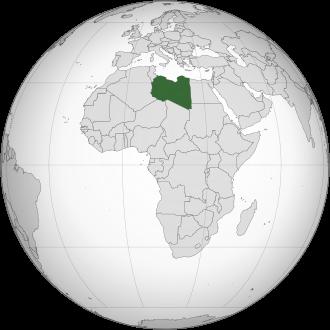
Libya’s geography adds another layer. Positioned between Europe, Sub-Saharan Africa, and the Middle East, the country represents a potential future node in critical mineral supply chains—particularly as Western nations seek alternatives to Chinese-dominated processing ecosystems.
However, challenges remain substantial. Libya’s political fragmentation, regulatory uncertainty, and infrastructure gaps could complicate execution. Turning geological potential into commercially viable, scalable production—especially in midstream processing—will require sustained capital, governance reform, and international partnership.
Still, the signal is clear: the competition for critical minerals is expanding into new jurisdictions. This is not just about resources in the ground—it is about who maps them, who finances them, and ultimately, who controls their path to market.
In Great Powers Era 2.0, the first move is often the quietest.


0 Comments
No replies yet
Loading new replies...
Moderator
Join the full discussion at the Rare Earth Exchanges Forum →