
Highlights
- Magnum reported anomalous TREO across all 122 drill holes at Piracanjuba North, with one interval returning 2m at 1,409 ppm TREO including desorbable terbium and dysprosium.
- The expanded 116-square-kilometer footprint stems from reinterpretation of existing radiometric data, not new surveys, and does not represent a drilled or resourced mineralized area.
- Magnum recorded a A$9.43 million net loss and material going-concern uncertainty, with over 3.8 billion shares and options outstanding posing significant dilution risk.
- Desorption results are laboratory screening values only; mineralogy, impurity profiles, reagent consumption, and commercial product viability remain unproven.
- Brazil's ionic clay rare earth potential is real, but value realization requires proven separation, metals production, and magnet supply chain integration.
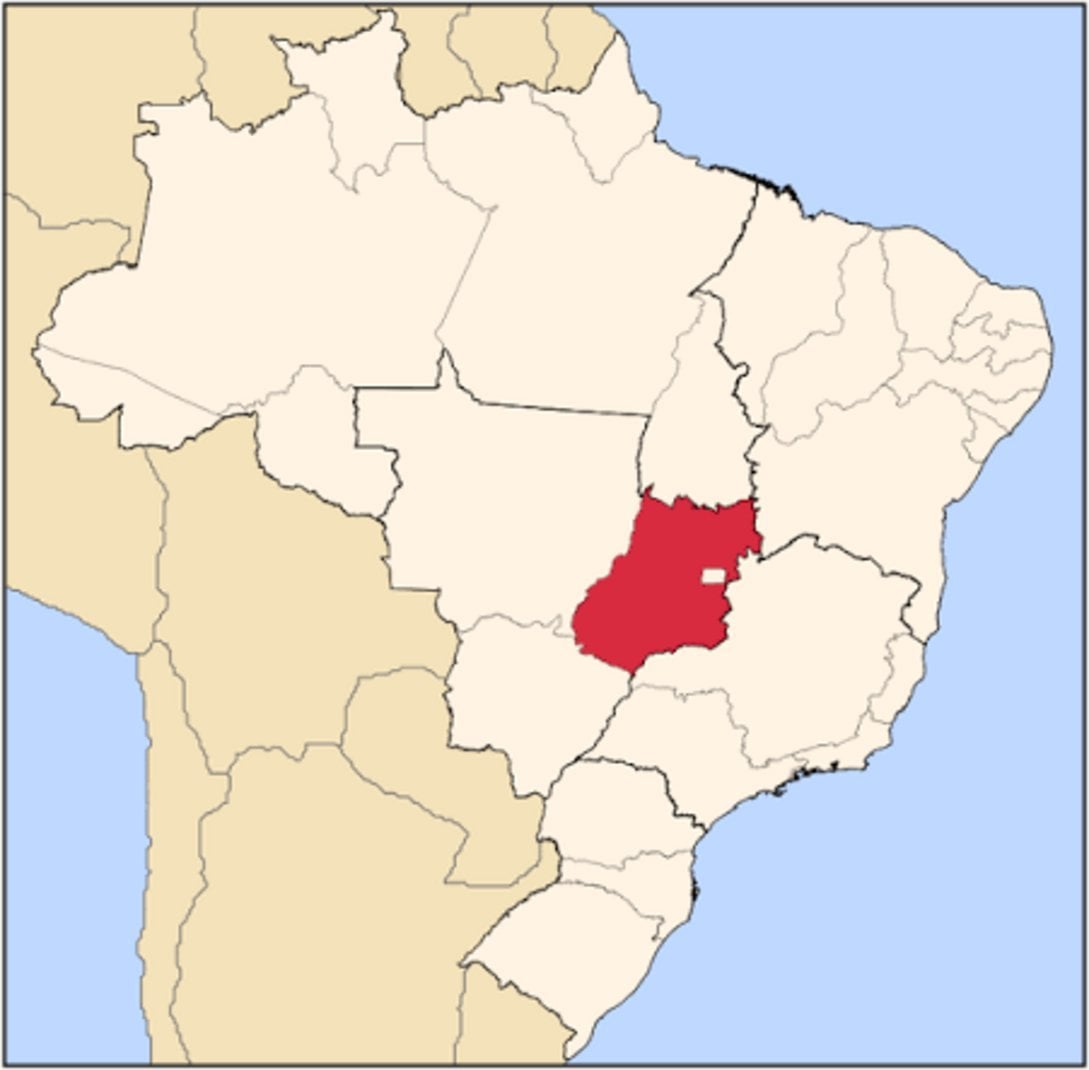
Magnum Mining and Exploration Limited (opens in a new tab) (ASX: MGU; OTCQB: MGUFF) has reported widespread shallow rare earth mineralization and encouraging early desorption results at Piracanjuba North in Goiás (opens in a new tab), Brazil. The data justify continued drilling, particularly because several intervals contain desorbable (removed via relatively mild chemical solution) terbium and dysprosium—scarce, high-value inputs for heat-resistant permanent magnets. Yet Piracanjuba remains an early exploration prospect without a mineral resource, optimized recovery process, economic study, or demonstrated saleable product. Rare Earth Exchanges® finds legitimate technical progress beneath language investors should still treat cautiously.
The Clay Is Talking
Magnum reported anomalous TREO in all 122 holes disclosed to date. One standout returned 2 meters at 1,409 ppm TREO, including 681 ppm desorbable TREO and 33 ppm desorbable terbium-plus-dysprosium. At PN-6, another interval produced 31 ppm desorbable Tb+Dy at 73% apparent desorption under mild ammonium-sulphate screening conditions.
These are credible exploration signals. Shallow mineralization, multiple target centers, and recoverable magnet rare earth indications support Magnum’s six-rig campaign.
The promotional edges require restraint. The enlarged 116-square-kilometer footprint results from reinterpretation of existing radiometric data—not a new survey—and is neither a drilled mineralized footprint nor a resource. Desorption results are laboratory screening values, not final recoveries.
The Questions Beneath the Assays
Calling Piracanjuba a potential “large-scale, high-value” ionic-adsorption clay system remains premature. Investors need mineralogy, clay speciation, impurity profiles, reagent consumption, water requirements, environmental data, recoveries by geological domain, and proof that a qualified commercial product can be produced. The real test: can encouraging recoveries repeat across coherent tonnage, and what share of future value would actually come from dysprosium, terbium, and NdPr?
Capital, Ownership and Dilution
Magnum ended 2025 with A$5.86 million cash, but recorded a A$9.43 million loss and a material going-concern uncertainty. It had approximately 3.19 billion ordinary shares, plus 630.25 million listed options and 82.5 million performance securities—meaning dilution deserves close attention.
The register is fragmented rather than institutionally anchored. As of February 27, 2026, director Antonio Vitor Junior (opens in a new tab) was the largest holder at 5.91%, followed by Adrian and Noelene Paul’s superannuation account at 3.89%. The top 20 held 38.7%. Nominee accounts obscure some beneficial ownership, so claims of precise institutional participation should be treated cautiously.
Brazil could become vital to U.S. heavy rare earth security—but discoveries matter only when linked to separation, metals, alloys, and magnets.
Profile
Magnum Mining and Exploration Limited remains a highly speculative, pre-revenue exploration company with a market capitalization of approximately A$20.9 million and an enterprise value of A$15.0 million. The company reported A$5.9 million in cash at year-end 2025 and carries no reported debt, resulting in a strong current ratio of 15.85, which provides near-term funding flexibility for its exploration programs. However, Magnum generated no operating revenue and recorded a net loss of A$9.43 million over the trailing twelve months, with negative EBITDA of A$2.85 million, operating cash outflow of A$2.09 million, and negative free cash flow of approximately A$1.0 million. Return on assets (-15.4%) and return on equity (-89.6%) underscore the company's early-stage, capital-consuming nature. With approximately 3.21 billion shares outstanding, a public float of 2.18 billion shares, and 34.2% insider ownership, Magnum's capital structure offers significant leverage to exploration success but also presents ongoing dilution risk should additional financing be required. Technically, the stock trades near A$0.0065, roughly midway between its 52-week low of A$0.0040 and high of A$0.0140, reflecting both investor optimism surrounding its Brazilian ionic clay rare earth program and the substantial execution risk inherent in advancing an early-stage exploration asset toward a JORC resource and, ultimately, commercial development.


0 Comments
No replies yet
Loading new replies...
Moderator
Join the full discussion at the Rare Earth Exchanges Forum →