
Highlights
- Malawi could generate $30 billion in mineral exports from 2026–2040 under the World Bank's base case, with annual exports near $3 billion by 2034.
- Lindian Resources has a binding deal to supply Iluka 6,000 dry metric tonnes of monazite concentrate annually for ~15 years, feeding Australia's Eneabba refinery.
- The Malawi–Australia corridor offers a non-Chinese separation route, but Malawi captures only concentrate-level margins while higher-value processing occurs offshore.
- The World Bank warns infrastructure, skills, and regulation could constrain development, framing Malawi's mining future as an execution story, not a guaranteed boom.
Malawi could generate US$30 billion in mineral exports from 2026–2040 under the World Bank's base case (opens in a new tab), with annual exports reaching roughly $3 billion by 2034. Rare earths, graphite, rutile, and uranium underpin the opportunity. But investors should distinguish forecast from fact: projects must still clear financing, infrastructure, and execution hurdles.
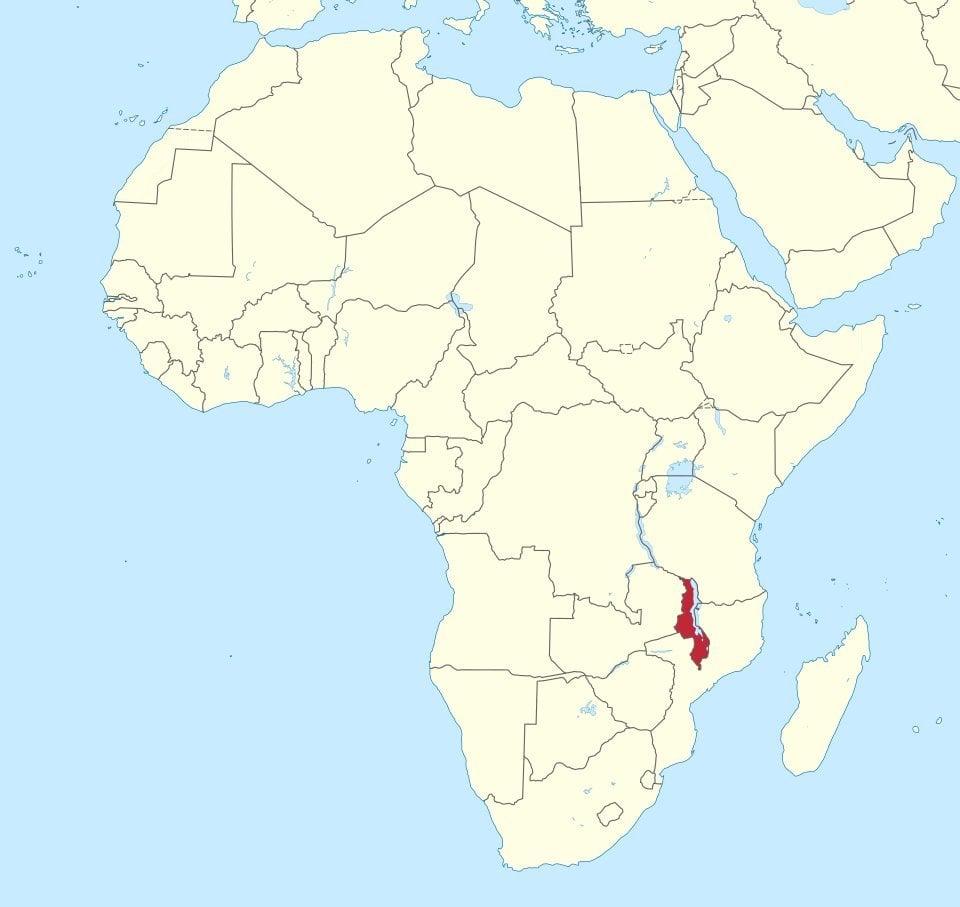
REEx Insight — Malawi Has the Ore. Who Captures the Margin?
But a recent "mining boom" headline misses the bigger strategic question: where does Malawi sit after the rock leaves the mine?
Kangankunde (opens in a new tab) provides the clearest test. Lindian Resources has a binding agreement to supply Iluka 6,000 dry metric tonnes of monazite concentrate annually for approximately 15 years, equal to about 10% of Eneabba's planned feed capacity. Eneabba is being built to separate both light and heavy rare-earth oxides.
That creates an emerging Malawi → Australia → separated oxide corridor previously tracked by REEx.
For investors, this is more important than another giant-resource headline. A mine becomes strategically more valuable when it has a credible route into non-Chinese separation. But Malawi captures only part of that value if concentrate leaves Africa while higher-margin separation, metallization, alloying, and magnet production occur elsewhere.
The policy challenge is therefore not simply "mine more." It is deciding which processing steps Malawi can economically retain without delaying projects by forcing uneconomic localization.
From Rocks to an Economy
The World Bank sees genuine potential but also warns that infrastructure, skills, regulation, and macroeconomic conditions can constrain development. Malawi's mining future is therefore neither boom nor bust yet—it is an execution story.
The prize is not $30 billion underground. It is building a supply chain capable of earning it.
REEx Connect
| Organization | Strategic Role | Key Contact |
|---|---|---|
| Lindian Resources | Kangankunde rare-earth developer | Executive Chairman Robert Martin |
| Iluka Resources | Kangankunde feedstock buyer; Eneabba refinery | Managing Director & CEO Tom O'Leary |
| World Bank Group | Malawi mining roadmap and $30B base-case projection | Malawi / Energy & Extractives |
| Malawi Government | Mining policy, permitting, and value-add strategy | Ministry responsible for mining |


0 Comments
No replies yet
Loading new replies...
Moderator
Join the full discussion at the Rare Earth Exchanges Forum →