
Highlights
- Malaysia's parliament is scrutinizing a proposed US$96 million Pentagon supply arrangement with Lynas Rare Earths over concerns about defense use and Palestinian solidarity.
- The Lynas-DoD agreement is a binding letter of intent, not a finalized contract, covering both light and heavy rare earth oxides with pricing to incentivize non-Chinese supply.
- Malaysia's true strategic leverage lies not in ore ownership but in hosting one of the world's few commercial rare earth separation facilities outside China.
- Islamist opposition party PAS, which governs several Malaysian states, is amplifying political pressure by questioning whether Malaysian materials could support U.S. military operations.
- The central challenge for Malaysia is converting geopolitical attention into downstream industrial leadership in metals, alloys, magnets, and advanced materials before competing powers dominate the value chain.
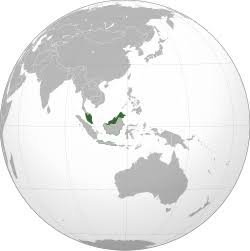
Malaysia's parliament is pressing Prime Minister Anwar Ibrahim's (opens in a new tab) government to clarify whether rare earth oxides processed by Lynas Rare Earths (ASX: LYC) could ultimately enter the U.S. defense supply chain. As captured in local media The Straits Times (opens in a new tab), the controversy blends Palestine solidarity, environmental concerns, industrial sovereignty, and geopolitical competition. Rare Earth Exchanges® finds the political debate legitimate—but incomplete. The central question is not simply where Malaysian-processed oxides go. It is whether Malaysia can leverage its strategic position to build domestic separation, metals, alloys, magnet manufacturing, and advanced materials capabilities before competing powers capture the highest-value portions of the supply chain. As we have chronicled, the national Malaysian fragmentation (federal to state as one example) and disparate political views could hinder the company’s emergence in Great Powers Era 2.0, rendering it a feedstock supplier to China, the United States, and perhaps a Japan-France collaboration.
A Strategic Industry Meets Domestic Politics
Malaysia has discovered the price of becoming strategically important: everyone wants its rare earth ecosystem, and every geopolitical decision now carries domestic political consequences.
A parliamentary committee chaired by Subang MP Wong Chen (opens in a new tab) has asked Putrajaya to clarify its position on a proposed four-year, US$96 million Pentagon supply arrangement with Lynas Rare Earths (ASX: LYC), whose Gebeng processing facility separates rare earth concentrates mined at Mount Weld in Western Australia.
The parliamentary review is only one dimension of the debate. More conservative political forces, particularly the Islamist opposition party PAS, (opens in a new tab) have also questioned whether Malaysian strategic materials could indirectly support U.S. military operations. While PAS does not control the federal government, it governs several Malaysian states and remains an influential force capable of shaping national political discourse. That makes this controversy more than a one-time parliamentary hearing.
A Letter of Intent—Not Yet a Final Contract
The underlying reporting is largely accurate but benefits from important context.
Lynas signed a binding letter of intent with the U.S. Department of Defense establishing a framework for negotiating a proposed supply agreement; it is not yet a fully executed long-term purchase contract. The proposal includes both light and heavy rare earth oxides and establishes pricing mechanisms intended to encourage non-Chinese production.
Environmental organizations and pro-Palestinian groups argue Malaysian processing should not contribute to any military conflict. Those concerns represent political and ethical positions rather than evidence that specific Lynas material can be traced into particular weapons systems. The article appropriately presents these as allegations, although it understates the technical complexity of tracing rare earth oxides through metals, alloys, magnets, and ultimately finished defense systems.
The Real Prize Lies Beyond Separation
Another important nuance often missed in mainstream coverage is that Malaysia's strategic leverage does not primarily come from owning the ore body. The feedstock is overwhelmingly Australian. Malaysia's advantage comes from hosting one of the world's few commercial rare earth separation facilities outside China.
Rare Earth Exchanges has consistently argued that strategic advantage no longer resides solely in mining or even separation. Increasingly, it lies in the downstream industrial chain—metals, alloys, permanent magnets, manufacturing qualification, and advanced engineering. Separation is essential, but it is not the end of the value chain. That assessment underpins the Great Powers Era 2.0 framework, which views the industrial midstream as the decisive battleground in global rare earth competition.
The Question Investors Should Be Asking
Malaysia estimates it possesses approximately 16.1 million tonnes of non-radioactive rare earth resources and continues pursuing policies designed to encourage domestic value creation rather than simple raw-material exports.
The larger question is no longer whether Malaysia will participate in global rare earth supply chains—it already does.
The question is whether Malaysia can convert today's geopolitical attention into long-term industrial leadership. In our thesis, major powers—including China, the United States, Japan, Australia, France, and increasingly South Korea—now seek influence over some portion of Malaysia's rare earth ecosystem.
That is Great Powers Era 2.0 in action: not merely a race for minerals, but a competition for the industrial chokepoints that transform them into strategic products. The nation that ultimately captures the greatest value may not be the one that mines the ore, but the one that controls the technologies, manufacturing, and trusted supply chains that follow.


0 Comments
No replies yet
Loading new replies...
Moderator
Join the full discussion at the Rare Earth Exchanges Forum →